What this tool does
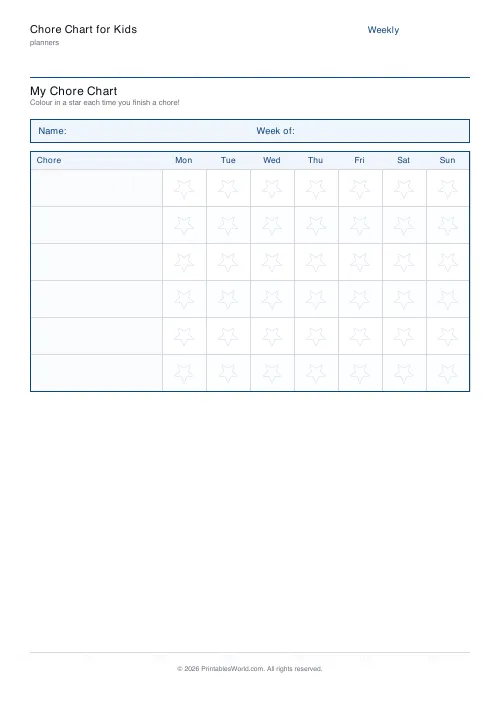
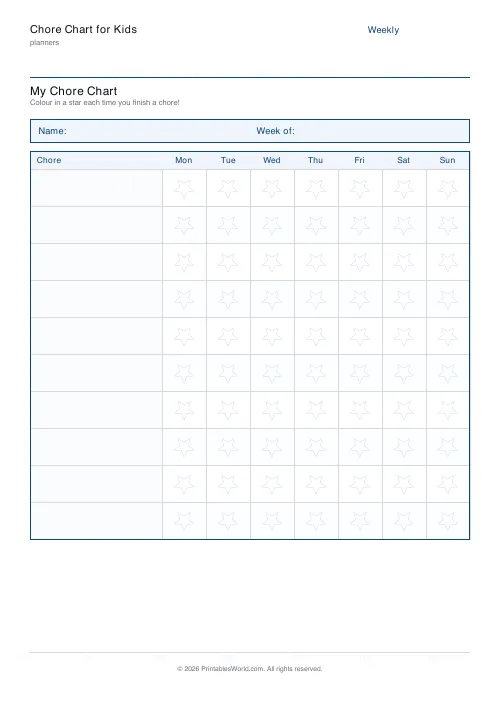
A chores-by-days grid with a soft star in every cell, there to be ticked or coloured in or covered with a sticker. Six to ten chores, seven days, and the child's name across the top.
People also used
Feedback
Spotted something off with this tool?
Chores down the side, seven days across
Type the child's name and your list of chores, and the sheet prints a grid with a faint star in every cell. Tick them, colour them, or cover them with stickers.
Six to ten chores. Leave the list empty and the rows print blank to fill in by hand.
Pick chores the child can finish alone
The single decision that determines whether the chart works.
"Tidy your room" cannot be finished, because it has no edge and no agreed end state, and a chore that cannot be completed cannot be ticked. "Put your shoes on the rack", "take your plate to the sink", "put dirty clothes in the basket" all have a visible moment where they are done.
Specific also removes the argument. A chart with "tidy your room" on it produces a weekly negotiation about what tidy means; a chart with five concrete things on it does not.
Fewer than ten
The grid takes ten and six is usually plenty. Ten chores times seven days is seventy things to remember, and the failure mode is not defiance but simply forgetting.
Better to have four chores done reliably than ten done sporadically, and the ticks on a shorter chart look like success rather than a page of gaps.
Age matters more than the chart does
A three-year-old can put toys in a box and carry their plate. A six-year-old can lay a table, feed a pet and sort socks. A ten-year-old can genuinely be responsible for a task nobody checks.
The mismatch to avoid is putting an eight-year-old's chore on a four-year-old's chart, where it becomes a daily reminder of failing. Start below what you think they can do.
On paying for chores
Contested, and worth a decision rather than a drift.
The common argument against is that paying for ordinary household contribution reframes it as work for hire, and there is a body of research on rewards reducing intrinsic motivation for things people would otherwise do willingly. The argument for is that pocket money attached to effort teaches something about money that pocket money on its own does not.
A middle route a lot of families take: everyday chores are unpaid because everybody lives here, and separate, larger jobs can be paid. Whatever you choose, say it out loud, because a child who does not know the rule will assume the one they prefer.
What the form offers
A title, the child's name, chore count (6 to 10), and your own chore list. A4 or US Letter, printed at 100%.
Put it at the child's height, not on the fridge above their eyeline. It is their chart.
FAQs
Quick answers
How many chores should I list?
Pick 6 to 10. For younger children (ages 4–6) 6 chores work well; older children can handle 8–10.
Can I print a blank chart and fill it in by hand?
Yes. Leave the Chores list blank and the rows print empty, ready to write in. Handy if you rotate chores each week.
What do the stars in each cell mean?
They are soft placeholder stars. Cover them with a sticker or colour them in each time the chore is done.
Can I make one per child?
Yes. Change the Name and chores list and generate a separate PDF for each child. The design stays consistent across siblings.
Related tools
30-Day Habit Tracker
A printable 30-day habit grid to tick off every morning. One row per habit.
Weekly Planner
Weekly spread with seven day columns, a goals box, and a notes strip.
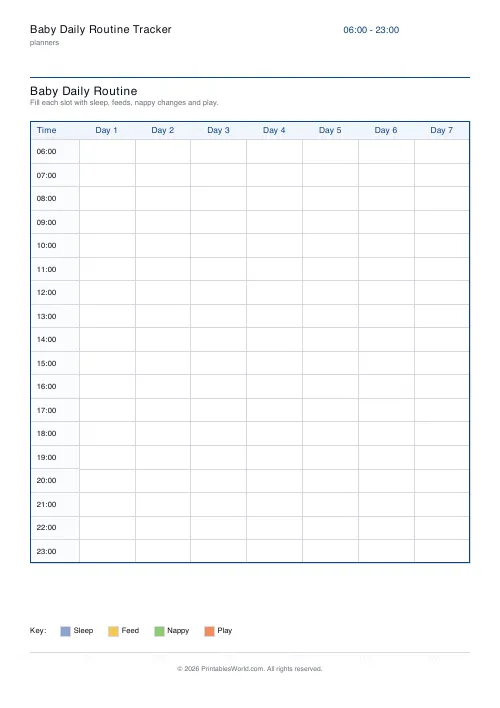
Baby Daily Routine Tracker
Printable hour-by-hour baby routine grid for sleep, feeds, nappy changes and play.
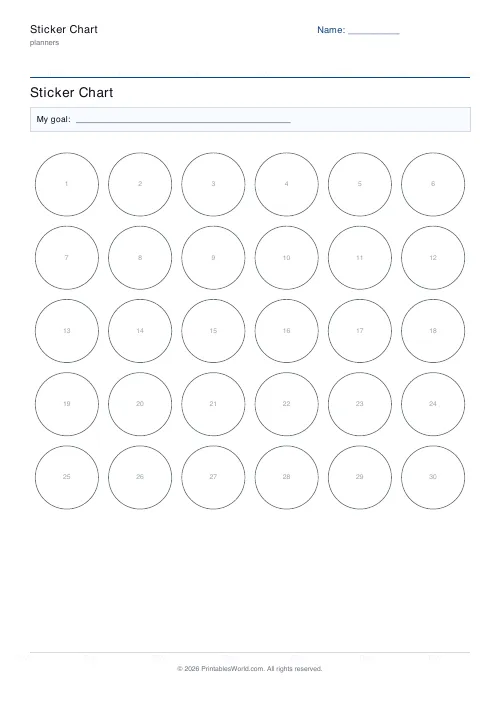
Sticker Chart
Printable sticker chart with a custom goal and 20–40 sticker slots.
Further reading
Planners
Chore charts that motivate kids (without nagging)
Most chore charts fail for the same three reasons. Here is what to put on one by age, whether to attach money, and how to stop being the person who remembers everything.
5 min read
Planners
Meal planning 101: save time and money every week
A weekly meal plan saves money mainly by changing how you shop. Here is a thirty-minute method, the shortcuts that keep it going, and the mistake that ends most plans in week three.
5 min read
Planners
Time blocking for beginners: a complete guide
Time blocking is deciding when each task happens, not just what. Here is how to size blocks realistically, what to do when the day breaks, and why most beginners over-schedule.
5 min read