What this tool does
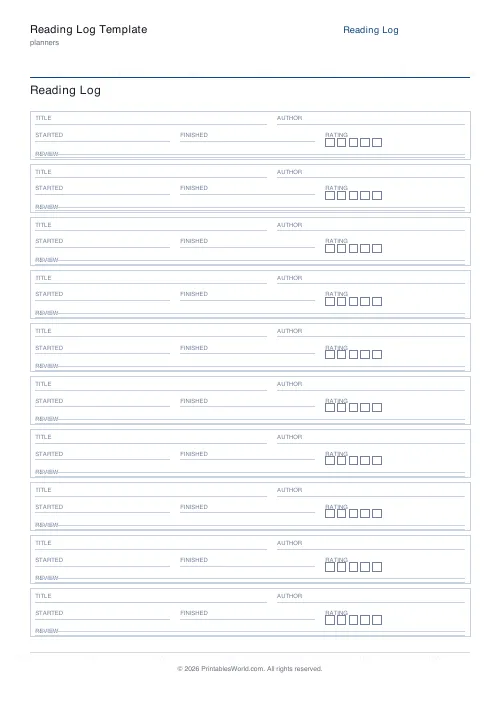
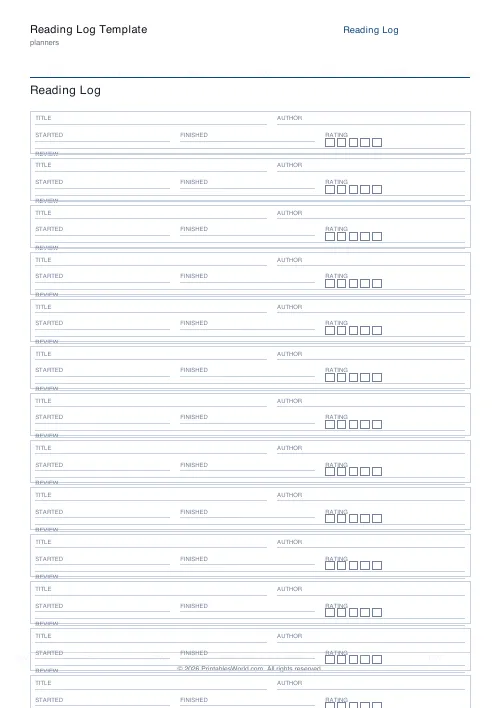
A row per book: title and author, the dates you started and finished, a five-star rating and space for a note. Four to sixteen books a sheet.
People also used
Annual Book Tracker
Print a single-page annual reading log with twelve months and space for every book you finish.
Journal Prompt Page
Printable journal page. One printed prompt at the top, full ruled writing area below.
Gratitude Journal Page
Printable gratitude journal. Three gratitudes, a win, and a reflection space.
Feedback
Spotted something off with this tool?
One row per book
Title and author. Two date columns, one for starting and one for finishing. Five stars to fill in, and a line for whatever you want to say about it. Four to sixteen rows.
The two dates are the interesting column
Everybody fills in the finish date. The start date is the one that tells you something.
A book that took five weeks and one that took two days were different experiences. A year later, the gap between those dates is the only record of which was which. It also exposes the book you were technically reading for two months while not actually reading anything, and the honest response to that is usually to abandon it.
Recording both is also the only way to see how much you actually read, as opposed to how much you finished.
Rate it immediately
Star ratings drift. A book rated three weeks after finishing tends to settle towards the middle, because the sharp reaction has faded and what remains is a general impression.
Fill in the stars on the day you close it. The rating you gave at the time is more useful later than a considered one, precisely because it records how the book actually landed.
The notes line is small on purpose
One line. Not a review.
What is worth writing is the thing you would otherwise forget: who recommended it, why you picked it up, the one idea you want to keep, or who to lend it to. A sentence like "for the chapter on tides" is worth more in two years than a paragraph of assessment.
People who keep reading logs for years almost always say the same thing: the notes are what they reread, and the ratings are what they ignore.
Log the abandoned ones too
A log of only finished books is a slightly dishonest document, and it quietly encourages finishing things you are not enjoying.
Write the row, leave the finish date blank, note why you stopped. Giving up on a book at page sixty is a legitimate outcome and worth recording as one — and occasionally you come back to it years later and the row tells you why you did not the first time.
For children
A reading log is a standard school request, and it is the one piece of homework that most reliably turns reading into a chore.
If it is being used with a child, keep the demands minimal — title and stars is plenty — and never make the log a condition of the reading. A child filling in a sheet about a book is not reading, and the sheet is not the point.
Settings: a title and how many rows (4 to 16). A4 or US Letter at 100%.
FAQs
Quick answers
How many books fit on a page?
You can choose anywhere from 6 to 12 book cards per page. More cards means smaller review space.
Can I use it for any book format?
Yes. It works for novels, non-fiction, audiobooks, or children's books. The rating and review fields stay the same.
Is there a place to rate a book?
Yes. Each card includes five empty stars you can fill in with pen or pencil.
Does it print in colour?
No. The log is intentionally black and white so it prints cleanly on any printer and is easy to photocopy.
Related tools
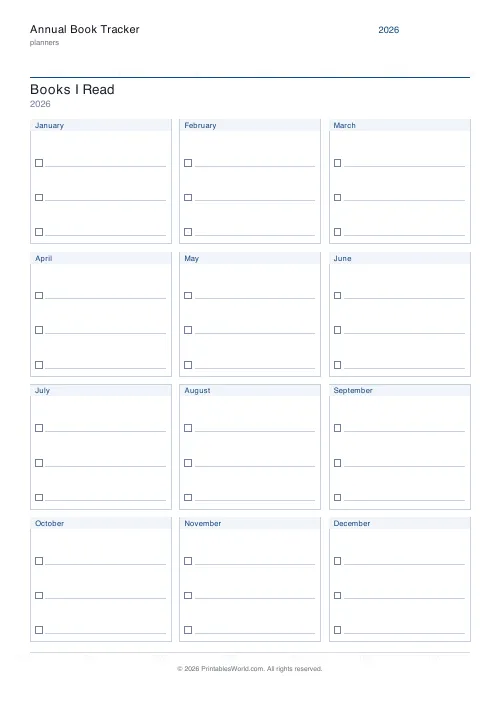
Annual Book Tracker
Print a single-page annual reading log with twelve months and space for every book you finish.
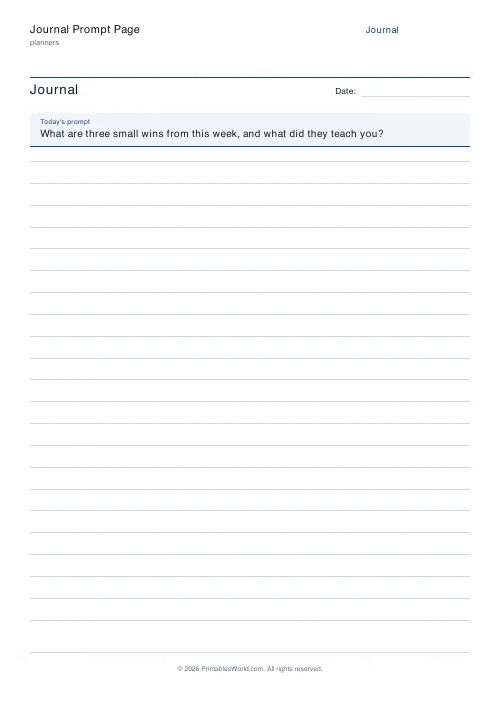
Journal Prompt Page
Printable journal page. One printed prompt at the top, full ruled writing area below.
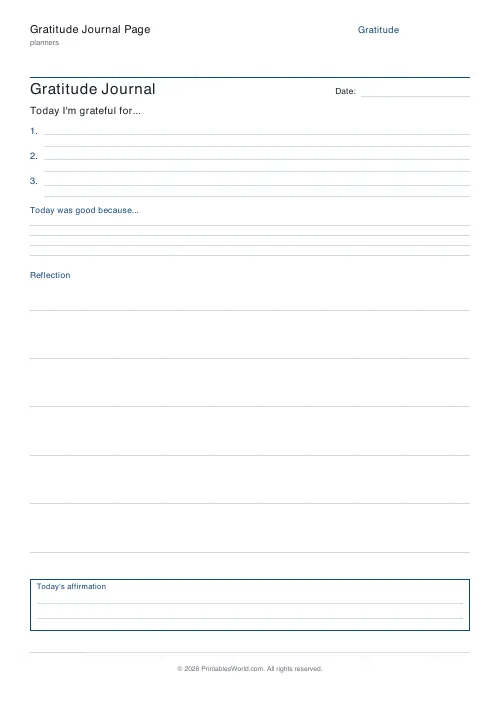
Gratitude Journal Page
Printable gratitude journal. Three gratitudes, a win, and a reflection space.
Further reading
Planners
How to track habits that actually change your life
Habit tracking works because it makes an invisible process visible. It fails when you track too many things, or when protecting the streak becomes more important than the habit.
5 min read
Planners
Study planning for exams: a student's complete guide
A revision timetable is only as good as what goes in the slots. Here is how to build one backwards from the exam date, and which study methods the evidence actually supports.
5 min read