What this tool does
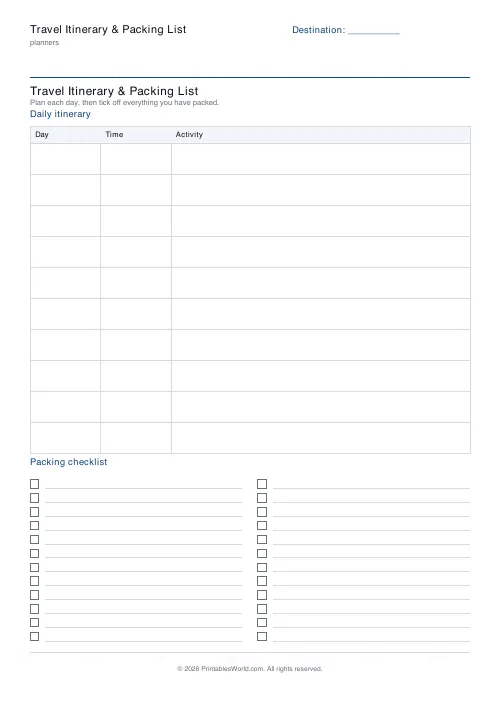
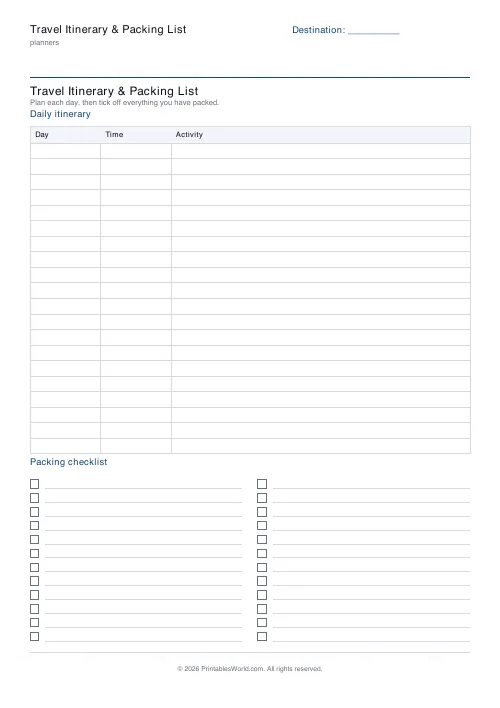
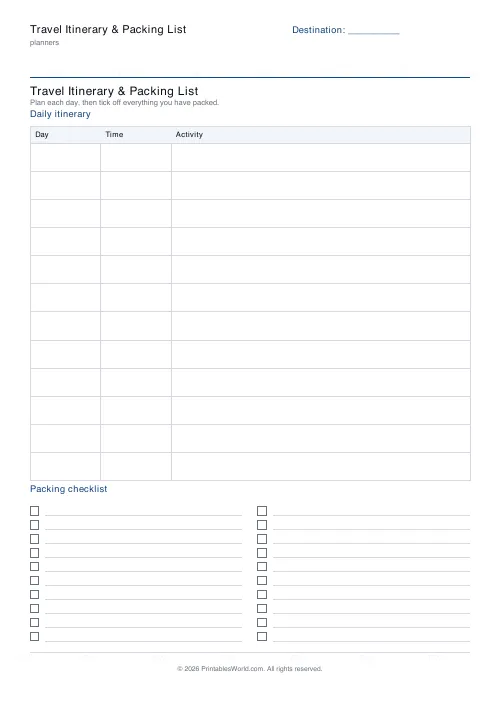
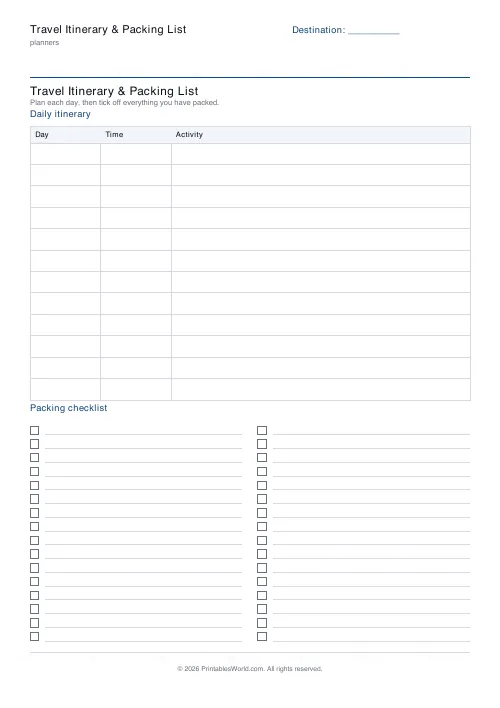
Itinerary and packing on one sheet: a day-time-activity table above a two-column checklist with tick boxes. 8 to 20 itinerary rows, 8 to 16 packing lines a column.
People also used
Feedback
Spotted something off with this tool?
Two halves of one problem
The top of the page is the itinerary — day, time, activity — and the bottom is a packing checklist in two tick-box columns. A destination label prints in the corner.
Eight to twenty itinerary rows. Eight to sixteen packing lines a column. One sheet handles a long weekend comfortably.
Why they belong on the same page
Because what you pack is decided by what you are doing, and separating the two lists is how people end up somewhere without the right shoes.
Write the itinerary first. Then read down it and pack against it. The walk on Tuesday needs boots. Thursday's dinner needs something other than a fleece, and the beach afternoon needs a towel that is currently in the airing cupboard. Far better than packing from a generic list and hoping.
Keep the itinerary loose
A schedule with something in every hour is not a holiday, it is an itinerary you will be behind on by Tuesday lunchtime.
Fix the things that are actually fixed — flights, check-in times, anything booked and paid for — and leave the rest as one or two things a day. The best parts of a trip are usually the unplanned afternoon, and a full grid removes the possibility of one.
Ticking the packing list
Tick as it goes in the bag, not as you think of it. The two are different actions and only one of them means the item is coming.
Do the packing list a day or two ahead rather than the night before. Everything you have forgotten to buy, charge or wash is then still fixable, which it will not be at eleven o'clock on the evening before an early flight.
The things always forgotten
Chargers and adaptors. Medication, in enough quantity, in hand luggage. Any document that is not on the phone, plus a printed copy of the one that is. Something for the journey itself, which is not the same as something for the holiday.
A photograph of the packed sheet on your phone is worth taking. It is the list you check against when repacking to come home, and it is what tells you what got left in the hotel.
One per traveller
Children pack better from their own sheet than from being told, and a teenager with a checklist is markedly less likely to arrive without a toothbrush.
Related: the expense tracker for what it all costs while you are away, and the moving house checklist if the journey is rather more permanent.
FAQs
Quick answers
How many days and items fit on the page?
The itinerary takes 8 to 20 rows and the packing checklist takes 8 to 16 lines per column, so 16 to 32 items in total. Pick fewer rows for more room to write, or more rows for a packed trip.
Can I plan a long trip on one sheet?
For a few days, yes. For longer holidays, print one sheet per block of days and number them, or pair it with the weekly planner.
Is it a fillable PDF?
No. It is a printable template you complete by hand. Nothing is stored, which keeps it private and works on any printer.
What paper sizes are supported?
A4 and US Letter. Print at 100% scale so the tick boxes stay square and the columns line up.
Related tools
Monthly Budget Planner
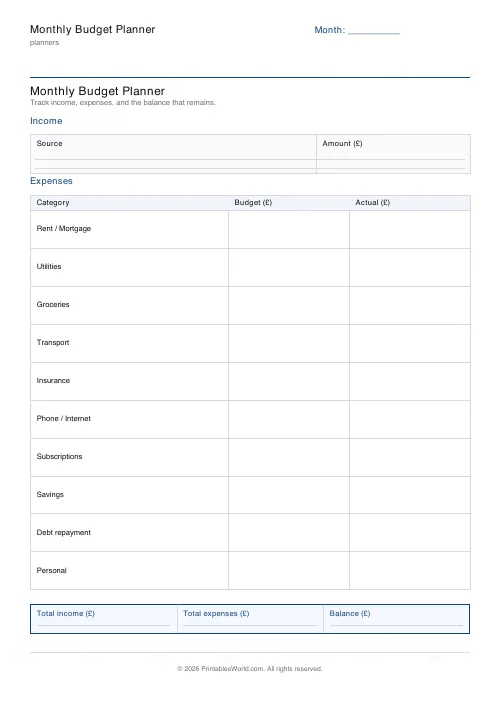
One-page printable budget: income, categorised expenses, balance summary.
Monthly Bill Tracker
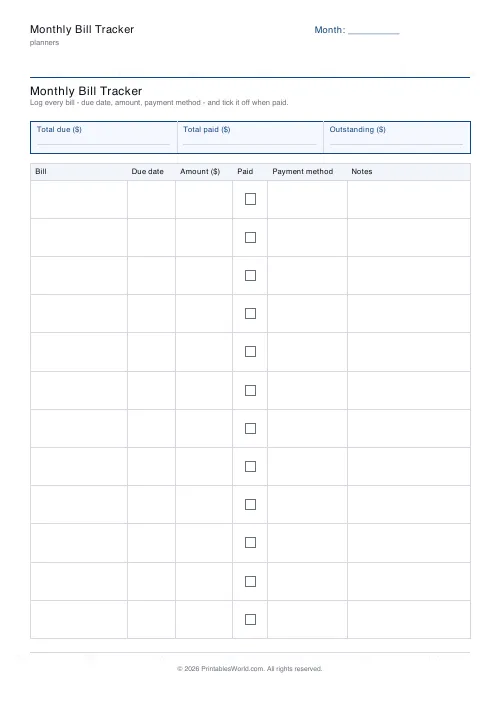
Printable bill tracker: due date, amount, paid check, payment method, notes.
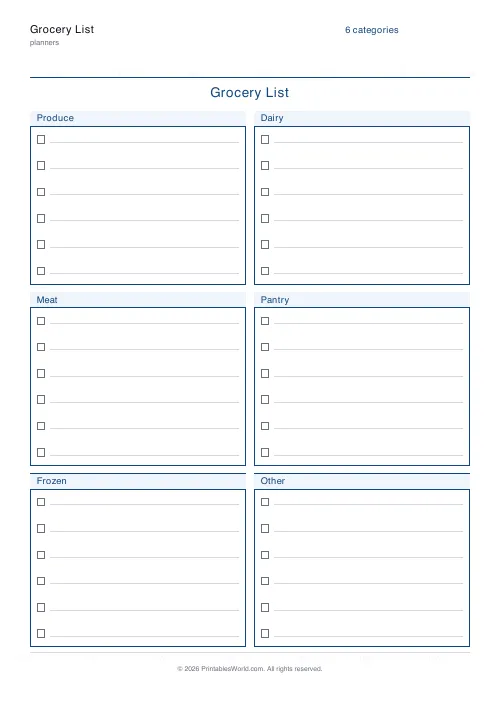
Grocery List
Printable categorised grocery list with tick boxes for every item.
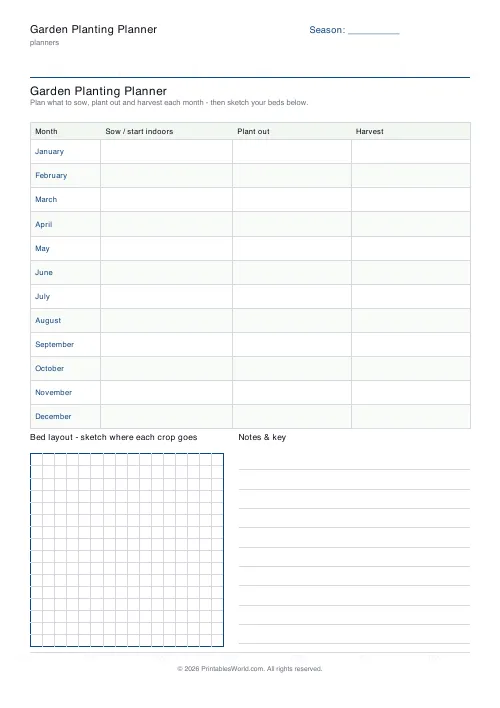
Garden Planting Planner
Printable month-by-month planting planner with a sow, plant out and harvest table plus a bed-layout grid.
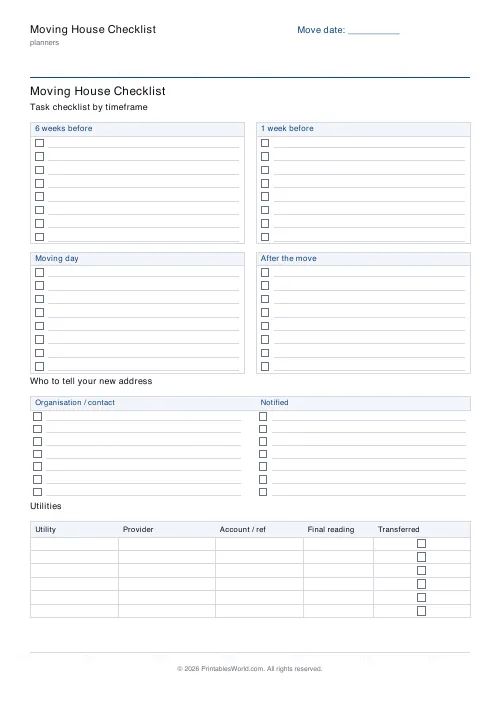
Moving House Checklist
Printable moving house checklist: tasks by timeframe, address-change list, utilities table.
Further reading
Planners
How to build a daily routine that actually sticks
Most routines fail in week two, when motivation runs out and nothing has replaced it. The fix is structural: fewer items, fixed anchors, and a plan for the day you miss.
6 min read
Planners
ADHD-friendly planning: systems that work
Standard planners assume you will remember to open them. That single assumption is why they fail for a lot of ADHD brains. And what an ADHD-friendly system has to replace.
6 min read
Planners
Budgeting for beginners: the 50/30/20 rule explained
Half to needs, 30% to wants, 20% to savings and debt. A useful starting frame. And this covers what actually counts as which, plus what to do when the numbers do not fit.
5 min read