What this tool does
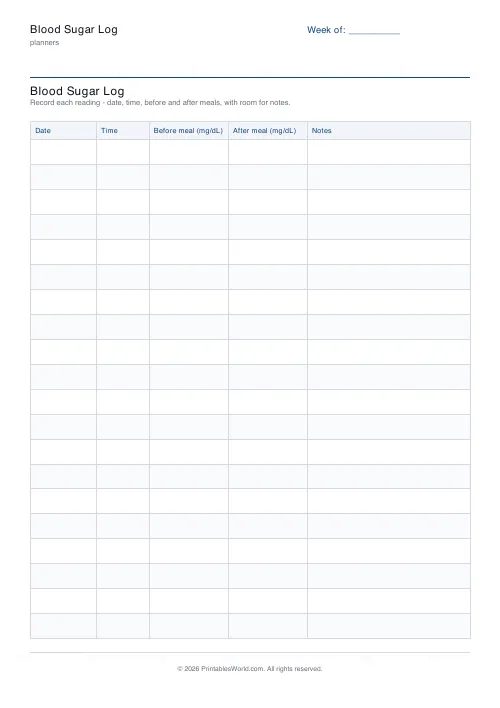
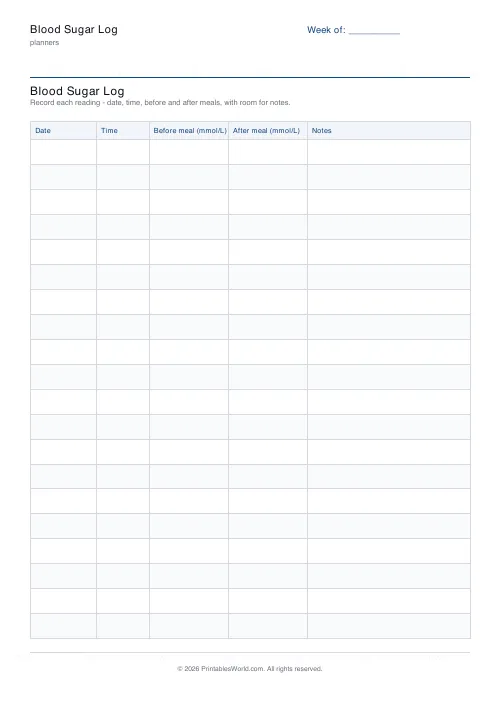
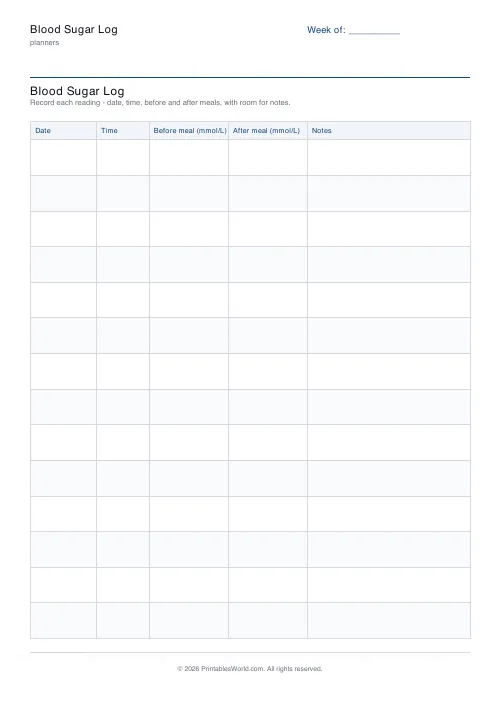
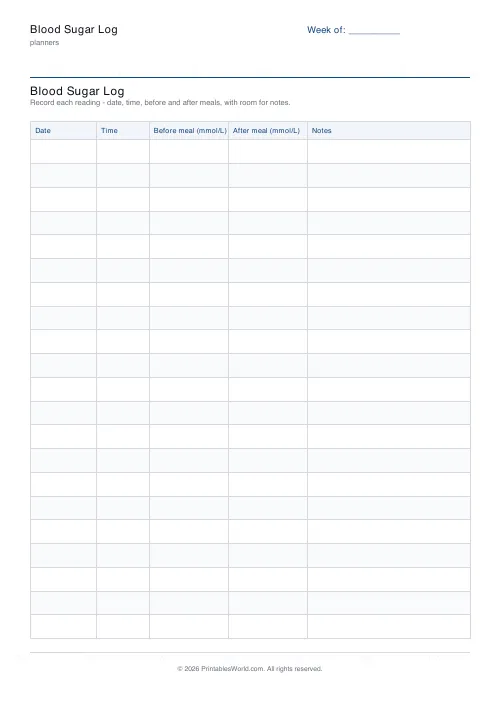
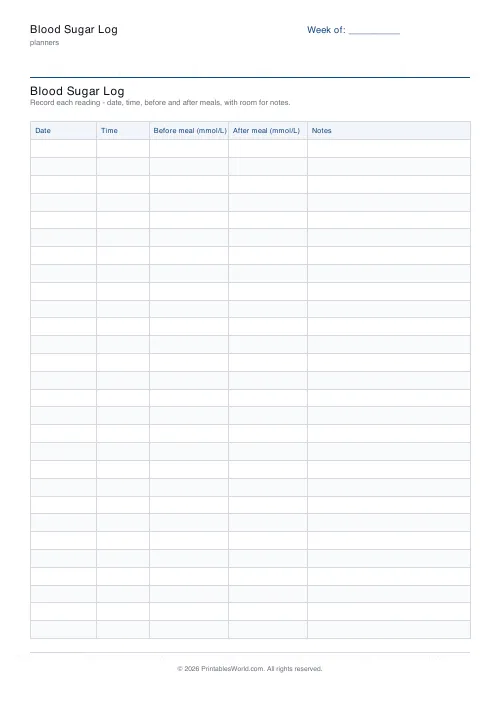
A glucose log: date, time, a before-meal reading, an after-meal reading and notes. Choose mmol/L or mg/dL, and 12 to 28 rows.
People also used
Feedback
Spotted something off with this tool?
Five columns
Date, time, before meal, after meal, notes. Twenty rows as standard, with a name and week-of line above them.
The unit is yours to set. Britain and Ireland use mmol/L, as does most of Europe; the United States and a number of other countries use mg/dL, and the column headers change accordingly so nobody is left converting in their head.
Before and after are different questions
The two columns are separate because they measure separate things.
A before-meal reading tells you where your baseline sits. An after-meal reading — usually taken about two hours later — tells you how a particular meal behaved. A person can have acceptable fasting numbers and large post-meal spikes, and vice versa, and only the pair together shows it.
Write down the time as well as the reading. "After lunch" and "two hours after lunch" are different measurements and only one of them is comparable with yesterday's.
The notes column is the useful one
Record what you ate, whether you exercised, how you slept, whether you were unwell, and any change to medication.
A reading on its own is a number. A reading with "large pasta lunch" beside it is an explanation, and the explanation is what lets you or your clinician change something. Illness moves glucose. So does stress, so does a bad night's sleep, all independently of what you ate — and without the notes those days simply read as unexplained bad results.
Patterns, not individual readings
One high reading means very little. The same reading at the same time of day, five days running, means a great deal.
Read the sheet in columns rather than rows — look down the before-breakfast entries for the week, then down the after-dinner ones. That is where a pattern lives, and it is why a full sheet is worth more to a clinician than a handful of remembered numbers.
Taking it to an appointment
Bring all of it, including the readings you were not pleased with. A log edited to look tidy leads to advice based on a fiction.
Many meters download to an app, which is more complete than this. It is also less legible in a ten-minute consultation, and it does not carry your notes about what you were eating.
Important
This sheet records; it does not interpret. Never change an insulin dose, a medication, or your diet on the strength of what you see here without talking to your diabetes team first.
Learn your own warning signs and act on them rather than on the log. If you have symptoms of a hypo, treat it immediately; if readings are persistently very high, or you are unwell and ketones are present, contact your healthcare provider straight away.
FAQs
Quick answers
How many readings fit on one page?
Choose between 12 and 28 rows. Fewer rows leave more height per reading for handwritten notes; more rows cover a longer stretch of days.
Can I use mg/dL instead of mmol/L?
Yes. Pick your unit and it prints in the before-meal and after-meal column headers. The sheet itself stays the same.
Is this a medical device or fillable PDF?
No. It is a printable worksheet you fill in by hand. No data is stored anywhere, and it does not replace advice from a healthcare professional.
What goes in the Notes column?
Anything useful. What you ate, exercise, medication, illness, or how you felt. Short phrases work best in the narrow column.
Related tools
Monthly Budget Planner
One-page printable budget: income, categorised expenses, balance summary.
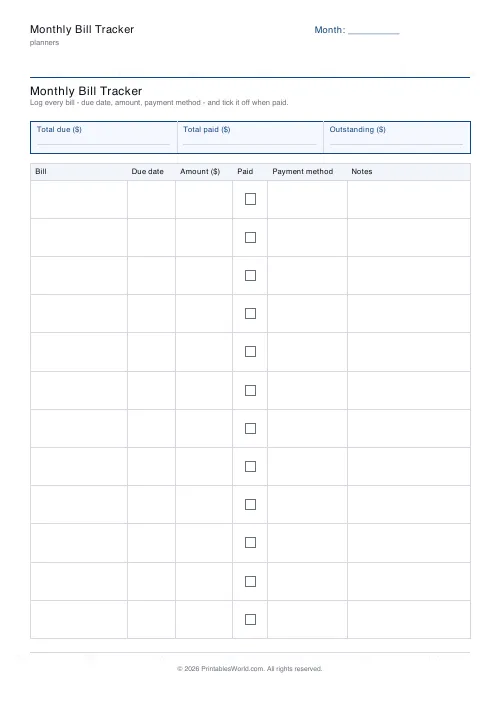
Monthly Bill Tracker
Printable bill tracker: due date, amount, paid check, payment method, notes.
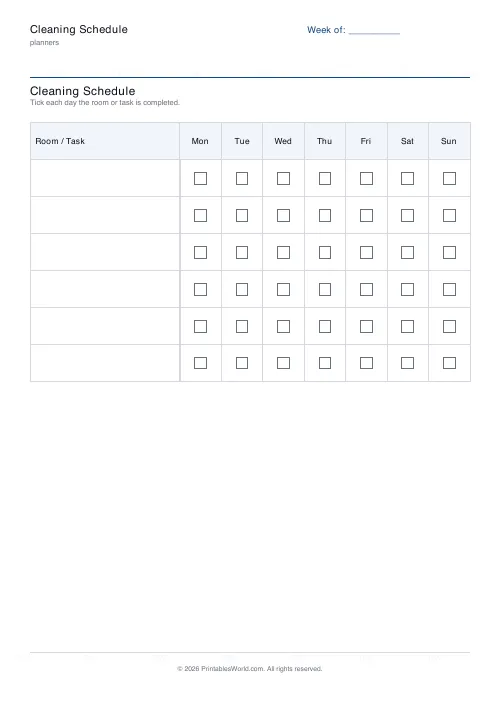
Cleaning Schedule
Print a weekly cleaning schedule grid with custom rooms and tasks across Monday to Sunday.
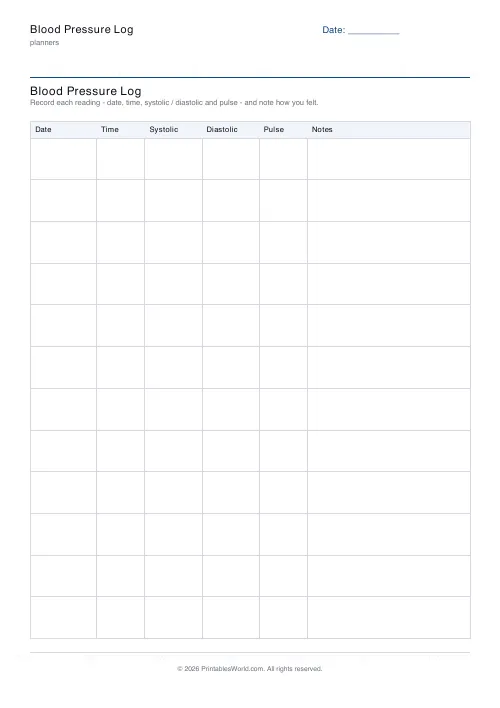
Blood Pressure Log
Printable blood pressure log: date, time, systolic, diastolic, pulse, notes.
Further reading
Planners
Meal planning 101: save time and money every week
A weekly meal plan saves money mainly by changing how you shop. Here is a thirty-minute method, the shortcuts that keep it going, and the mistake that ends most plans in week three.
5 min read
Planners
Time blocking for beginners: a complete guide
Time blocking is deciding when each task happens, not just what. Here is how to size blocks realistically, what to do when the day breaks, and why most beginners over-schedule.
5 min read
Planners
Study planning for exams: a student's complete guide
A revision timetable is only as good as what goes in the slots. Here is how to build one backwards from the exam date, and which study methods the evidence actually supports.
5 min read