What this tool does
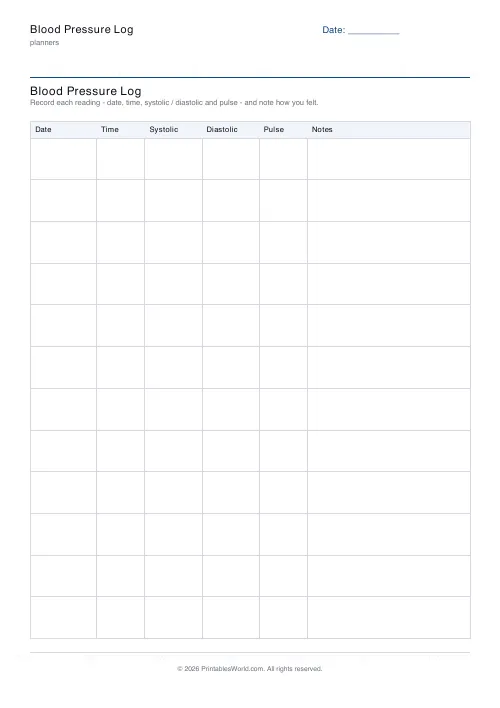
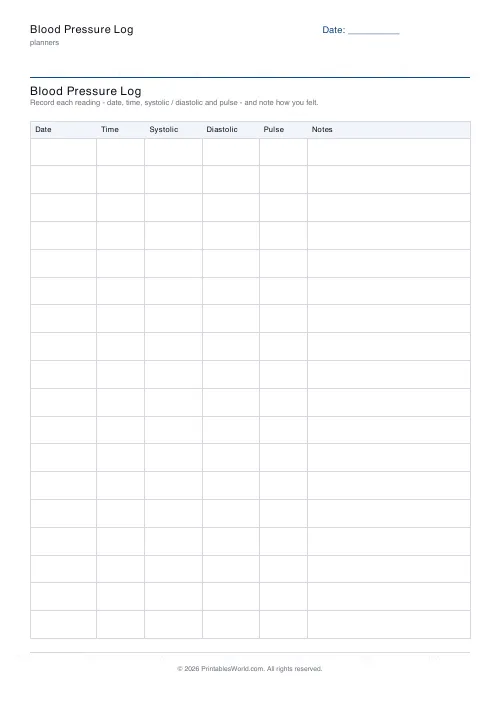
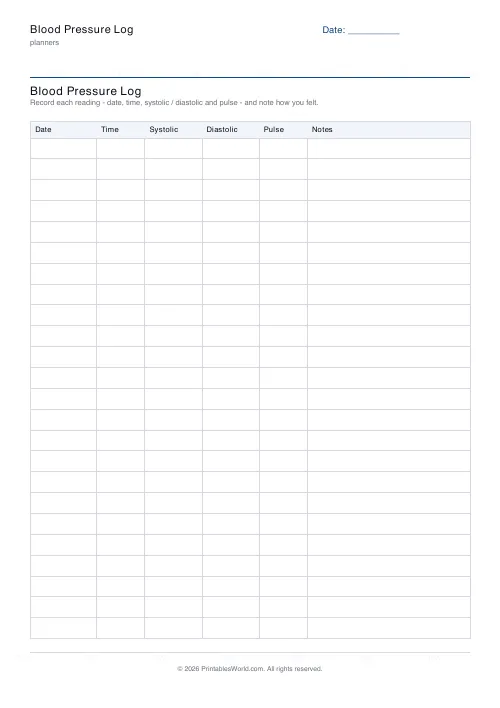
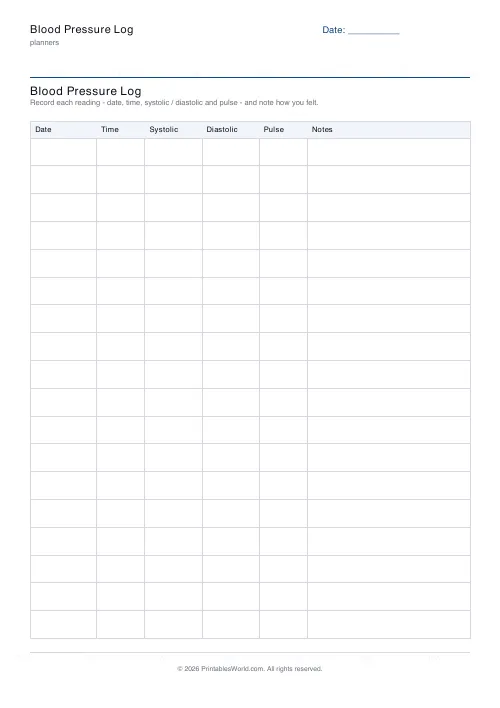
A blood pressure log: date, time, systolic and diastolic, then pulse and notes. 10 to 24 reading rows, with a name line at the top.
People also used
Feedback
Spotted something off with this tool?
Six columns
Date, time, systolic, diastolic, pulse, notes. Eighteen rows by default, anywhere from ten to twenty-four, with a name line and date band at the top.
That is the whole sheet. It is deliberately the shape a GP or nurse expects to be handed.
Why they ask you to keep one
Because a reading taken in a surgery is often not your reading.
White-coat hypertension is well documented and common: blood pressure rises in a clinical setting for reasons that have nothing to do with your cardiovascular health, and a decision made on that number alone can be the wrong decision. A fortnight of readings taken at home, at consistent times, gives a far better picture, and it is why home monitoring is now routinely recommended before starting or changing medication.
Taking a reading properly
Most of the variation people see is technique rather than physiology.
Sit down and rest for five minutes first. Feet flat, back supported, arm resting at roughly heart height. Do not talk during the measurement — talking alone can add several points. No caffeine or exercise in the half hour before, and empty your bladder first, which sounds trivial and is not.
Take two readings a minute apart and record the second. The first is often higher.
When to measure
Twice a day at consistent times: once in the morning before medication and before breakfast, once in the evening. Consistency matters more than the exact hour, because blood pressure follows a daily rhythm and readings taken at random times cannot be compared with each other.
A week or two of that is what most clinicians want to see.
The notes column
Use it. Slept badly, felt stressed, new medication started, unusually salty meal, forgot yesterday's dose.
An outlier reading with a note beside it is explainable; the same reading with nothing beside it may cause a change in treatment that was not warranted. The notes are also where you record that a dose was missed, which is the piece of information patients are least likely to mention out loud and clinicians most want to know.
What to do with the sheet
Bring it to the appointment. All of it, including the readings you did not like.
Never adjust your own medication on the strength of what you see here, and never stop taking anything because the numbers have started looking good. This is a record for your clinician to interpret, not a diagnostic tool — and if a reading is very high, or you have chest pain, or breathlessness, or disturbed vision, seek medical help straight away rather than writing it into a row.
FAQs
Quick answers
How many readings fit on one page?
Choose between 10 and 24 rows. Fewer rows leave more height per reading, while more rows cover a longer stretch of monitoring.
Can I add a name to the sheet?
Yes. Turn on the name and date band at the top, and optionally type a name so the printed sheet shows it.
Does the log tell me if my readings are high?
No. It is a blank recording sheet, not a medical device. Always discuss what your readings mean with a qualified healthcare professional.
Is my data stored anywhere?
No. You hand-write the readings on the printed sheet. Nothing is saved or uploaded. The PDF is generated on the fly from your settings.
Related tools
Monthly Budget Planner
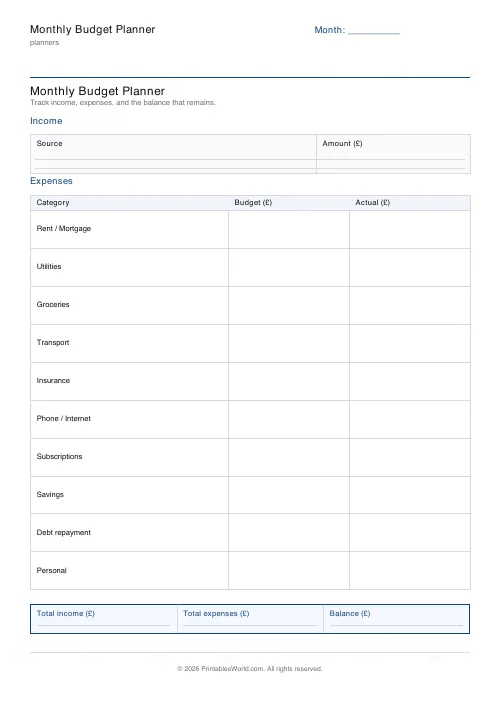
One-page printable budget: income, categorised expenses, balance summary.
Monthly Bill Tracker
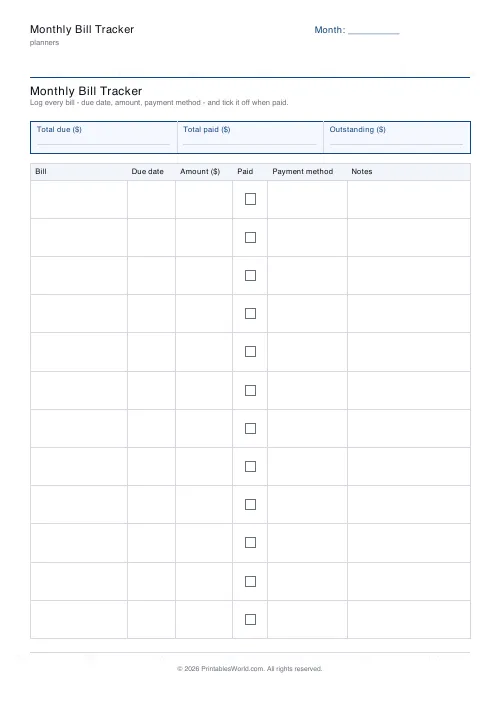
Printable bill tracker: due date, amount, paid check, payment method, notes.
Cleaning Schedule
Print a weekly cleaning schedule grid with custom rooms and tasks across Monday to Sunday.
Blood Sugar Log
Printable blood sugar log: date, time, before-meal and after-meal readings, notes.
Body Measurement Tracker
One-page printable body measurement log: date, weight and key measurements over time.
Further reading
Planners
Time blocking for beginners: a complete guide
Time blocking is deciding when each task happens, not just what. Here is how to size blocks realistically, what to do when the day breaks, and why most beginners over-schedule.
5 min read
Planners
Meal planning 101: save time and money every week
A weekly meal plan saves money mainly by changing how you shop. Here is a thirty-minute method, the shortcuts that keep it going, and the mistake that ends most plans in week three.
5 min read
Planners
Study planning for exams: a student's complete guide
A revision timetable is only as good as what goes in the slots. Here is how to build one backwards from the exam date, and which study methods the evidence actually supports.
5 min read