What this tool does
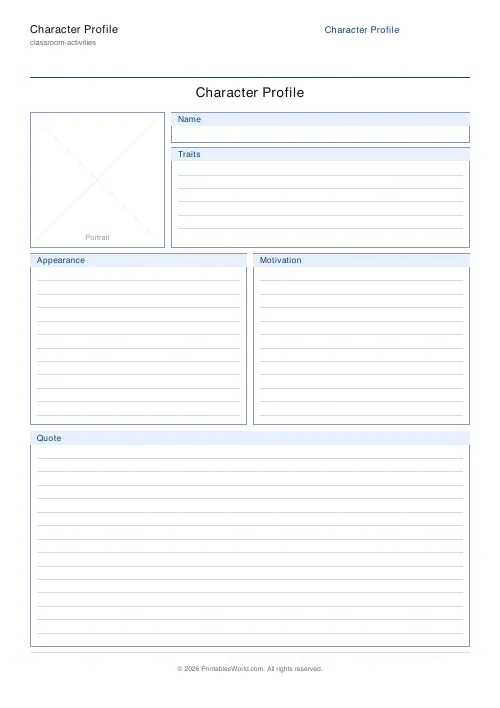
A character analysis sheet with a portrait box and labelled panels for the name, traits, appearance, motivation and a chosen quotation.
People also used
Story Map Template
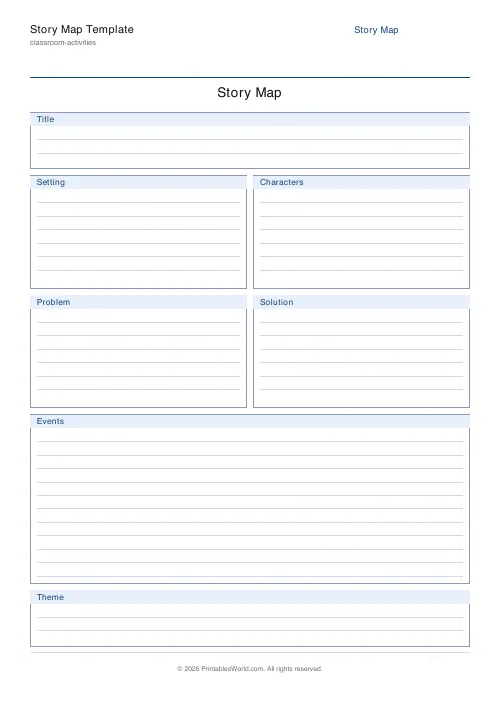
Story elements on one page: Title, Setting, Characters, Problem, Events, Solution.
Timeline Template
Horizontal or vertical timeline with evenly-spaced event markers and write-on lines.
KWL Chart Template
Three-column "Know, Want to Know, Learned" graphic organiser, fillable and printable.
Feedback
Spotted something off with this tool?
Five panels and a box to draw in
A portrait box, then labelled panels: Name, Traits, Appearance, Motivation, and a Quote. One character to a page.
The order is deliberate and it runs from easy to hard. Name and appearance are retrieval. Traits require a judgement. Motivation requires an inference the book almost never states. The quote requires going back and finding evidence.
Motivation is the panel that does the work
Appearance and traits can be filled in by anyone who skimmed the book. What a character wants usually cannot.
Books rarely say it outright. It has to be worked out from what the character does when they have a choice, which is exactly the reading skill that separates following a plot from understanding a story. A child who writes "she wanted to be safe" about a character who keeps running towards danger has not read carefully, and no other panel on the sheet would have shown that.
The follow-up question is always the same: where in the book can you show me that?
The quote panel forces evidence
One line, in the character's own words, chosen by the reader.
It is the smallest box on the sheet and the one that takes longest, because it means going back through the text with a purpose. That is a genuinely different activity from reading, and it is the one that transfers straight into essay writing, where an unsupported claim about a character is the commonest thing to lose marks for.
Ask why that line. The choice is more revealing than the line.
Traits are not the same as adjectives
Children write "nice" and "mean" and stop. Both are judgements about how the character made them feel rather than descriptions of how the character behaves.
Push for behaviour: not brave but "goes first when nobody else will". A trait a reader can point to in a scene is a trait they have actually noticed.
Controls and printing
A title, and paper size A4 or US Letter. Leave the title blank for a generic sheet you can print in bulk.
Using two together
Fill one in for the protagonist and one for the antagonist, side by side. Comparing the motivation panels is where most of the interesting conversation about a book lives, and it is much easier to have with two completed sheets on the table than in the abstract.
The same sheet also works for a character a child is inventing, which is a good use for it in a writing lesson — deciding what your character wants before you start writing is exactly the planning step that gets skipped.
Print at 100% on A4 or US Letter.
FAQs
Quick answers
What goes in the portrait box?
Students can sketch the character, paste a printed image, or describe key features in writing. The box is intentionally blank so any of those approaches works.
Which sections are included?
Name, Traits, Appearance, Motivation, and a favourite Quote. Each section has a labelled banner and writing lines inside.
What ages is this suitable for?
Works well from around age 8 upward. Younger students focus on appearance and traits; older students engage with motivation and textual evidence in the quote.
Can I give it a custom heading?
Yes. Set the title (e.g. the character's name or the book title) and it prints at the top of the page.
Related tools
Story Map Template
Story elements on one page: Title, Setting, Characters, Problem, Events, Solution.
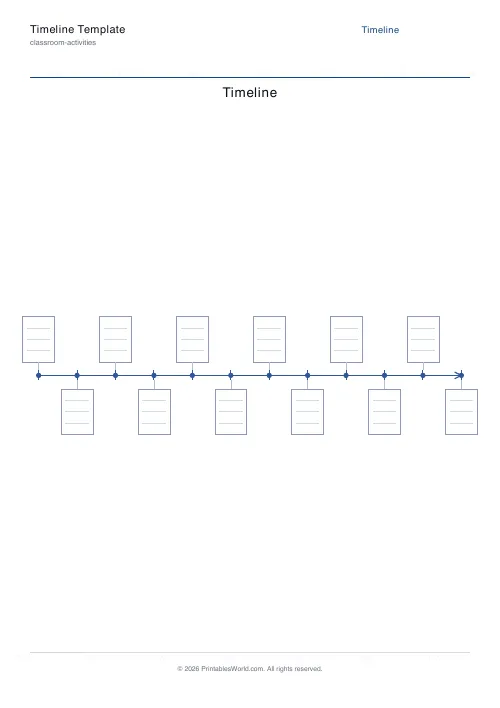
Timeline Template
Horizontal or vertical timeline with evenly-spaced event markers and write-on lines.
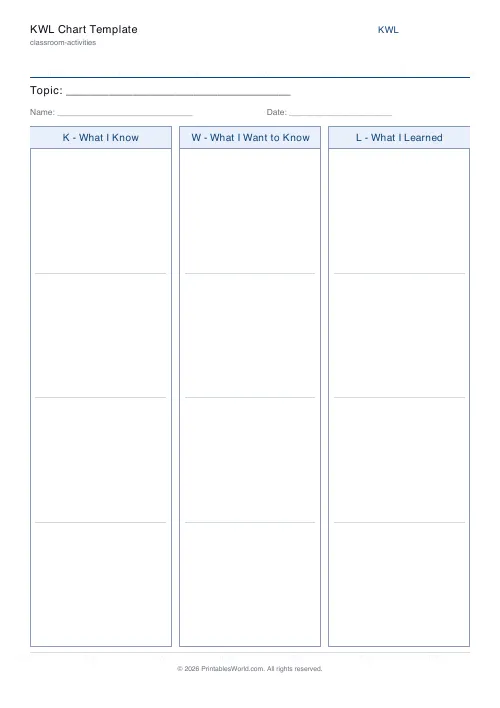
KWL Chart Template
Three-column "Know, Want to Know, Learned" graphic organiser, fillable and printable.
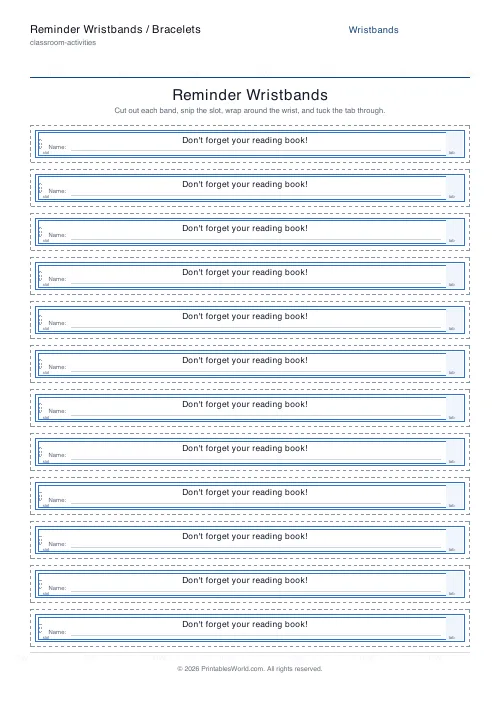
Reminder Wristbands / Bracelets
Printable paper wristbands with your own reminder message, a slot-and-tab fastener, and a name line.
Further reading