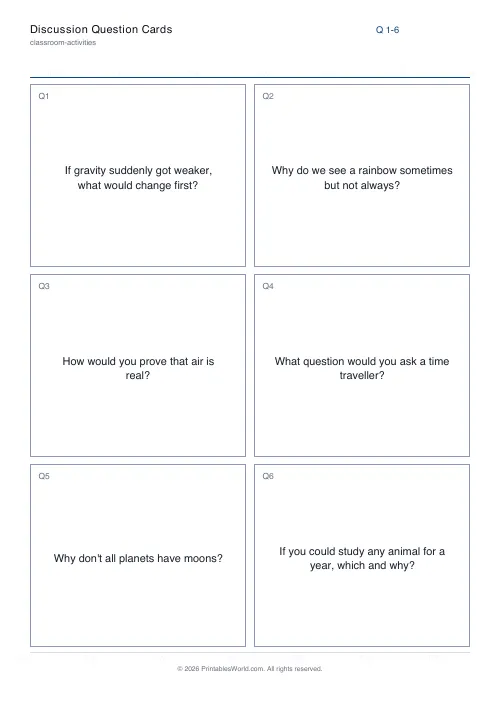
What this tool does
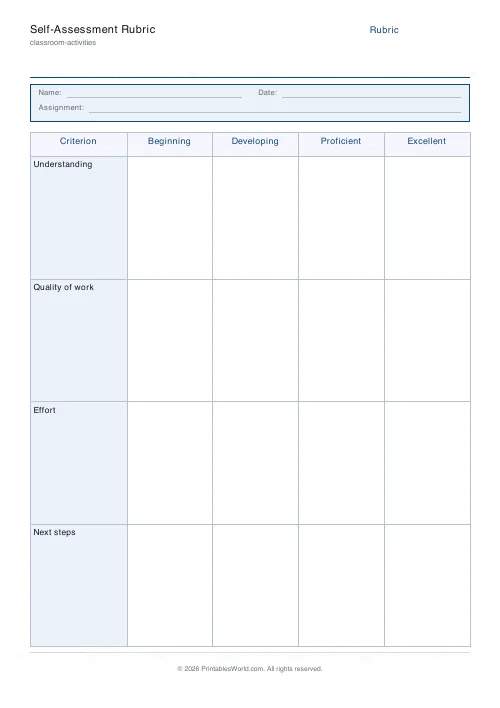
A four-by-four rubric pupils fill in themselves. Four criteria down the rows, four performance levels across the columns, and every cell blank so they can tick where they think they are and write what would move them up. All eight labels are editable, defaulting to Beginning and Developing, then Proficient, then Excellent.
People also used
Feedback
Spotted something off with this tool?
Four criteria, four levels, sixteen empty cells
Criteria run down the left. Levels run across the top. The pupil ticks the square that matches where they think their work sits, then writes what would move it one column right.
That second half is the whole exercise. A tick on its own is a grade a child has given themselves. A tick plus a sentence saying what is missing is a plan, and it is the only part that changes anything.
The cells are blank on purpose, and that is a decision rather than an omission.
Why the descriptors are left out
A rubric with printed descriptors is a document a pupil reads. A rubric with empty cells is one they have to think about.
Asking a class to write, in their own words, what Proficient looks like for this particular task produces a conversation you would not otherwise have, and it surfaces the ones who have no idea what they are aiming at. If your school uses fixed descriptors, hand them out on a separate sheet or have pupils copy them in, which is still more useful than reading them off a pre-printed grid.
Four is the practical ceiling for criteria on one page. Five makes the cells too small to write a plan in, which defeats the point.
Changing the language to match your school
Beginning, then Developing, then Proficient, then Excellent. That is the default set. Swap in Emerging through to Mastery, or 1 to 4, or Bronze through to Platinum if that is the language the corridor displays already use.
The wording of the bottom level is worth thinking about for a minute. Beginning reads as a starting point; anything that reads as failure gets ticked dishonestly, and a rubric nobody is honest on is worse than no rubric at all.
The criteria themselves take anything. Structure and vocabulary, accuracy, voice: that is a writing task. Method and accuracy with reasoning and presentation covers maths. And listening, contributing, focus, kindness does group work, which is the version that produces the most surprising results.
Hand it out at the start, not the end
The commonest mistake with a rubric is issuing it after the work is finished, at which point it is a marking scheme wearing a costume.
Give it out with the task, and ask pupils to highlight the cell they are aiming for before they begin. Come back to it after the first draft rather than only at the end. Then follow the self-assessment with a five-minute conference, because the gap between how a pupil rated themselves and how you rated them is the most useful piece of information either of you will get that week.
Keep the completed sheets in a portfolio. A term of them shows a pupil their own trajectory, which no single mark does.
A Year 6 persuasive letter
Criteria set to structure and layout, then persuasive language, then spelling and punctuation, then effort and presentation. Default levels kept.
One pupil rates persuasive language as Developing because his letter used a single rhetorical device, and writes add two more rhetorical questions in the cell. The teacher, marking alongside, has him at the same level for the same reason, and the five-minute conference is therefore about how rather than whether. That is a much shorter and much more useful conversation than the one that starts with a disagreement about the grade.
Where it stops
- It is a reflection tool. Teacher judgement still owns the mark book, and a pupil's self-rating is evidence rather than a grade.
- Four criteria maximum, because five stops being readable at print scale.
- Print at full scale so the grid stays square.
- Coloured paper helps more than it should. A visual cue that this sheet is for reflection rather than marking changes how honestly it gets filled in.
FAQs
Quick answers
Can I change the level labels?
Yes. The four level headers are fully editable. Use Emerging/Developing/Secure/Mastery, 1/2/3/4, or anything your school uses.
Is it for students, teachers, or both?
It is designed for student self-assessment, but teachers can fill it in alongside to compare perceptions. A useful conversation starter.
What if I want descriptors inside each cell?
This template prints blank cells so students can annotate them. If you need pre-filled descriptors, draft them in a document and attach it alongside the rubric.
What age range is appropriate?
Suitable from upper primary through secondary. Younger children may need the language simplified in the criteria.
Related tools
Further reading
Classroom Activities
How to run a classroom economy (free printables)
A classroom economy teaches money, work and choice at once. But it collapses if the maths is wrong. Here is how to set the numbers, and the four pitfalls to avoid.
5 min read
Classroom Activities
20 classroom games that need zero prep
Games organised by the gap they fill: two minutes at the end of a lesson, ten minutes before assembly, or a whole wet lunchtime. Almost all need nothing but a voice.
6 min read