What this tool does
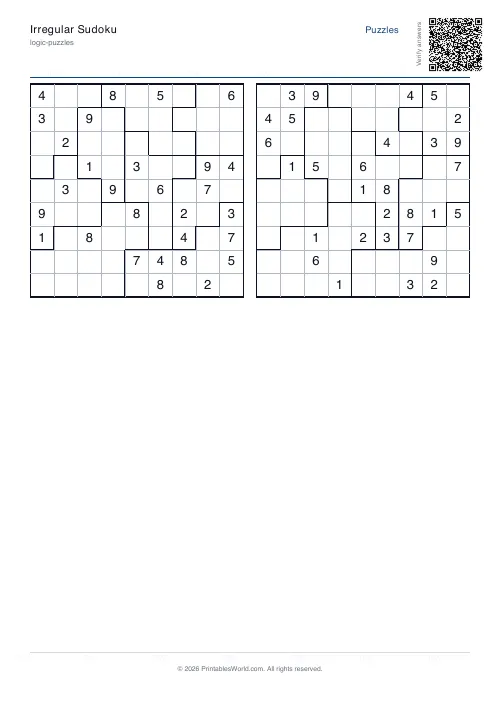
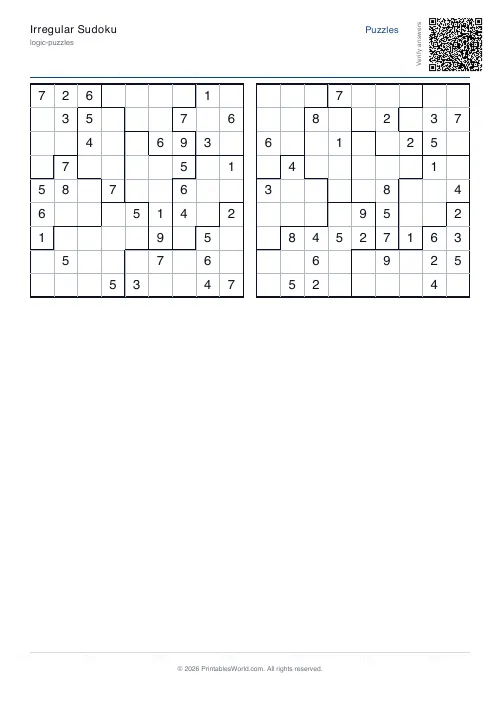
Jigsaw sudoku: the nine regions are irregular nine-cell shapes rather than 3×3 boxes. Every row, every column and every region holds 1 to 9. Up to four puzzles a page, solutions optional.
People also used
Feedback
Spotted something off with this tool?
Same rules, different regions
Rows and columns behave exactly as they do in ordinary sudoku. The third constraint is what changes. Instead of nine square boxes, the grid is cut into nine interlocking shapes of nine cells each, outlined with a heavier border.
Every one of those regions must contain the digits 1 to 9 once each, like a box.
Why it feels harder than it looks
Because the technique you rely on stops being reliable.
On a standard grid, scanning a box means checking a tidy 3×3 block: three rows crossed with three columns, and the intersections are obvious. A jigsaw region can span five rows and four columns, wander round a corner and come back. Working out which cells it actually covers takes deliberate attention every single time, and the eye gives you no help at all.
That extra effort is the whole appeal. The deductions are the same ones you already know; the bookkeeping is harder.
The technique that jigsaw rewards
Region-to-row and region-to-column interaction, far more than on a standard grid.
When a region covers most of one row, the digits it still needs are heavily constrained by what that row already holds — and because the shapes are ragged, these overlaps are lopsided in ways that produce forced placements a square box never would. A region with five cells in one row and one in another is a very strong clue and it appears constantly.
Look for the regions that are nearly linear. They are where the board opens up.
How these boards are built
The region map is fixed — nine contiguous nine-cell shapes, only six of whose 81 cells line up with the ordinary 3×3 grid.
Each board starts from a completed grid that satisfies all three constraints, with the digits relabelled at random. Givens are then removed one at a time and the puzzle re-solved under the jigsaw rule after every removal — if a second solution appears, the digit goes straight back. Every printed puzzle therefore has exactly one answer, and most ship with 31 or 32 givens.
Digit relabelling gives 362,880 arrangements of the same underlying grid, with different cells revealed each time. The region shapes stay the same from sheet to sheet, which is normal for this variant — published jigsaw sudoku usually keeps one layout per book too.
Coming to it from standard sudoku
Nothing you know is wrong here. Singles, hidden singles, pairs, pointing pairs — all of it transfers, with "box" replaced by "region" throughout.
Expect to be slower. An experienced solver's first jigsaw usually takes two or three times as long as a standard puzzle of similar difficulty, almost entirely because reading the regions is unfamiliar. That gap closes quickly.
What the generator asks for
Puzzles per page, from one to four, the solutions page, and a seed. A4 or US Letter.
Two to a page keeps the region outlines clearly readable, which matters more here than on a standard grid — if you cannot see where a region ends, you cannot solve it.
Print at 100% on A4 or US Letter.
FAQs
Quick answers
What changes from standard sudoku?
The 9 regions are irregular shapes instead of 3x3 boxes. Rows, columns and regions still need 1-9.
Are the region shapes always the same?
In v1 we use one fixed irregular partition for all puzzles to keep the layout printable.
How many per page?
Two grids per page.
Other variants?
Try Arrow, Thermo, or Diagonal Sudoku.
Related tools
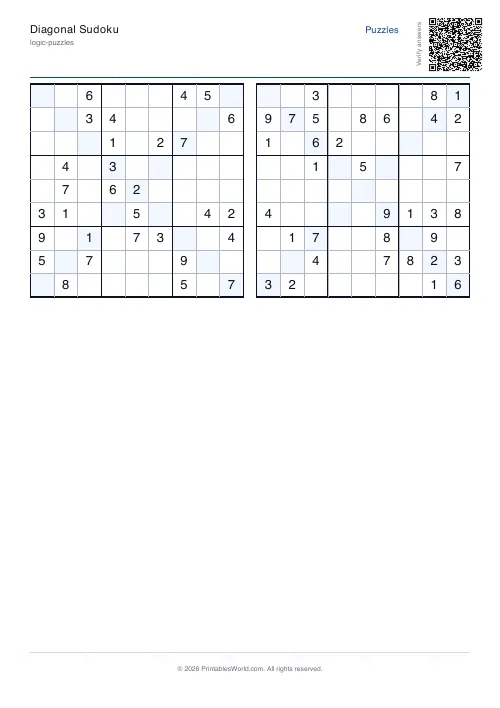
Diagonal Sudoku
Standard Sudoku with the added constraint that diagonals must contain 1-9.
Arrow Sudoku
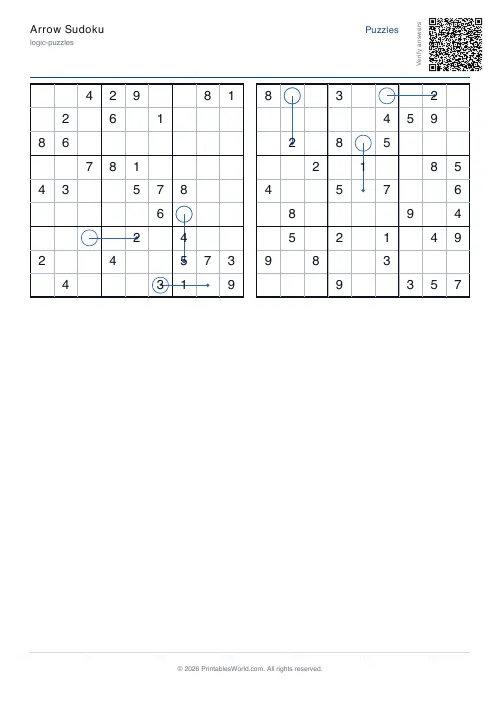
Sudoku variant where digits along arrows must sum to the circle digit.
Sudoku Generator
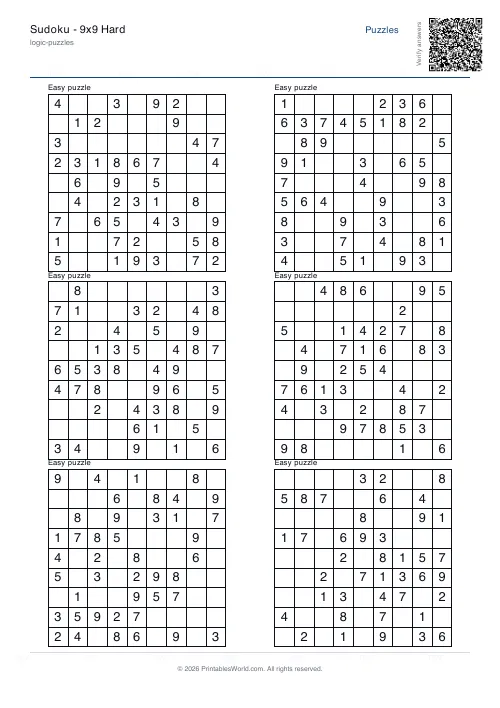
Generate printable Sudoku puzzles with six per page, multiple difficulty levels, and optional solutions.
Samurai Sudoku
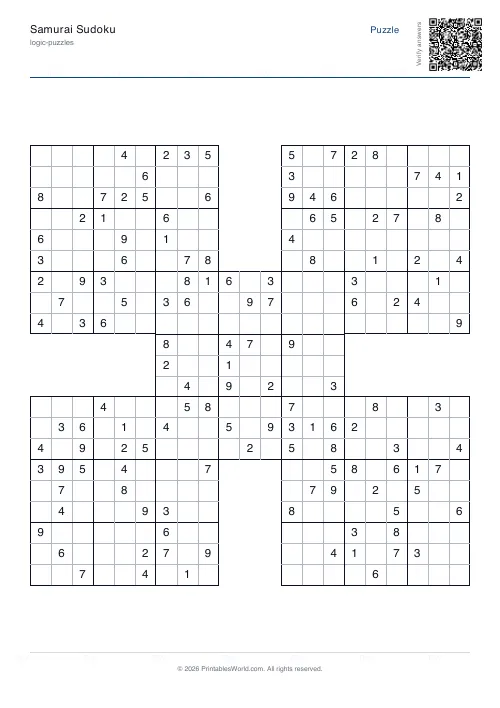
Five overlapping 9x9 Sudoku grids sharing corner regions.
Further reading
Logic Puzzles
How to solve Sudoku: a beginner's step-by-step guide
Four techniques, learned in order, solve almost every easy and medium Sudoku: scanning, the last free cell, pencil marks and naked pairs. Here is each one with a worked example.
6 min read
Logic Puzzles
Kakuro, killer sudoku and other number puzzles explained
If sudoku has stopped being a challenge, these are the natural next steps. And unlike sudoku, most of them genuinely involve arithmetic.
5 min read
Puzzles & Brain Games
Sudoku for kids: which difficulty to start at, by age
A practical guide to picking the right sudoku difficulty for a child by age, with a copyable first session and free printable grids in seconds.
7 min read