Logic Puzzles
KenKen — 6x6
Six-by-six KenKen with all four arithmetic operations.
Last updated:
What this tool does
6x6 KenKen puzzles using +, −, × and ÷ across cages. Place 1 to 6 in each row and column so every cage hits its target. Two puzzles per page with optional solutions.
Free downloads
Ready-made Kenken Puzzle printables — free PDF downloads
No setup needed — download these print-ready kenken puzzles as free PDFs. Each one was made with the generator above, so you can recreate or fully customize any of them.
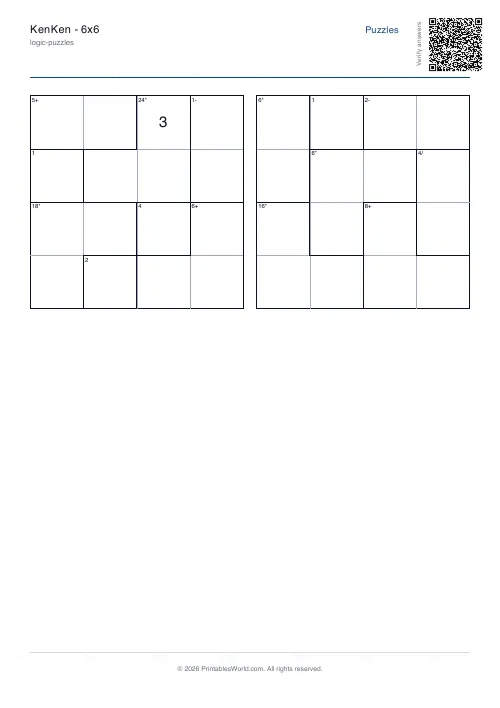
Kenken Puzzle — 4x4
Print-ready kenken puzzle (4x4) as a free PDF — made with the generator above so you can tweak and reprint.
↓ Download PDF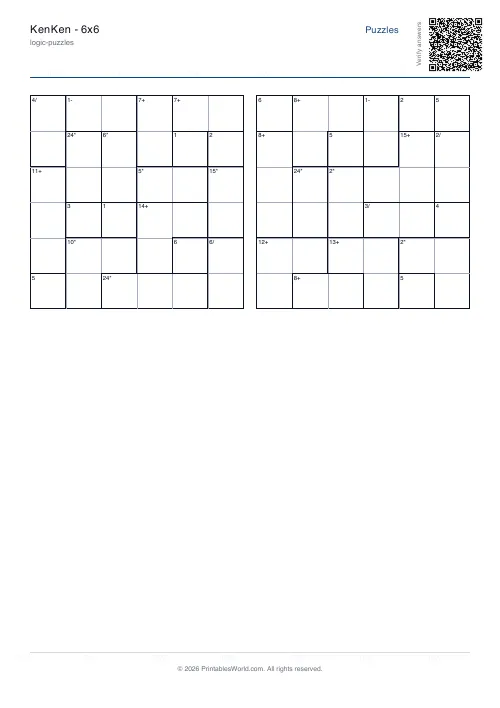
Kenken Puzzle — 6x6
Print-ready kenken puzzle (6x6) as a free PDF — made with the generator above so you can tweak and reprint.
↓ Download PDF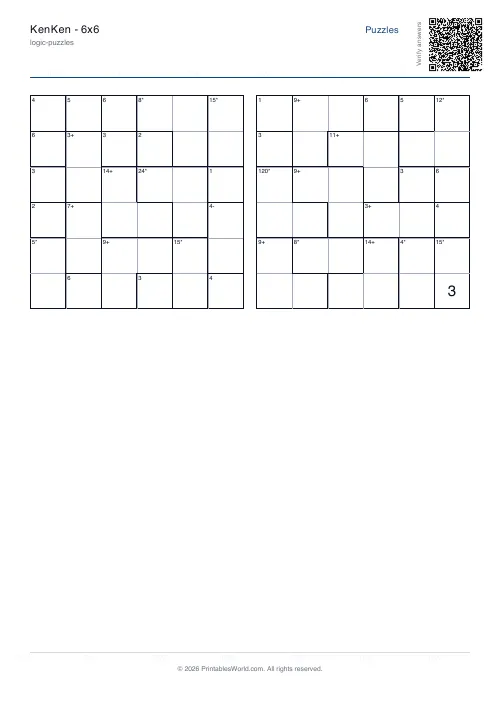
Kenken Puzzle — No division
Print-ready kenken puzzle (No division) as a free PDF — made with the generator above so you can tweak and reprint.
↓ Download PDF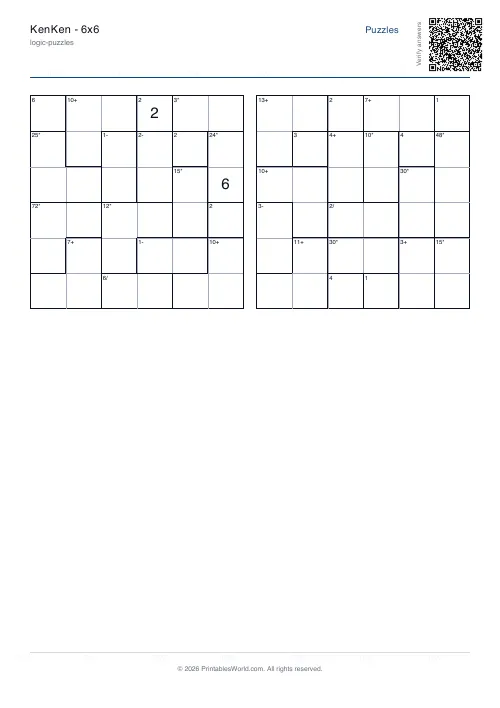
Kenken Puzzle — With division
Print-ready kenken puzzle (With division) as a free PDF — made with the generator above so you can tweak and reprint.
↓ Download PDF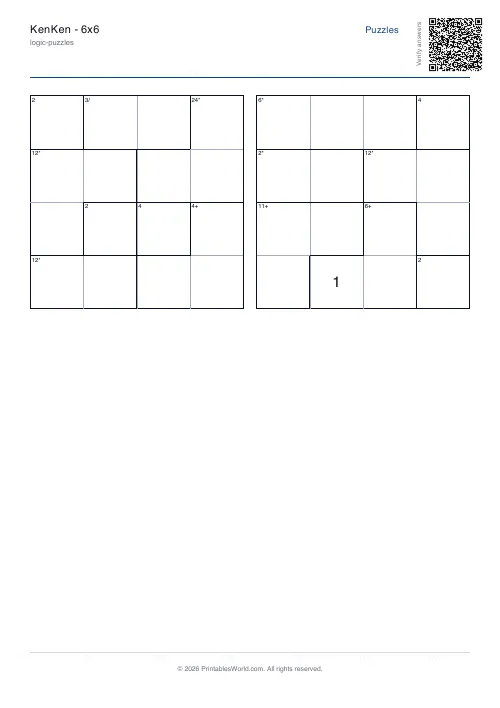
Kenken Puzzle — 4x4, with answer key
Completed answer key for the 4x4 kenken puzzle — print-ready PDF for fast marking.
↓ Download PDF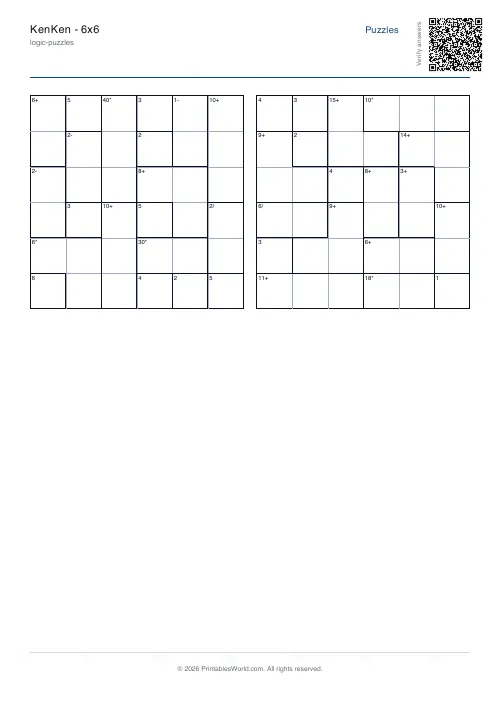
Kenken Puzzle — 6x6, with answer key
Completed answer key for the 6x6 kenken puzzle — print-ready PDF for fast marking.
↓ Download PDF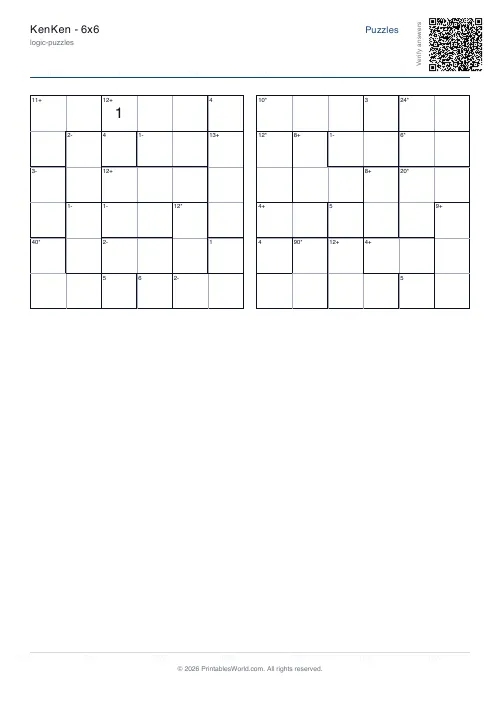
Kenken Puzzle — No division, with answer key
Completed answer key for the No division kenken puzzle — print-ready PDF for fast marking.
↓ Download PDF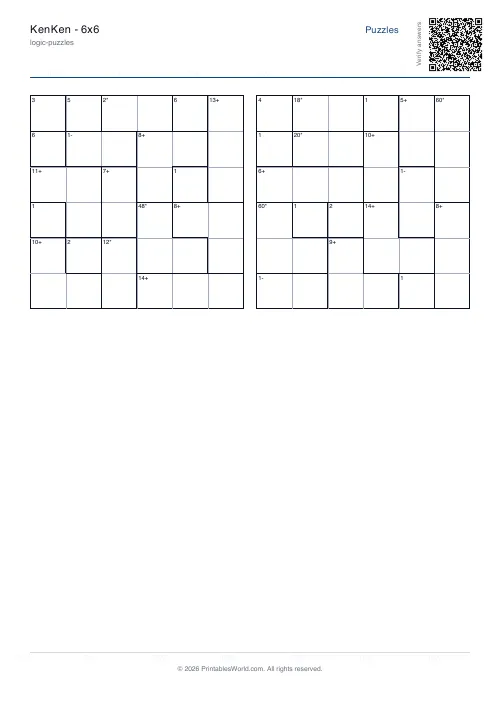
Kenken Puzzle — With division, with answer key
Completed answer key for the With division kenken puzzle — print-ready PDF for fast marking.
↓ Download PDF
Settings
Customize your KenKen sheet
2 6x6 KenKen per PDF on A4.
Size
Paper size
Preview
Sample puzzle
Latin-square grid with arithmetic cages.
People also used
Feedback
Spotted something off with this tool?
Printable 6x6 KenKen Puzzles with All Four Operations
The 6x6 KenKen grid is where the puzzle stops being a taster and starts being a serious brain-training workout. You place digits 1 to 6 in every row and column, and each bold-outlined cage combines its digits using addition, subtraction, multiplication or division to hit a printed target.
This generator produces print-ready 6x6 KenKen puzzles in A4 or US Letter PDF format, with two puzzles per page so cage labels stay readable. Optional solutions are included on a separate sheet. A 6x6 board typically takes ten to twenty minutes to solve, which is perfect for a commute, a coffee break, a travel puzzle or a long waiting-room visit.
KenKen at this size stretches pattern recognition, deductive reasoning and mental arithmetic across the full set of operations. It is especially satisfying for adults who already enjoy Sudoku and want a richer logic experience.
How the 6x6 KenKen rules work
Every row and column must contain the digits 1 to 6 exactly once. The grid is broken into cages; each cage carries a target number and one of the four arithmetic operations.
- Addition (+): digits in the cage add up to the target.
- Subtraction (−): the positive difference between the two digits equals the target.
- Multiplication (×): digits in the cage multiply to the target.
- Division (÷): the larger digit divided by the smaller equals the target.
Subtraction and division cages always contain exactly two cells. Addition and multiplication cages may span two or three cells. Single-cell cages are forced to their target digit.
Who 6x6 KenKen is for
Beginners
Work through some 4x4 puzzles first. Once two-cell multiplication and division cages feel natural, you are ready for the 6x6.
Puzzle enthusiasts
This is the classic KenKen size for serious solvers. Factor pairs, Latin-square interactions and multi-cell combinations make for rich deduction chains.
Classroom teachers
6x6 KenKen is excellent for older pupils learning to be fluent with all four operations. Two puzzles per page suits a focused activity with plenty of thinking room.
Parents
A pair of 6x6 puzzles sits nicely between dinner and bedtime, or fills the quiet part of a long flight. The difficulty is just right for teens and adults to solve together.
What you can customise
- Grid size: fixed at 6x6 for this preset.
- Puzzle count: two per page to keep cage labels clear.
- Allow division: leave on for the full four-operation experience.
- Include solutions: add a separate answer page.
- Seed: reproduce the same set on demand.
- Paper size: A4 or US Letter PDF output.
Worked example
Imagine a two-cell cage with target 12×. The pair of digits must be factors of 12 drawn from 1 to 6. The options are {2, 6} and {3, 4}. Another two-cell cage shows 3÷. The digits must have a ratio of 3, which means {1, 3}, {2, 6} is also possible. Latin-square constraints plus overlaps with other cages normally narrow these options down to one pair each.
Three-cell cages are more forgiving. A 10+ three-cell cage in a 6x6 has many combinations, so you often leave it pending until row and column constraints whittle the options down.
How to use the tool
- Confirm the 6x6 preset.
- Choose the puzzle count (two per page by default).
- Keep “allow division” on for all four operations.
- Decide whether to include the solutions page.
- Select A4 or US Letter paper.
- Click Generate and preview the puzzles.
- Download the PDF and print at 100% scale.
Methodology
The generator starts from a complete 6x6 Latin square. It then groups cells into cages sized between one and three cells, selects an operation compatible with each cage shape (subtraction and division only for two-cell cages), and computes the target from the digits inside. The puzzle prints only the cage outlines, targets and operations; the filled Latin square becomes the optional solution page.
Tips for solving
- Begin with forced singles and extreme cage targets. A 6÷ two-cell cage must be {1, 6}.
- List factor pairs for every multiplication cage before you start placing digits.
- Remember that cages do not forbid a digit appearing twice in the same cage when they span more than one row or column (only the Latin-square rule forbids repeats in a row or column).
- Use pencil candidates liberally. 6x6 boards reward careful tracking more than raw speed.
Designed for A4 and US Letter printing
6x6 KenKen puzzles print cleanly on both A4 and US Letter. Two puzzles per page keeps cage labels small but legible, and leaves plenty of space to write in each cell.
Why 6x6 KenKen is such a satisfying brain training puzzle
6x6 KenKen sits in a sweet spot for dedicated solvers. It is large enough to demand genuine planning, yet small enough that you can hold most of the candidate information in your head. That balance makes it a surprisingly relaxing puzzle to sink into on a quiet evening or a long train journey.
Multiplication and division cages bring the best kind of pattern recognition into play. Solvers quickly learn to read a cage label like 30× and immediately think of the factor pairs in 1 to 6, or a 2÷ and think of ratio pairs. That mental library of small combinations is exactly the sort of numerical fluency that supports mental arithmetic more broadly, which is one reason KenKen is often recommended by maths teachers.
Related logic puzzles
FAQs
Quick answers
How tough is the 6x6 grid?
A solid challenge — division cages mean you sometimes have to consider factor pairs, not just sums.
Why two per page?
The bigger grid plus cage labels need more room; two per page keeps both clear.
Are all four operations always present?
Cages are sized 1-3 cells; we mix + and × on three-cell cages and any of +, −, ×, ÷ on two-cell cages when allowed.
Want something easier?
Try the 4x4 KenKen first.
Related tools
More like this
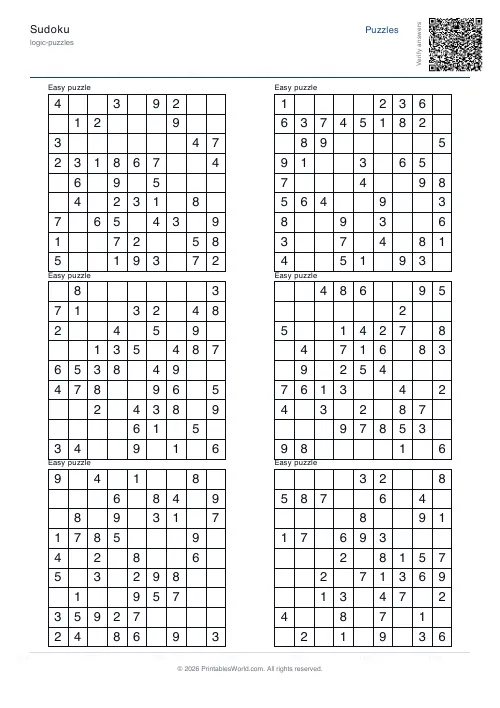 Sudoku Generator
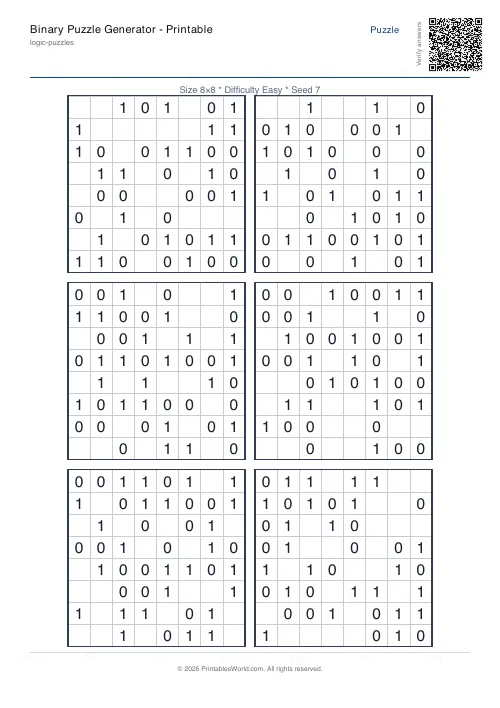 Binary Puzzle Generator — Printable
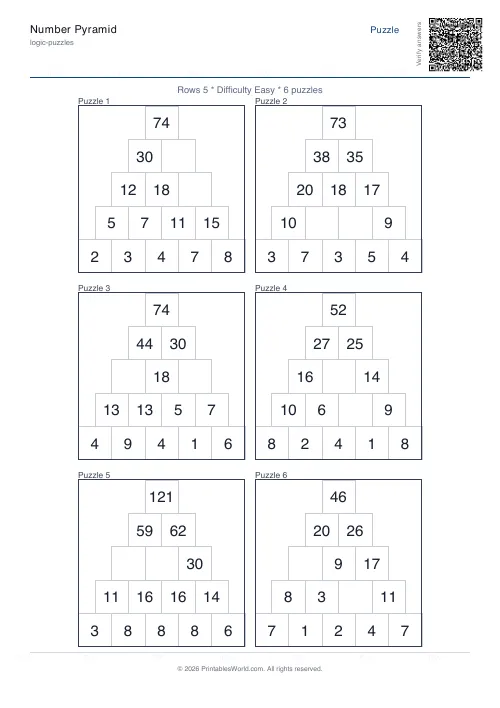 Number Pyramid Generator
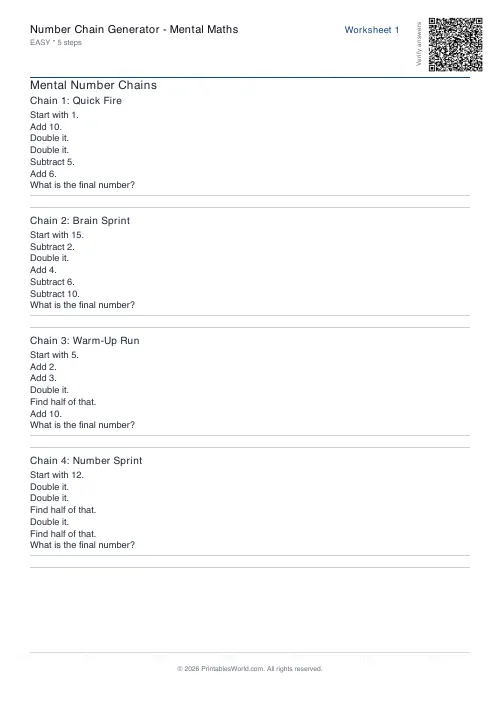 Number Chain Generator — Mental Maths
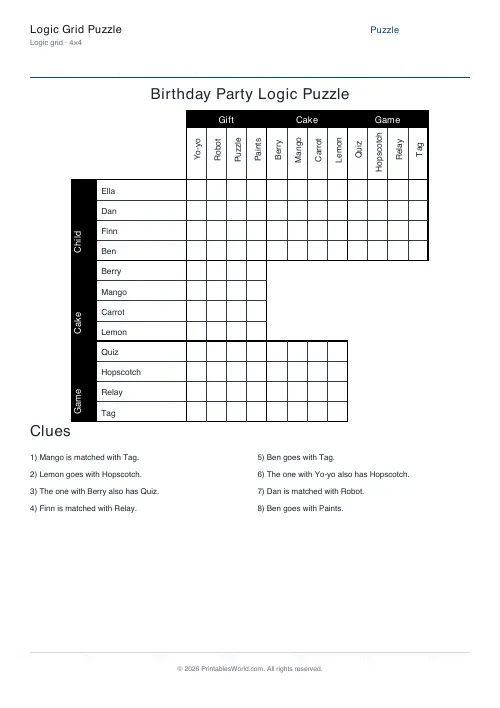 Logic Grid Puzzle Generator — Printable
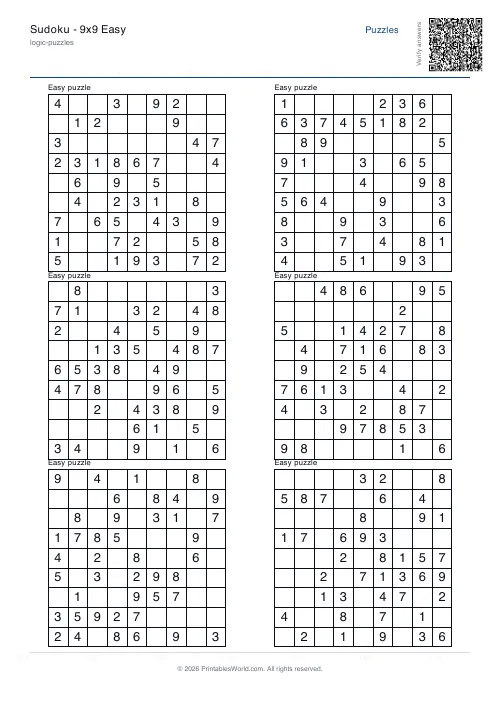 Sudoku — 9x9 Easy
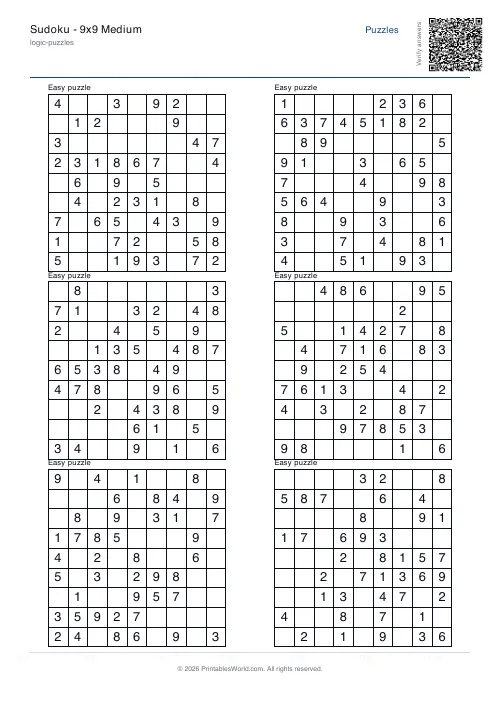 Sudoku — 9x9 Medium
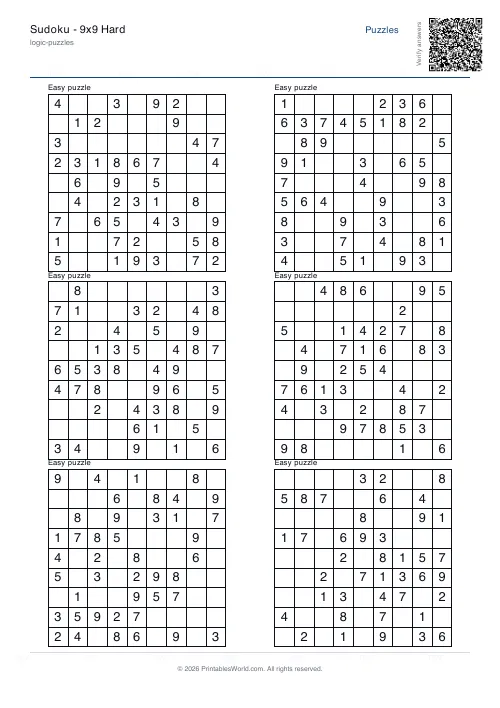 Sudoku — 9x9 Hard
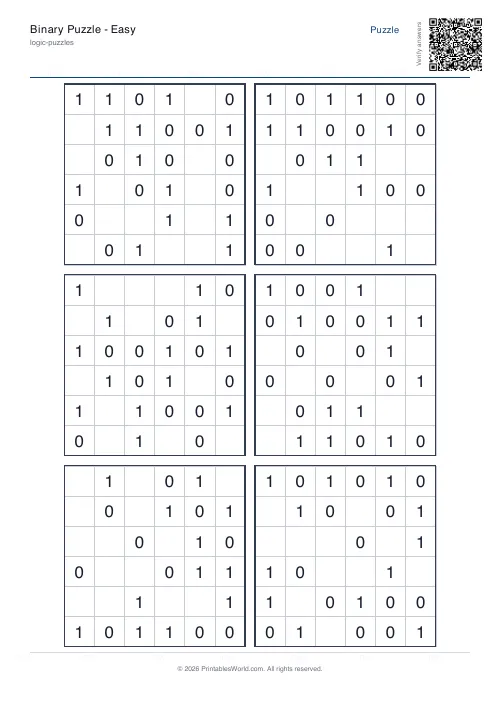 Binary Puzzle — Easy
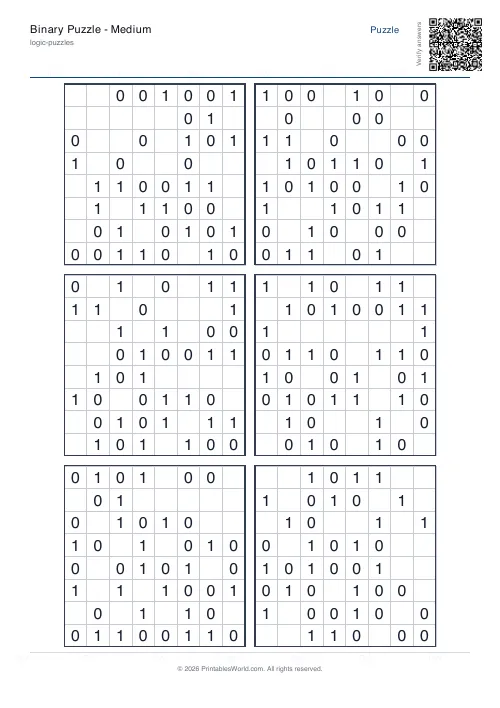 Binary Puzzle — Medium
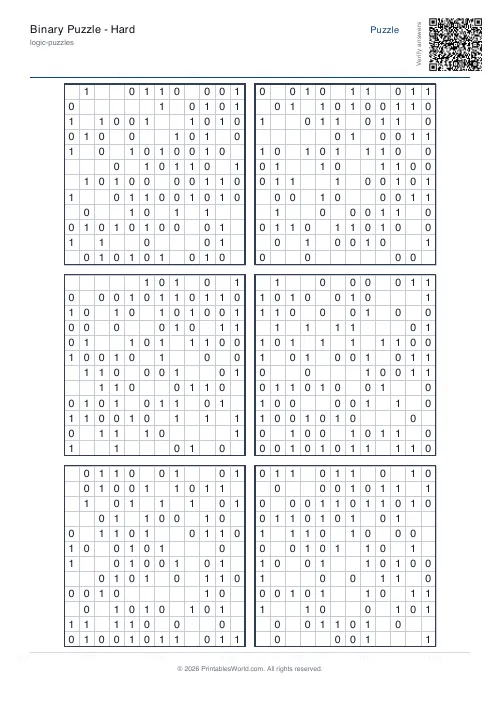 Binary Puzzle — Hard
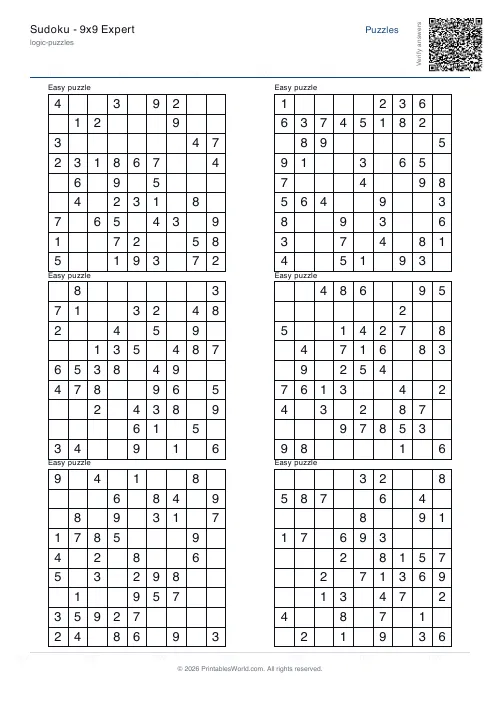 Sudoku — 9x9 Expert
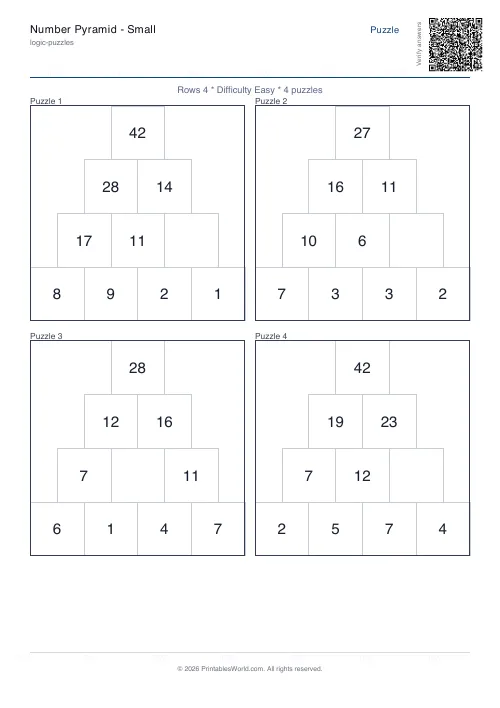 Number Pyramid — Small
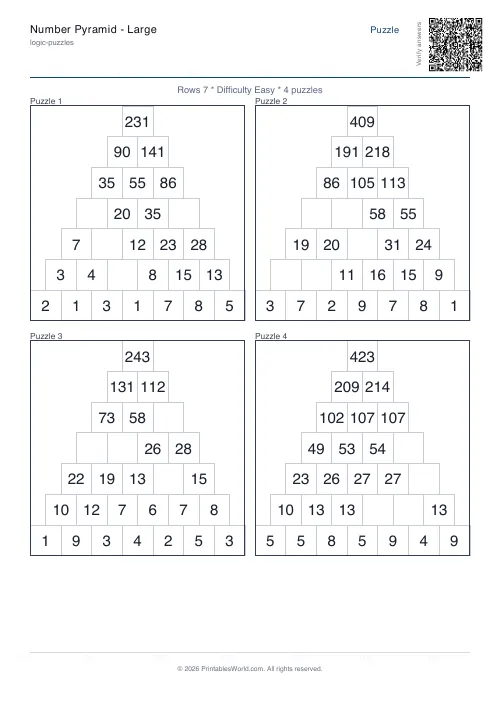 Number Pyramid — Large