Printable Paper
Primary Lined Paper — Dotted
Three-line primary ruling with a dotted midline for early writing.
Last updated:
What this tool does
Three-line primary ruled paper — top line, dotted midline, and baseline — the classic format for early handwriting practice. The midline guides letter heights and the baseline keeps writing aligned.
Free downloads
Ready-made Lined Paper printables — free PDF downloads
No setup needed — download these print-ready lined paper as free PDFs. Each one was made with the generator above, so you can recreate or fully customize any of them.
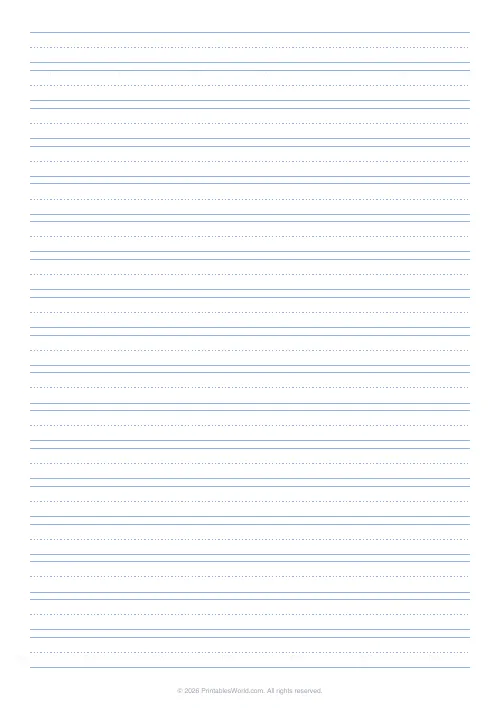
Lined Paper — 6.35 mm (narrow ruled)
Print-ready lined paper (6.35 mm (narrow ruled)) as a free PDF — made with the generator above so you can tweak and reprint.
↓ Download PDF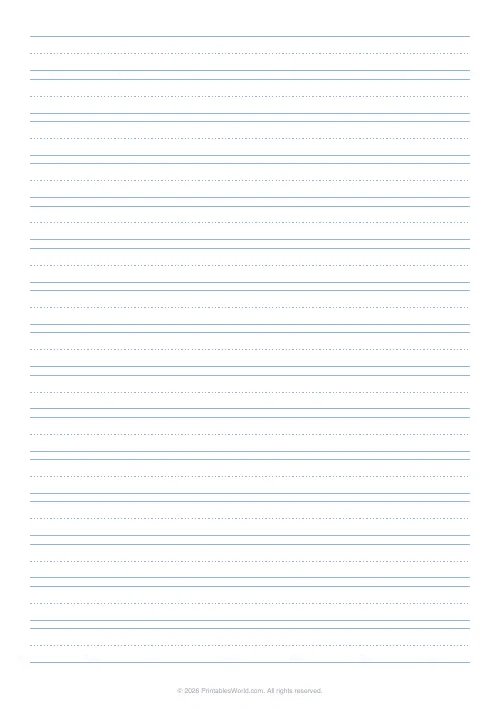
Lined Paper — 7.1 mm (college ruled)
Print-ready lined paper (7.1 mm (college ruled)) as a free PDF — made with the generator above so you can tweak and reprint.
↓ Download PDF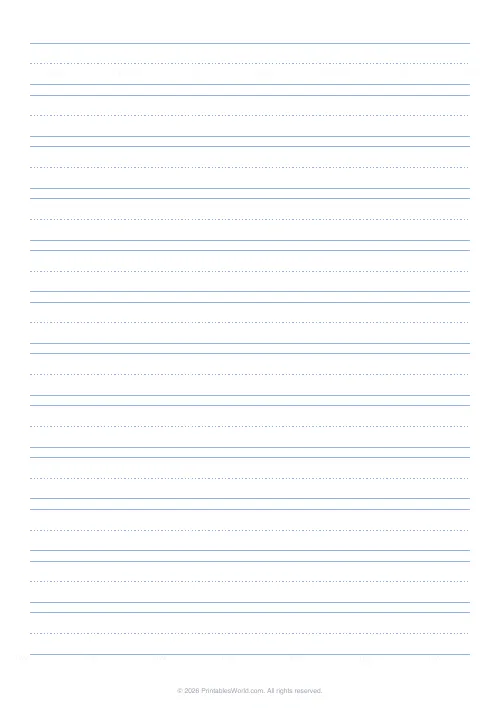
Lined Paper — 8.7 mm (wide ruled)
Print-ready lined paper (8.7 mm (wide ruled)) as a free PDF — made with the generator above so you can tweak and reprint.
↓ Download PDF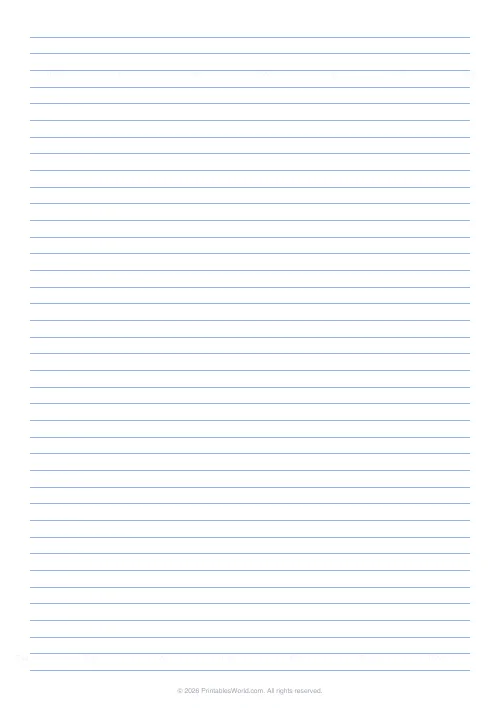
Lined Paper — Plain ruled
Print-ready lined paper (Plain ruled) as a free PDF — made with the generator above so you can tweak and reprint.
↓ Download PDF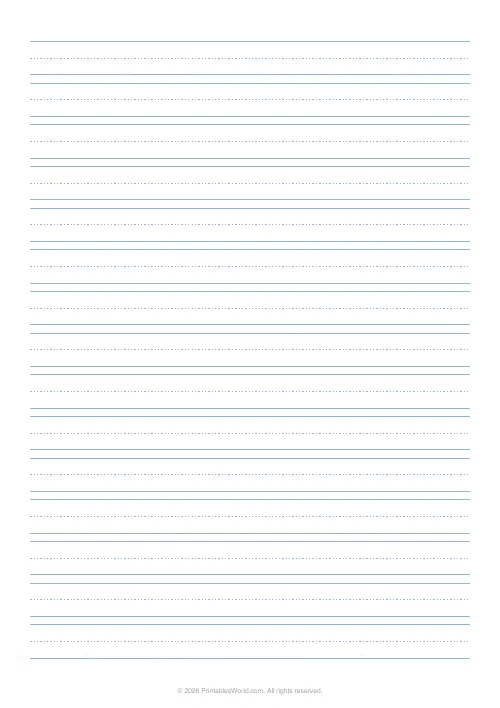
Lined Paper — Primary (three-line)
Print-ready lined paper (Primary (three-line)) as a free PDF — made with the generator above so you can tweak and reprint.
↓ Download PDF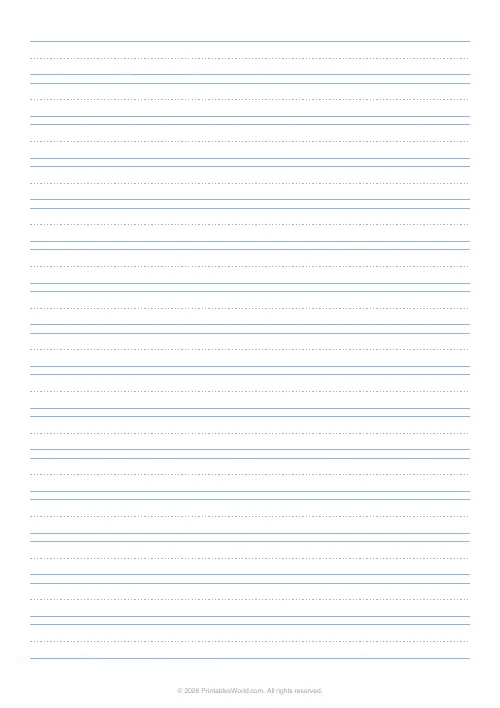
Lined Paper — With margin line
Print-ready lined paper (With margin line) as a free PDF — made with the generator above so you can tweak and reprint.
↓ Download PDF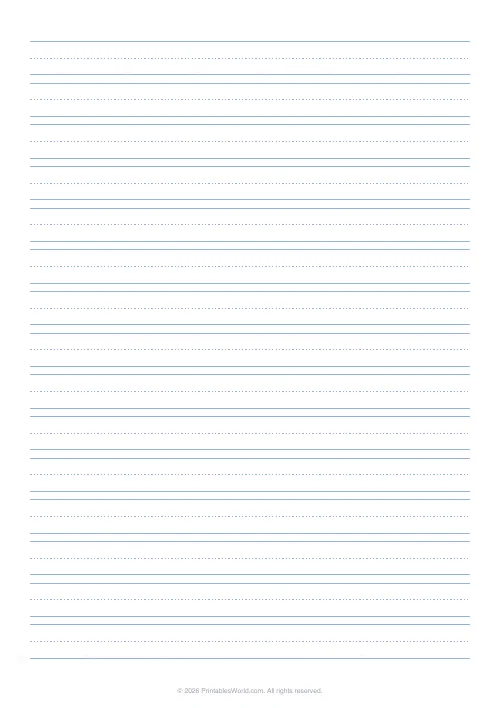
Lined Paper — No margin
Print-ready lined paper (No margin) as a free PDF — made with the generator above so you can tweak and reprint.
↓ Download PDF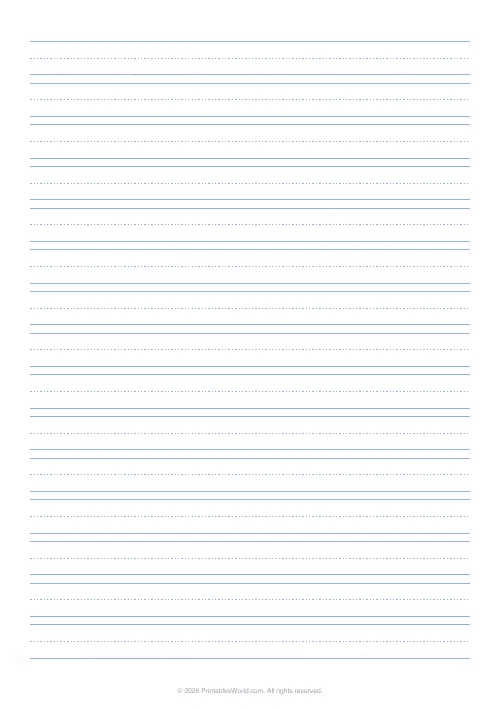
Lined Paper — Blue
Print-ready lined paper (Blue) as a free PDF — made with the generator above so you can tweak and reprint.
↓ Download PDF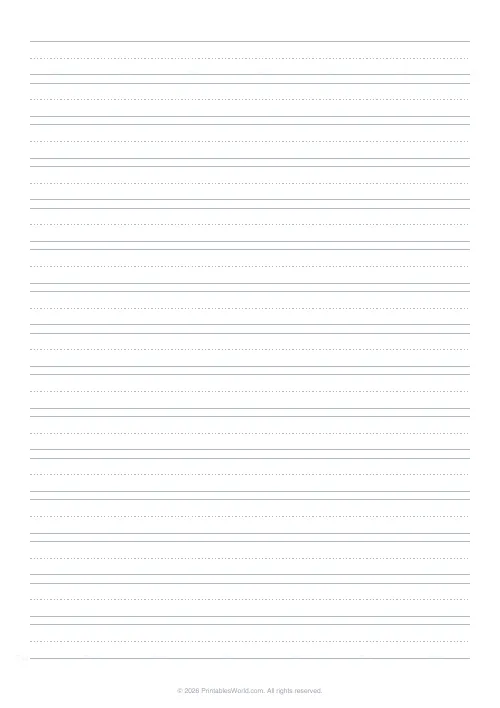
Lined Paper — Gray
Print-ready lined paper (Gray) as a free PDF — made with the generator above so you can tweak and reprint.
↓ Download PDF
Settings
Customize your lined paper
7 mm spacing on A4 paper, light blue lines with a dotted midline.
Line weight
Line colour
Paper size
Preview
Sample sheet
On-screen mock of the chosen pattern. The PDF prints at exact millimetre spacing.
People also used
Lined Paper — Wide Ruled
Wide-ruled lined paper (8.7 mm) for early writers.
Handwriting Practice Generator
Create custom 4-line handwriting practice sheets with trace rows, adjustable guides, and your own text.
Alphabet Tracing — Uppercase
Trace all 26 uppercase letters with practice lines beneath each row.
Feedback
Spotted something off with this tool?
Printable Primary Lined Paper with a Dotted Midline for Early Handwriting
Primary ruled paper — sometimes called dotted thirds, three-line ruling, or writing lines — is the classic format for teaching letter formation. Each row has a top line, a dotted midline, and a baseline, creating two zones: an ascender zone above the midline and a body zone below. The dotted midline guides the height of lowercase letters (a, c, e, m, n, o all stop there) while the top line catches ascenders (b, d, h, k, l). Download a print-ready PDF in A4 or US Letter to support handwriting practice at home and at school.
For linked handwriting practice with traceable letters, try the Handwriting Practice Generator. For standard single-line paper, use the Lined Paper Generator.
Why three-line (dotted thirds) paper?
Early writers need more than one line to learn consistent letter shapes. With a single baseline, children cannot see how tall a lowercase letter should be; with two solid lines, every letter tends to stretch to the top. The dotted midline compromises elegantly: it tells the child where the body of the letter ends, without forcing ascender letters to overshoot. Use primary ruled paper for:
- Reception and Year 1 handwriting lessons
- US kindergarten and Grade 1 penmanship
- occupational therapy for children with fine-motor challenges
- home handwriting routines
- dyslexia-friendly writing practice
- English-as-an-additional-language letter formation
- adult learners returning to handwriting
What is on the page
Each row of the template consists of:
- A top line (solid) marking the height of ascenders and capitals.
- A dotted midline halfway down, marking the x-height of lowercase letters.
- A baseline (solid) where letters sit.
- A small gap before the next row begins, to leave space for descenders (g, j, p, q, y) below the baseline.
Row height is about 14 mm from top line to baseline, with the dotted midline at 7 mm. The full row-plus-gap repeats at a pitch that keeps writing legible without feeling sparse.
Who this paper is for
Students
Early-years learners aged roughly 4 to 7 benefit most. The dotted midline acts as training wheels for letter-size control.
Designers & makers
Typographers and lettering artists use three-line rulings to practise calligraphic hands and to demonstrate x-height, cap height, and ascender height.
Teachers
Primary school teachers use three-line paper for the whole phonics-to-handwriting sequence. Print class sets in minutes instead of photocopying from a worn master sheet.
Hobbyists
Adults who want to improve their handwriting find three-line paper a calmer way to retrain consistent letter heights than single-line paper.
How to use the tool
- Leave spacing at 7 mm (the default midline height), or increase for larger letters.
- Choose A4 or US Letter.
- Click Generate.
- Preview and confirm the row height suits the learner.
- Download and print at 100% scale.
If the child is writing more confidently, graduate them to Wide Ruled Lined Paper at 8.7 mm and eventually to College Ruled Lined Paper at 7.1 mm.
Worked example
A Year 1 teacher wants to introduce lowercase letter formation for a group of children whose letters currently vary wildly in size. She prints the primary-ruled template in A4 with default 7 mm body height. Each row then accommodates roughly 6 mm of x-height body and 6 mm of ascender space, giving a comfortable 12 to 14 mm between baselines. At the start of each row she prints a model letter in light grey; children trace it once and then write five more in the rest of the row. The dotted midline helps the group stop lowercase letters at the correct height.
Methodology
The template draws three ruled elements per row: a solid top line, a dotted midline (a short-dashed pattern chosen to be visible without competing with the child's pencil work), and a solid baseline. The row height is set in millimetres so the writing zone is always a predictable size regardless of paper format. The midline sits at exactly half the row height, matching conventional dotted-thirds paper used in schools.
Every PDF passes through the shared printable-paper template, so branding and QR placement remain consistent across all paper templates.
Designed for A4 and US Letter printing
Row height stays the same on both paper sizes — only the number of rows per page changes. Print at 100% scale so the writing zones remain the size you set.
Tips for teaching handwriting with primary paper
- Start with the easiest letter families: straight lines (l, t, i), curves (c, o, a), and hills (m, n, h).
- Demonstrate letter formation on a large version of the ruling, then shrink to the child's paper.
- Encourage children to say the starting point aloud: "top line for tall letters, dotted line for small letters".
- Use a grey model letter at the start of each row for children to trace before writing their own.
- Praise consistent height more than perfect shape — the midline is the primary teaching target.
Related printable paper tools
- Handwriting Practice Generator — traceable word and letter practice
- Wide Ruled Lined Paper — single-line 8.7 mm ruling for the next step
- College Ruled Lined Paper — 7.1 mm for older students
- Lined Paper Generator — customisable ruling
FAQs
Quick answers
What is the dotted midline for?
It guides the height of lowercase letters — a, c, e, m, n, o all stop at the dotted line, while b, d, h, etc. reach the top line.
How tall is each row?
About 14 mm from top line to base, with the dotted midline halfway, plus a small gap to the next row.
Is this good for ages 4–7?
Yes — three-line ruling is the classic format for early years handwriting practice.
Can I add a margin guide?
The primary ruling has no margin guide by default. Use the standard wide-ruled lined paper if you need one.
Related tools
Lined Paper — Wide Ruled
Wide-ruled lined paper (8.7 mm) for early writers.
Handwriting Practice Generator
Create custom 4-line handwriting practice sheets with trace rows, adjustable guides, and your own text.
Alphabet Tracing — Uppercase
Trace all 26 uppercase letters with practice lines beneath each row.
Genko Yoshi Paper
Japanese manuscript paper for writing kana and kanji.