Math Worksheets
Addition Worksheets — Double Digit
Printable double-digit addition practice (10–99).
Last updated:
What this tool does
Double-digit addition practice. Problems are drawn from two-digit numbers (10–99) so learners practise column addition and regrouping. Choose blank sheets, answer sheets, or both.
Free downloads
Ready-made Addition Worksheet printables — free PDF downloads
No setup needed — download these print-ready addition worksheets as free PDFs. Each one was made with the generator above, so you can recreate or fully customize any of them.
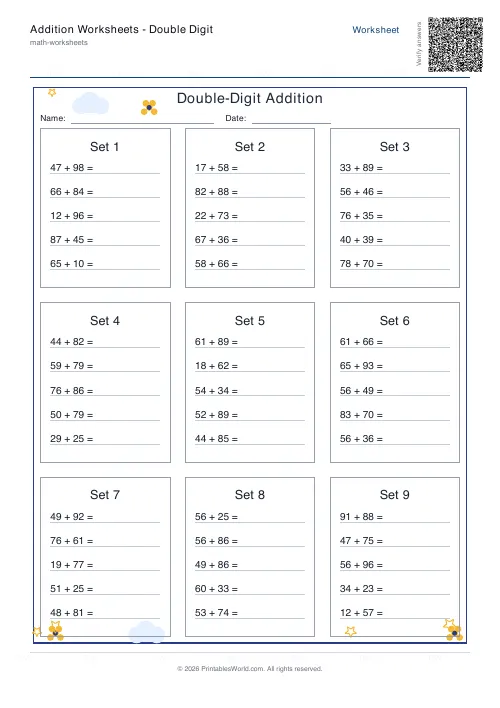
Addition Worksheet — Table style
Print-ready addition worksheet (Table style) as a free PDF — made with the generator above so you can tweak and reprint.
↓ Download PDF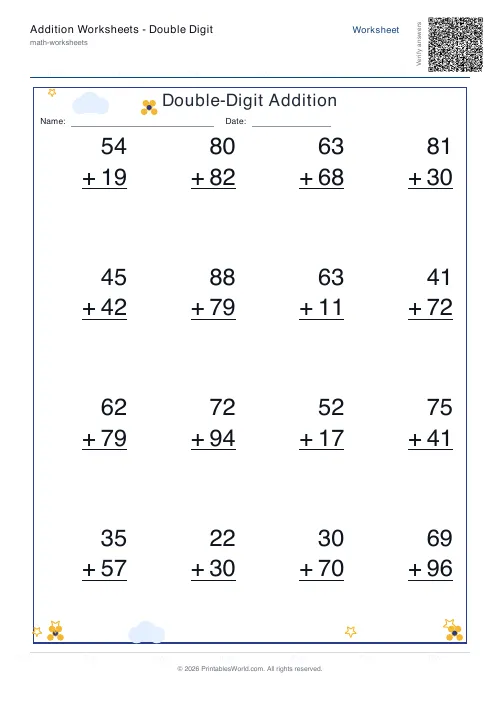
Addition Worksheet — Vertical / line-by-line
Print-ready addition worksheet (Vertical / line-by-line) as a free PDF — made with the generator above so you can tweak and reprint.
↓ Download PDF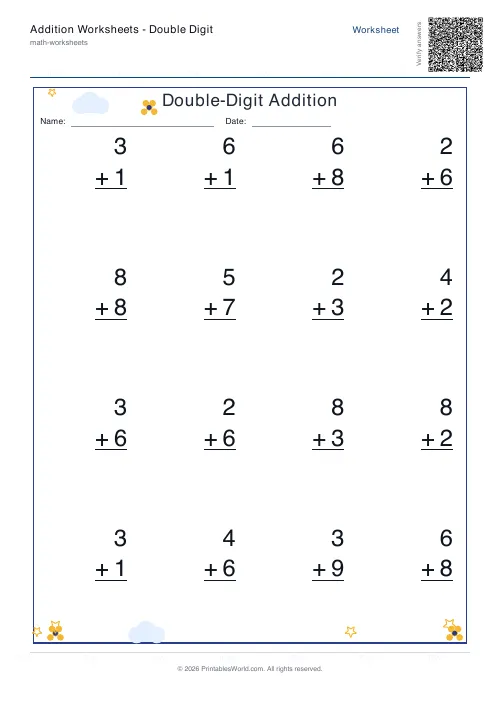
Addition Worksheet — 1-digit
Print-ready addition worksheet (1-digit) as a free PDF — made with the generator above so you can tweak and reprint.
↓ Download PDF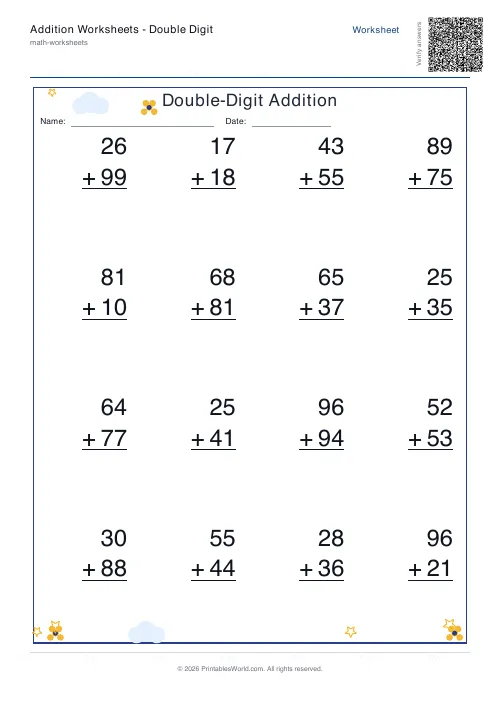
Addition Worksheet — 2-digit
Print-ready addition worksheet (2-digit) as a free PDF — made with the generator above so you can tweak and reprint.
↓ Download PDF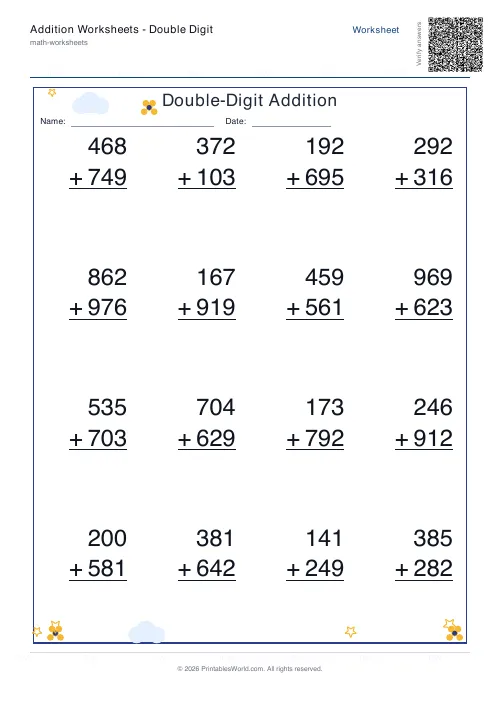
Addition Worksheet — 3-digit
Print-ready addition worksheet (3-digit) as a free PDF — made with the generator above so you can tweak and reprint.
↓ Download PDF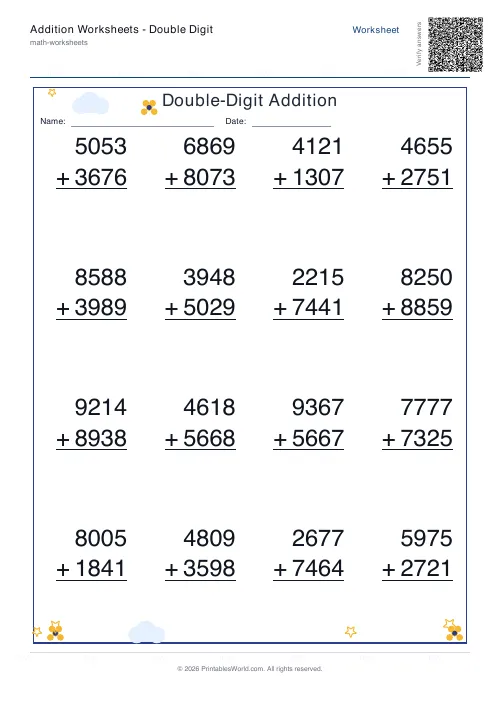
Addition Worksheet — 4-digit
Print-ready addition worksheet (4-digit) as a free PDF — made with the generator above so you can tweak and reprint.
↓ Download PDF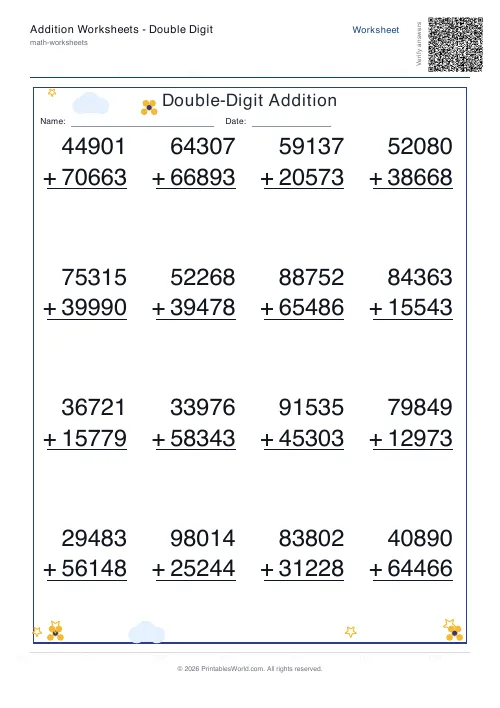
Addition Worksheet — 5-digit
Print-ready addition worksheet (5-digit) as a free PDF — made with the generator above so you can tweak and reprint.
↓ Download PDF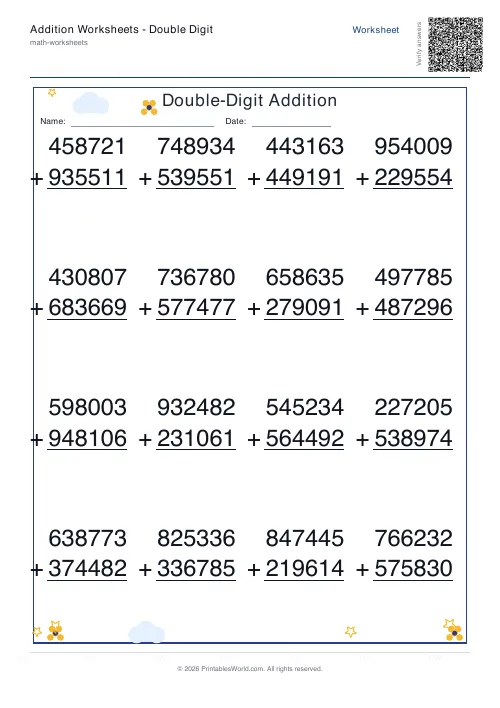
Addition Worksheet — 6-digit
Print-ready addition worksheet (6-digit) as a free PDF — made with the generator above so you can tweak and reprint.
↓ Download PDF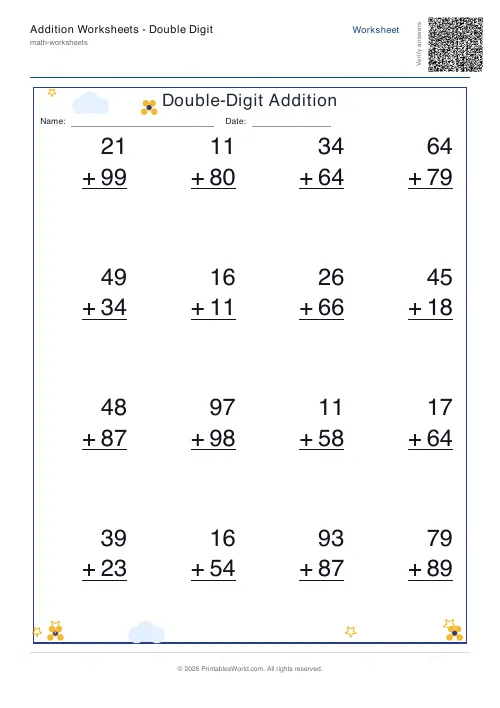
Addition Worksheet — Standard
Print-ready addition worksheet (Standard) as a free PDF — made with the generator above so you can tweak and reprint.
↓ Download PDF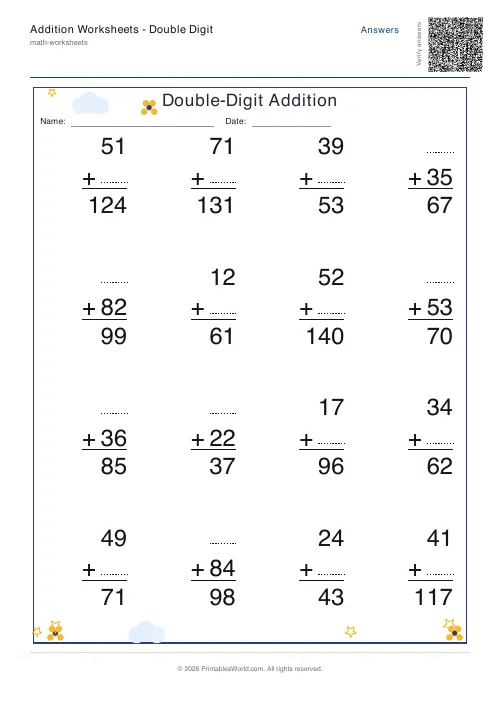
Addition Worksheet — Find the missing number
Print-ready addition worksheet (Find the missing number) as a free PDF — made with the generator above so you can tweak and reprint.
↓ Download PDF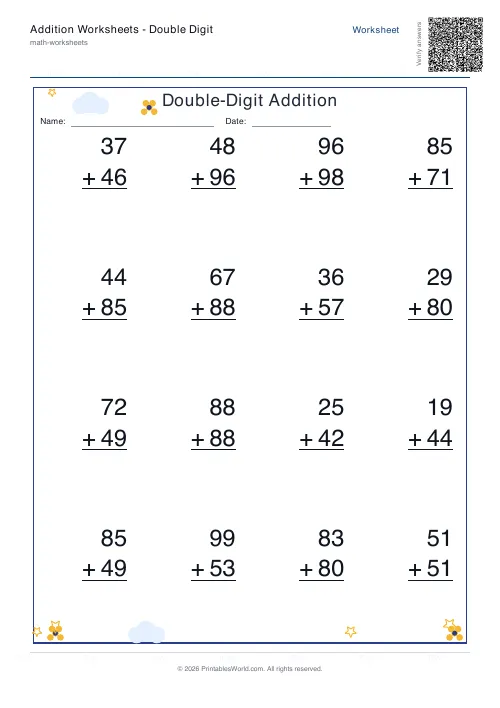
Addition Worksheet — No zero
Print-ready addition worksheet (No zero) as a free PDF — made with the generator above so you can tweak and reprint.
↓ Download PDF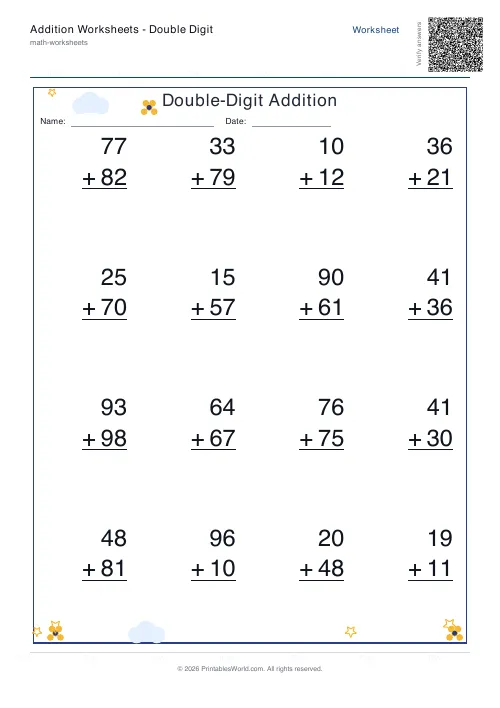
Addition Worksheet — Include zero
Print-ready addition worksheet (Include zero) as a free PDF — made with the generator above so you can tweak and reprint.
↓ Download PDF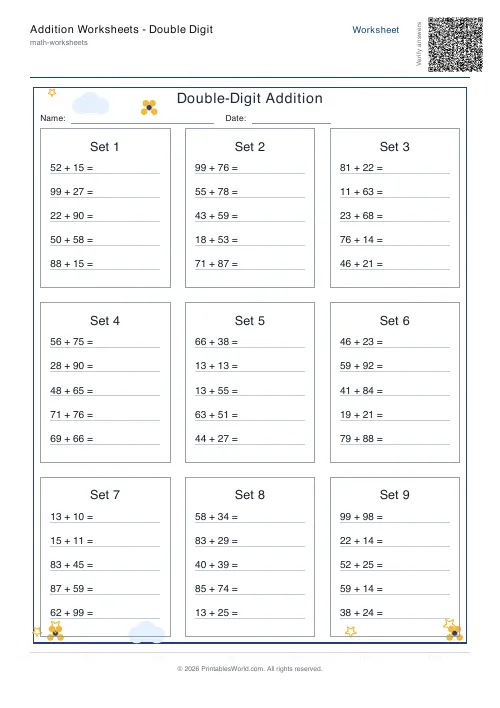
Addition Worksheet — Table style, with answer key
Completed answer key for the Table style addition worksheet — print-ready PDF for fast marking.
↓ Download PDF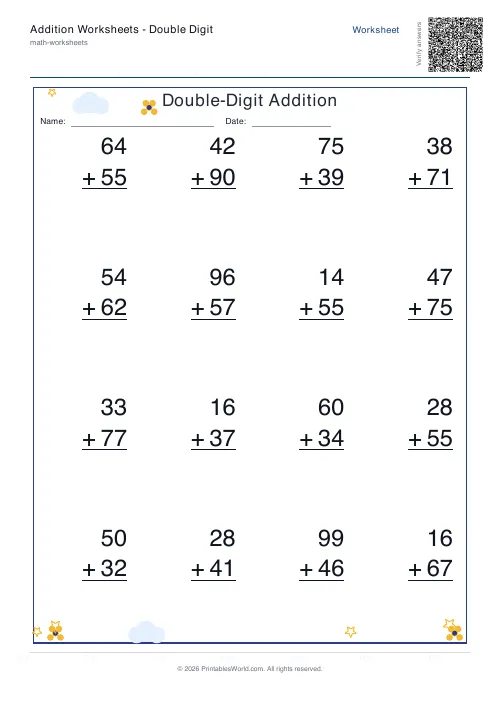
Addition Worksheet — Vertical / line-by-line, with answer key
Completed answer key for the Vertical / line-by-line addition worksheet — print-ready PDF for fast marking.
↓ Download PDF
Settings
Customize your addition worksheet
Line-by-line · none theme · 2-digit · A4
Worksheet style
Output
Paper size
Preview
Live PDF preview
The actual PDF, updated as you change settings.
People also used
Feedback
Spotted something off with this tool?
Create Printable Double-Digit Addition Worksheets for Home and Classroom Use
Build free printable double-digit addition worksheets that match the learner, the regrouping stage, and the worksheet style you prefer.
This generator produces A4 or US Letter PDFs where every addend lies between 10 and 99. That gives you the full range of two-digit sums — from straightforward no-carry problems like 23 + 14 to regrouping drills such as 47 + 58. Download a blank sheet, an answer key, or both in a single PDF.
Teachers, parents, tutors and homeschoolers can use it to make fresh column-addition practice without reusing the same page twice.
Why use this double-digit addition generator?
Double-digit addition is where column layout, place value and regrouping (“carrying”) come together. Learners need plenty of varied practice to lock in the process. This generator supports:
- Year 2 and Year 3 (UK) column-addition work
- Grade 1 and Grade 2 (US) two-digit fluency
- daily homework sheets
- small-group intervention
- pre-test revision
- tutor sessions focused on carrying
- homeschool arithmetic blocks
Because every page is randomised, learners encounter a fresh mix of carry and no-carry problems each time.
What you can customise
- Worksheet style: Table or Line-by-line layout
- Number range: two-digit numbers (10–99) by default, with the end number adjustable if you need an easier 10–50 sheet
- Download type: Blank, Answers, or Both
- Missing question mode: print the total and hide one addend for inverse-operation practice
- Paper type: A4 or US Letter PDF
- Theme style: pick a friendlier visual style when needed
- Font size: Auto or larger for struggling learners
- Worksheet title: use your own heading
- Name and Date fields: handy for classwork and homework
Notes and limitations
- Problems are random, so Blank and Answers match page-for-page only when downloaded together.
- Regrouping is not guaranteed on every sum — expect a natural mix of carry and no-carry problems.
- Line-by-line style leaves room for column work; Table style packs more problems per page.
- Print at 100% scale so column spacing and digit alignment stay accurate.
Who these worksheets are for
Parents
Weekly column-addition practice that matches what the class teacher is covering, with an answer key so marking takes seconds.
Teachers
Morning work, classwork, homework and formative-assessment sheets for Year 2 and Year 3.
Homeschool families
Graded practice that rises from 10–50 up to the full 10–99 range as confidence grows.
Tutors
Targeted two-digit sheets to diagnose regrouping errors and track improvement week by week.
Worksheet style options
Table style
Compact grouped cards, useful once learners no longer need generous column space to work in.
Line-by-line
Vertical column layout with generous working space beneath each sum — best while learners are still recording carries.
Missing question mode
Prints the total and hides one addend so learners reason backwards, reinforcing the link between addition and subtraction.
How to use the tool
- Choose Table or Line-by-line layout.
- Leave the range at 10–99 or lower the end number for easier practice.
- Turn Missing question mode on if you want inverse practice.
- Show or hide Name and Date fields.
- Select Blank, Answers or Both.
- Pick A4 or US Letter.
- Click Generate Worksheet, preview, and download the PDF.
Worked example
For a Year 3 column-addition starter, pick Line-by-line, keep the range at 10–99, leave Missing question mode off, and set Download type to Both.
The blank PDF gives you around twenty sums such as 47 + 58 and 31 + 26, with plenty of room to record the carry digit above the tens column. The matching answer sheet lets you mark in seconds.
Methodology
The generator selects random two-digit pairs (10–99) and lays them out in the chosen style. It does not filter for regrouping, so every sheet naturally contains a blend of carry and no-carry sums — closer to real assessment conditions. Each click of Generate reshuffles the set, producing a fresh PDF through the shared branded template.
Helpful preset ideas
- End number set to 50 for first weeks of Year 2
- Full 10–99 range for Year 3 revision
- Line-by-line layout while learners still record carries
- Missing question mode for linking addition and subtraction
- Both (blank + answers) for tutor sessions
Best ways to practise double-digit addition
- Insist on tidy column alignment — ones under ones, tens under tens.
- Encourage learners to write the carry digit above the tens column.
- Mix no-carry and carry sums so learners stay alert.
- Check a handful of problems daily rather than a long session once a week.
- Use Missing question mode once column addition feels secure.
Designed for A4 and US Letter Printing
The layout is tuned for both A4 and US Letter paper, so column spacing stays clean on either. Pick the paper size that matches your printer and you will get correctly proportioned sheets — whether that is a class set on A4 in the UK or a homework sheet on US Letter in North America.
Related maths practice tools
Other printable maths tools you may find useful:
FAQs
Quick answers
Does it include regrouping (carrying)?
Yes. Many double-digit sums require regrouping, which the answer sheet makes easy to check.
Which year group is this for?
Double-digit addition is typically covered in Year 2 and Year 3 (UK) or Grades 1–2 (US).
Can I get a printable answer key?
Yes. Select Answers or Both in the output type.
What paper sizes can I print on?
You can print on A4 or US Letter. The branded template lays out the columns and optional answer key to fit either size cleanly, so the worksheet looks the same wherever you print it.
Related tools
Addition Worksheets — Single Digit
Printable single-digit addition practice (1–9).
Addition Worksheets — Triple Digit
Printable triple-digit addition practice (100–999).
Addition Worksheets Generator
Free printable addition worksheets in tables or line-by-line layouts.
Symmetry Worksheets
Printable lines-of-symmetry and complete-the-figure practice.
More like this
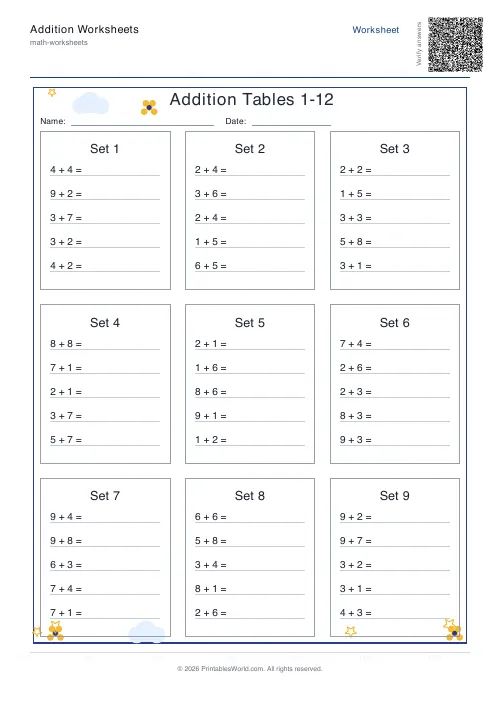 Addition Worksheets Generator
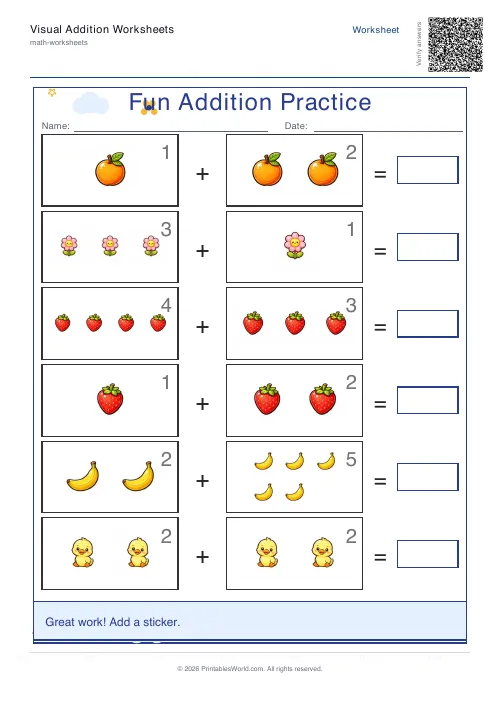 Visual Addition Worksheets Generator
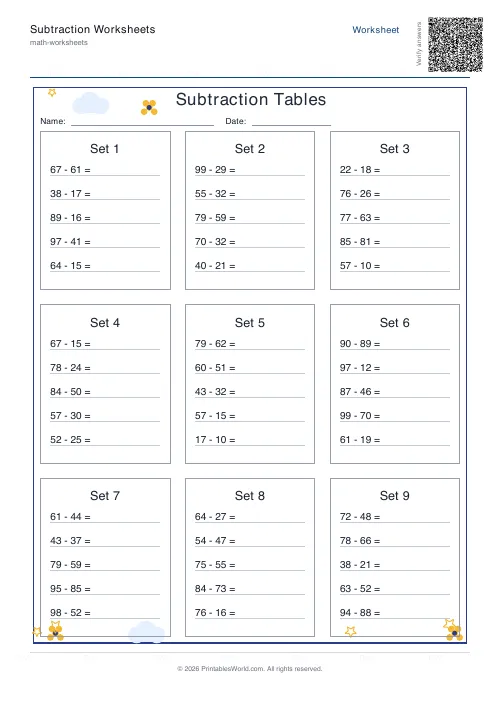 Subtraction Worksheets Generator
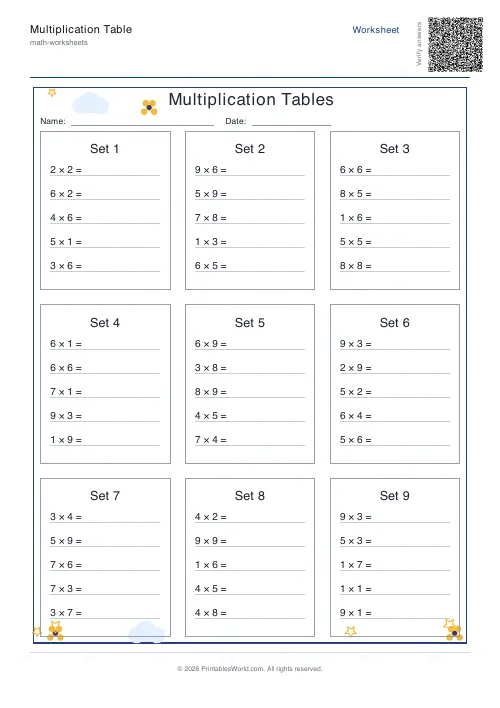 Multiplication Table Generator
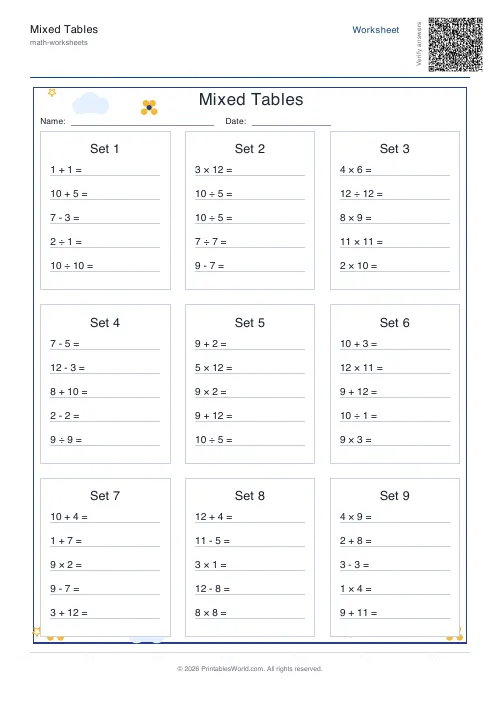 Mixed Tables Generator
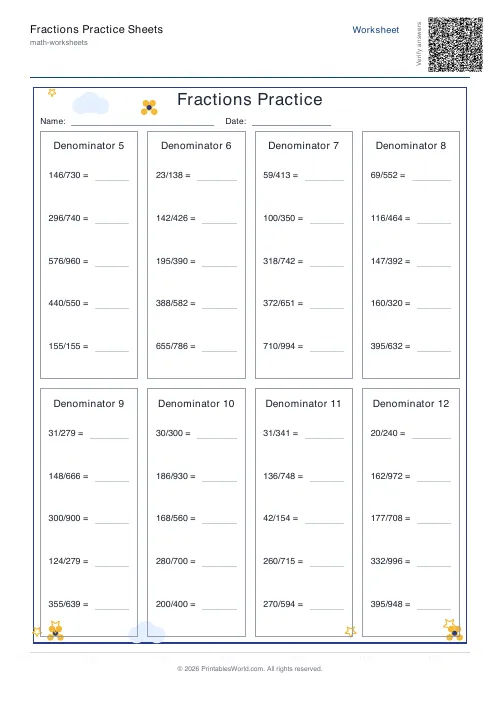 Fractions Practice Sheets Generator
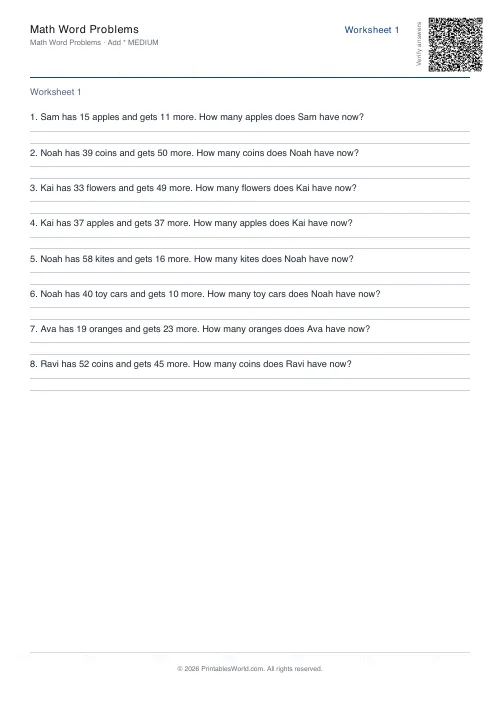 Math Word Problems Generator
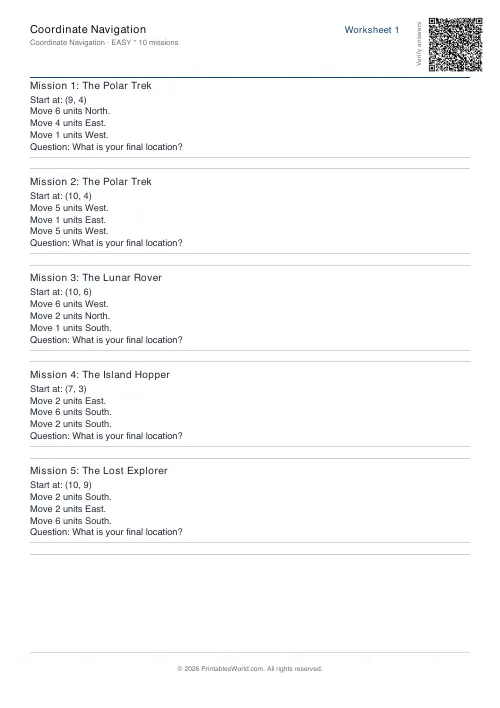 Coordinate Navigation Generator
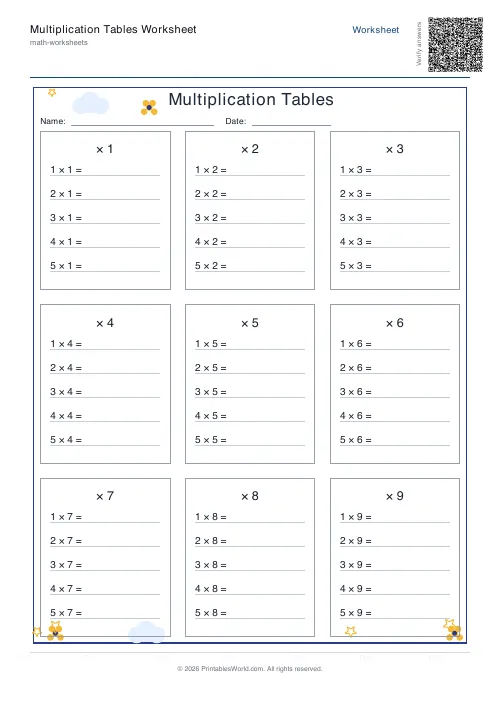 Multiplication Tables Worksheet
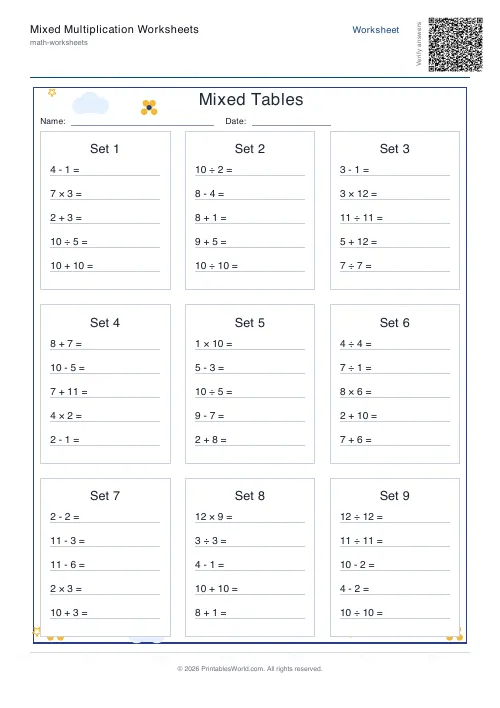 Mixed Multiplication Worksheets
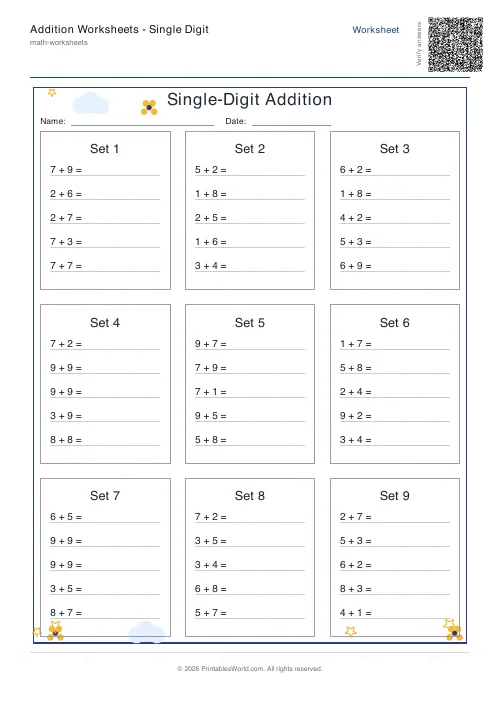 Addition Worksheets — Single Digit
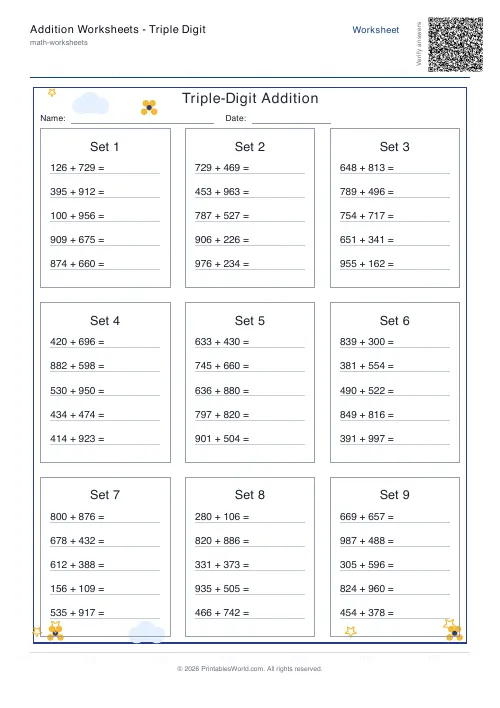 Addition Worksheets — Triple Digit
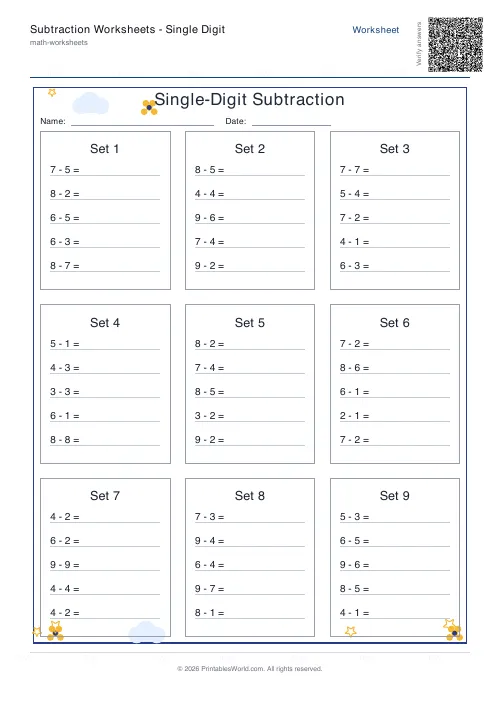 Subtraction Worksheets — Single Digit
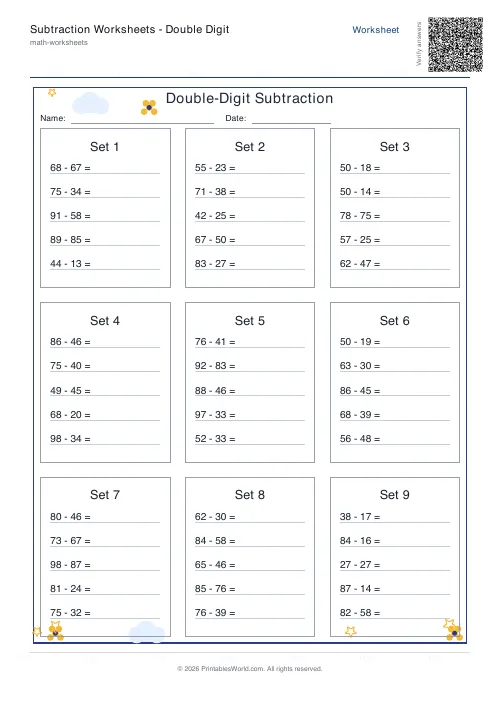 Subtraction Worksheets — Double Digit