What this tool does
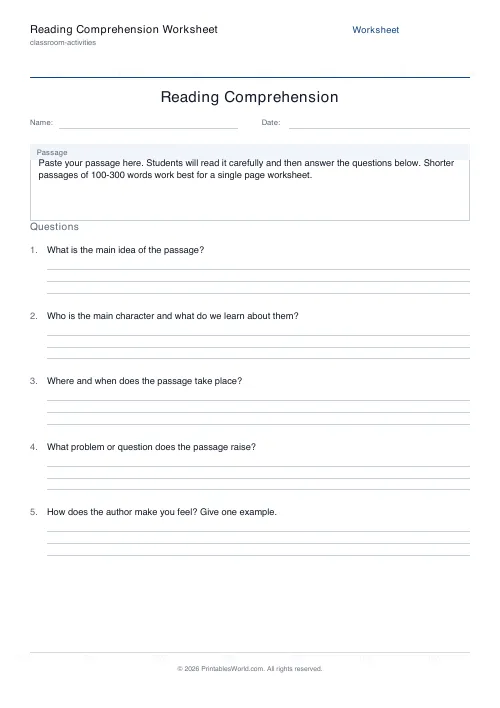
Paste a passage and your questions. The passage prints inside a bordered box and each numbered question gets ruled answer lines underneath, sized to fit whatever is left on the page.
People also used
Book Report Template
Printable book report scaffold with title, author, setting, characters, summary and rating.
Vocabulary Builder Worksheet
Define, use in a sentence, and sketch. One word at a time.
Dot-to-Dot / Connect the Dots Generator
Printable connect-the-dots puzzles that reveal a picture when you join the numbered or lettered dots in order.
Feedback
Spotted something off with this tool?
Your passage, your questions, one printed page
Paste a text into the passage box and add as many questions as you want. The sheet prints the passage inside a bordered panel and then lays out the numbered questions below it, each with ruled lines for the answer.
The line count is worked out from the space left after your passage. A long passage leaves fewer lines per question and a short one leaves more, so the page fills properly instead of running to a second sheet or leaving half of one blank.
Aim for 100 to 300 words in the passage
That is not a technical limit — a longer text will still print, it just eats the answer space.
It is a pedagogical one. A passage a child can reread three times in the time available is a passage they can answer questions about properly. A page of dense text usually produces answers to the first two questions and guesses at the rest, and the resulting mark says more about reading stamina than about comprehension.
Writing questions that are worth asking
The default five are deliberately generic, and they work with almost any text: main idea, character, setting, the problem, and how the writing makes you feel. Replace them with your own as soon as you have a specific text in mind, because generic questions get generic answers.
A mix is what you want. Retrieval questions — what colour was the door — check the text was read. Inference questions — why did she close the door quietly — check it was understood. Author-intent questions — why did the writer tell us about the door at all — are the hardest and the ones most reliably skipped in classroom practice.
A sheet of five retrieval questions is a search exercise. A child can score full marks on it without following the story.
What to use it with
Anything. A paragraph from the class reader, a news item rewritten for children, the instructions from a board game, a paragraph of your own about last week's trip.
Non-fiction is under-used here and it is where the need is greatest. Children who read fiction fluently often lose the thread completely in a paragraph of science or history, because the text does not carry them the way a story does, and nobody notices until it starts to matter.
What is adjustable
Worksheet title, the passage, and your list of questions. Paper size A4 or US Letter.
The passage box wraps and paginates whatever you give it, and the question list takes as many entries as you add.
Marking
Read for evidence rather than for the right answer. An inference question answered differently from what you expected, but supported by something in the passage, is a correct answer — and a child who justifies an unexpected reading has demonstrated more than one who guessed the answer you wanted.
Print at 100% on A4 or US Letter.
FAQs
Quick answers
How long should the passage be?
Between 100 and 300 words fits comfortably on a single page alongside 5–8 questions. Longer passages may spill into a second page or crowd the questions.
Can I change the questions?
Yes. Add, edit or remove any question in the settings and the PDF will update. Each question gets its own set of ruled answer lines in the export.
Does it work with any subject?
Yes. You provide the passage, so it works for English, science, history or any subject where short reading passages are useful.
Is there an answer key?
No. Answers depend on the passage you paste. Teachers can keep their own answer key separately.
Related tools
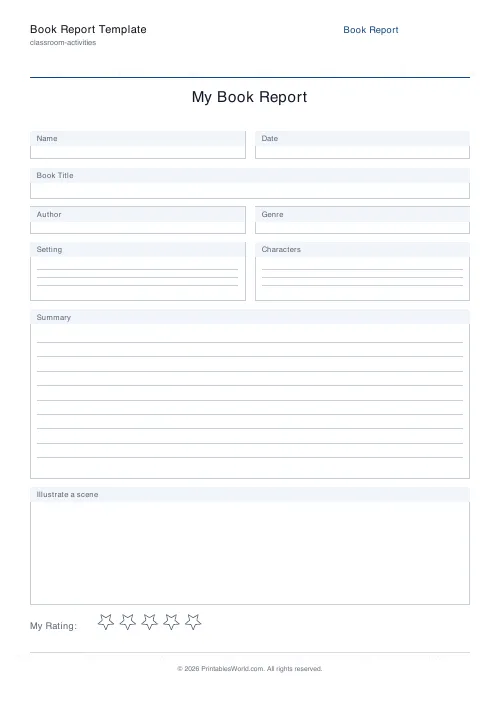
Book Report Template
Printable book report scaffold with title, author, setting, characters, summary and rating.
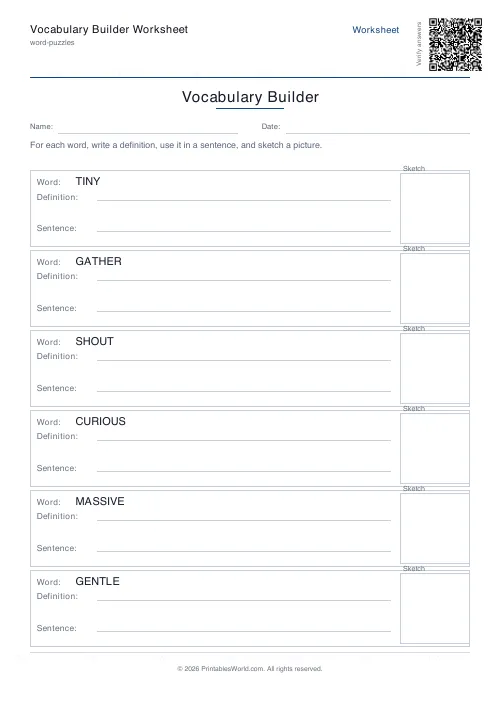
Vocabulary Builder Worksheet
Define, use in a sentence, and sketch. One word at a time.
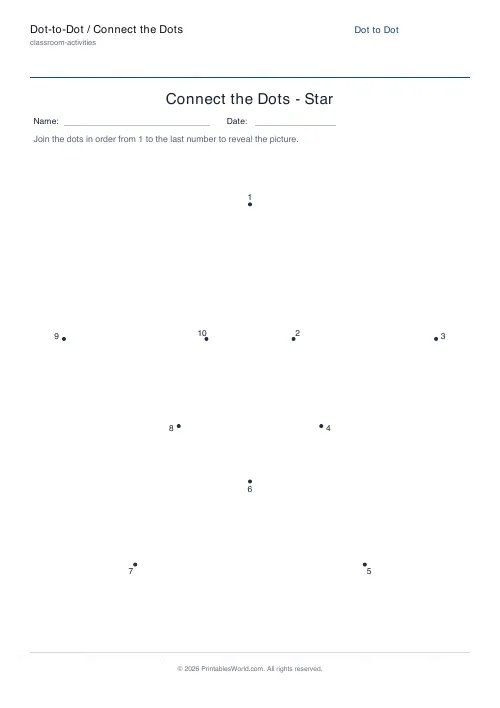
Dot-to-Dot / Connect the Dots Generator
Printable connect-the-dots puzzles that reveal a picture when you join the numbered or lettered dots in order.
Further reading
Classroom Activities
How to make learning stations work in any classroom
Stations fail for two predictable reasons: the independent tasks are not truly independent, and the timing is wrong. Both are fixable before the lesson starts.
5 min read
Teaching & Classroom
How to make a custom spelling word search
Turn any spelling list into a printable class set in minutes. A practical guide to making a custom spelling word search, with a worked example and difficulty tips.
7 min read