Math Worksheets
Subtraction Worksheets — Triple Digit
Print triple-digit subtraction worksheets with borrowing practice for grades 3–5.
Last updated:
What this tool does
Generate subtraction worksheets featuring three-digit numbers from 100 to 999. Problems appear in vertical column format or subtraction-table grids, with or without answers. Adjust problem count, toggle zero inclusion, add name-and-date fields, and download a branded PDF ready for classroom or home use.
Free downloads
Ready-made Subtraction Worksheet printables — free PDF downloads
No setup needed — download these print-ready subtraction worksheets as free PDFs. Each one was made with the generator above, so you can recreate or fully customize any of them.
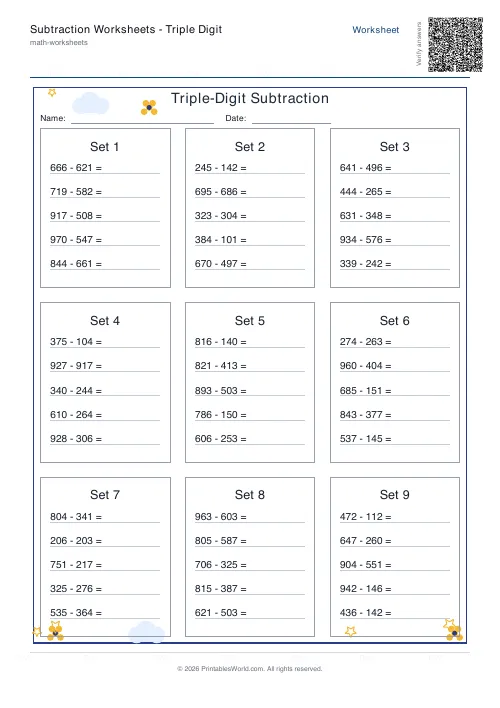
Subtraction Worksheet — Tables
Print-ready subtraction worksheet (Tables) as a free PDF — made with the generator above so you can tweak and reprint.
↓ Download PDF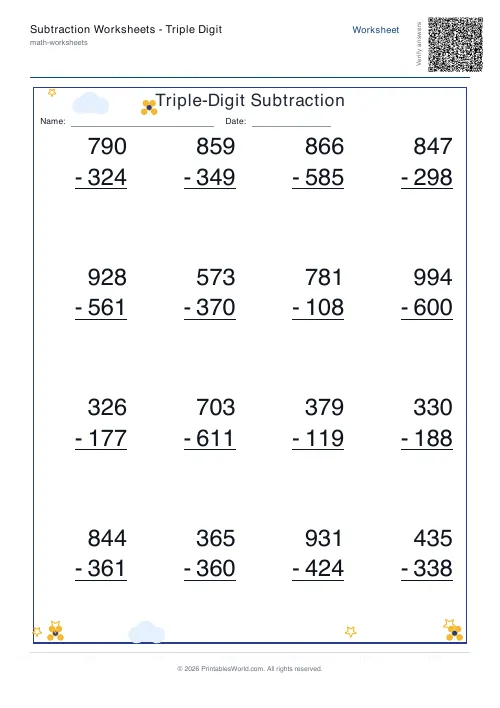
Subtraction Worksheet — Vertical column
Print-ready subtraction worksheet (Vertical column) as a free PDF — made with the generator above so you can tweak and reprint.
↓ Download PDF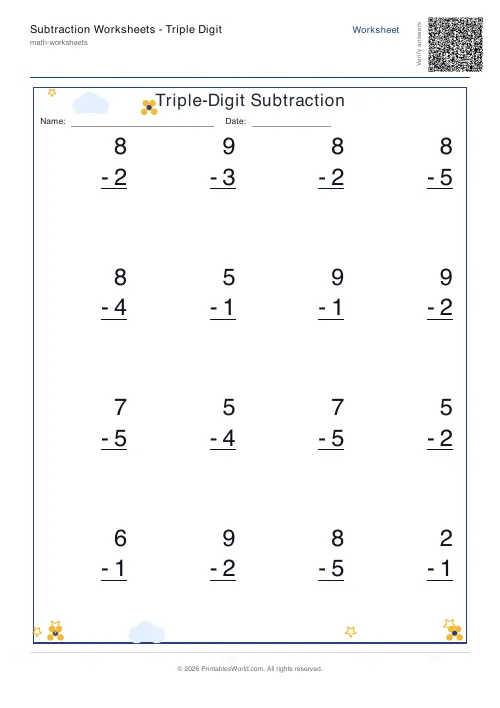
Subtraction Worksheet — 1-digit
Print-ready subtraction worksheet (1-digit) as a free PDF — made with the generator above so you can tweak and reprint.
↓ Download PDF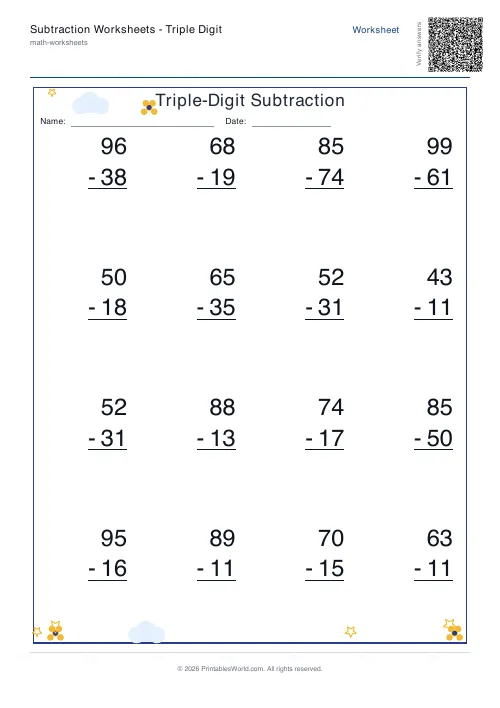
Subtraction Worksheet — 2-digit
Print-ready subtraction worksheet (2-digit) as a free PDF — made with the generator above so you can tweak and reprint.
↓ Download PDF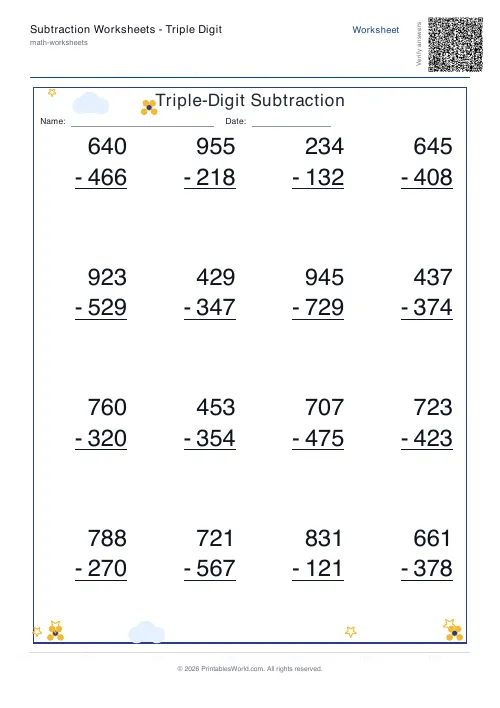
Subtraction Worksheet — 3-digit
Print-ready subtraction worksheet (3-digit) as a free PDF — made with the generator above so you can tweak and reprint.
↓ Download PDF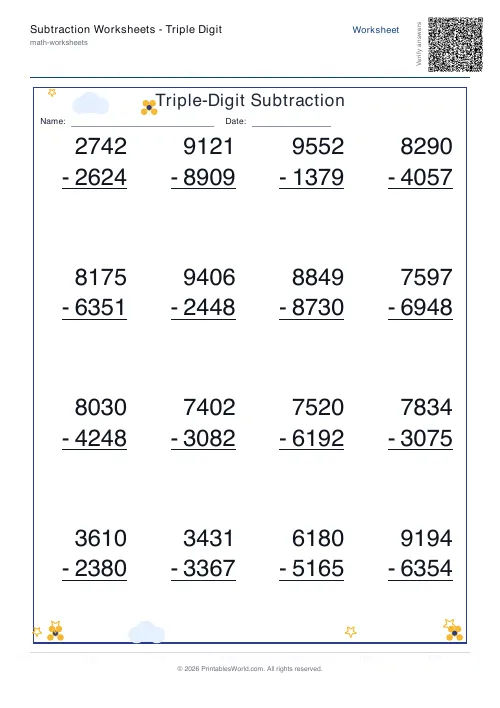
Subtraction Worksheet — 4-digit
Print-ready subtraction worksheet (4-digit) as a free PDF — made with the generator above so you can tweak and reprint.
↓ Download PDF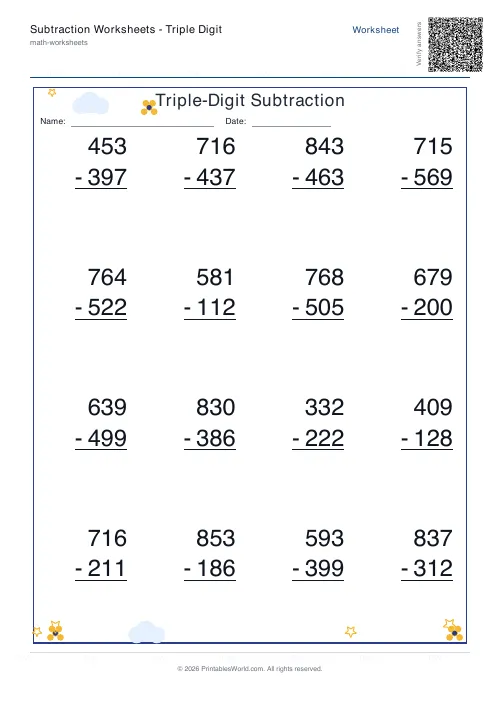
Subtraction Worksheet — Standard
Print-ready subtraction worksheet (Standard) as a free PDF — made with the generator above so you can tweak and reprint.
↓ Download PDF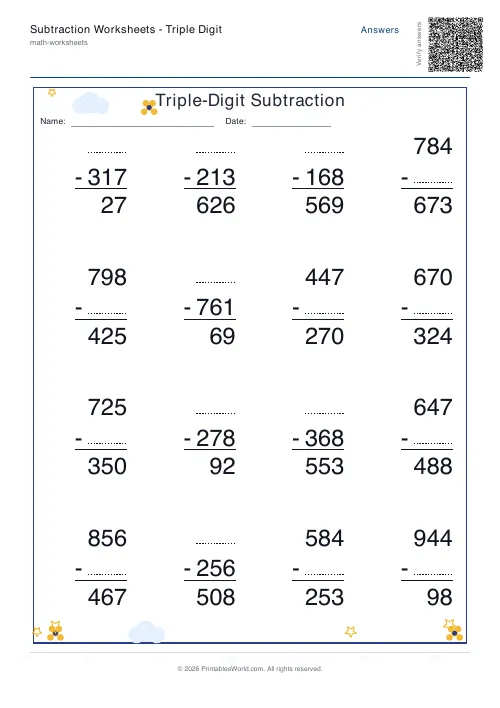
Subtraction Worksheet — Find missing number
Print-ready subtraction worksheet (Find missing number) as a free PDF — made with the generator above so you can tweak and reprint.
↓ Download PDF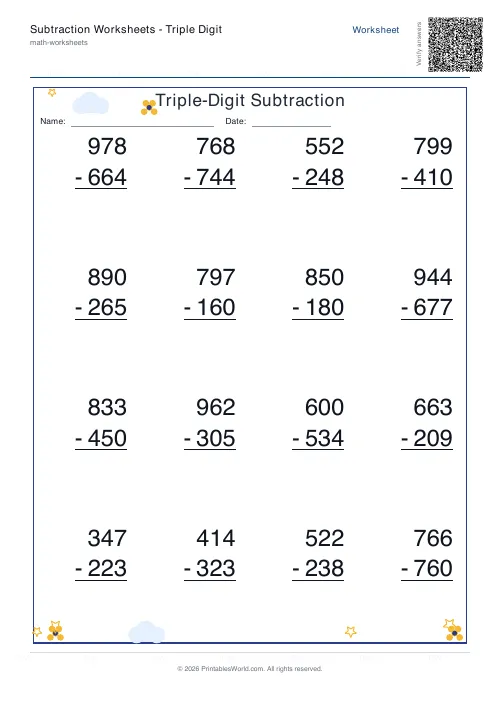
Subtraction Worksheet — No zero
Print-ready subtraction worksheet (No zero) as a free PDF — made with the generator above so you can tweak and reprint.
↓ Download PDF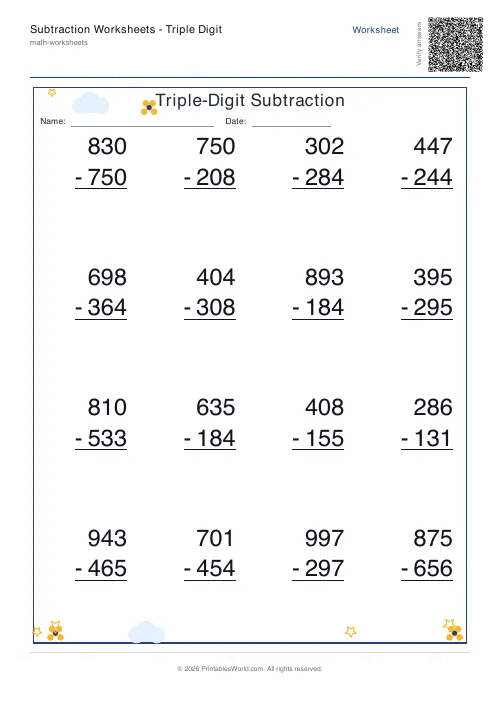
Subtraction Worksheet — Include zero
Print-ready subtraction worksheet (Include zero) as a free PDF — made with the generator above so you can tweak and reprint.
↓ Download PDF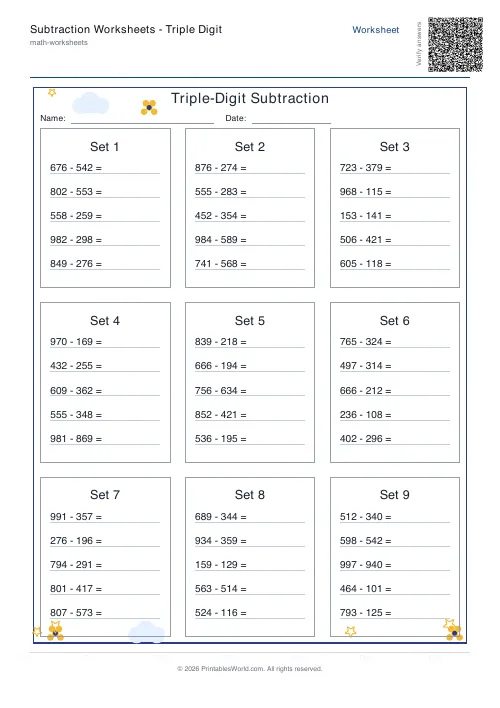
Subtraction Worksheet — Tables, with answer key
Completed answer key for the Tables subtraction worksheet — print-ready PDF for fast marking.
↓ Download PDF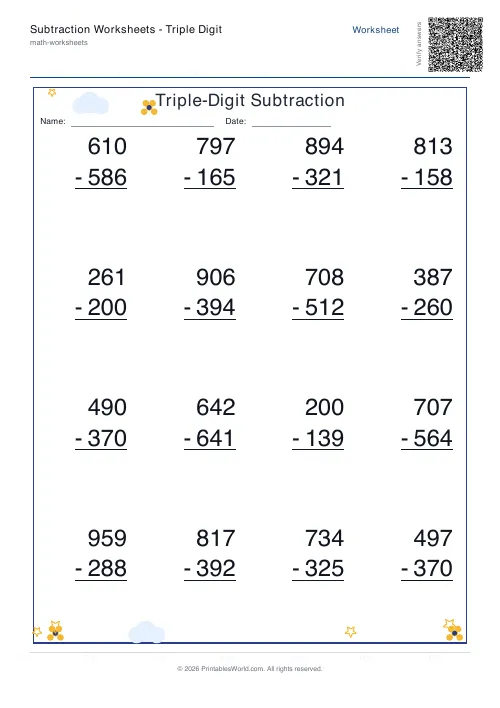
Subtraction Worksheet — Vertical column, with answer key
Completed answer key for the Vertical column subtraction worksheet — print-ready PDF for fast marking.
↓ Download PDF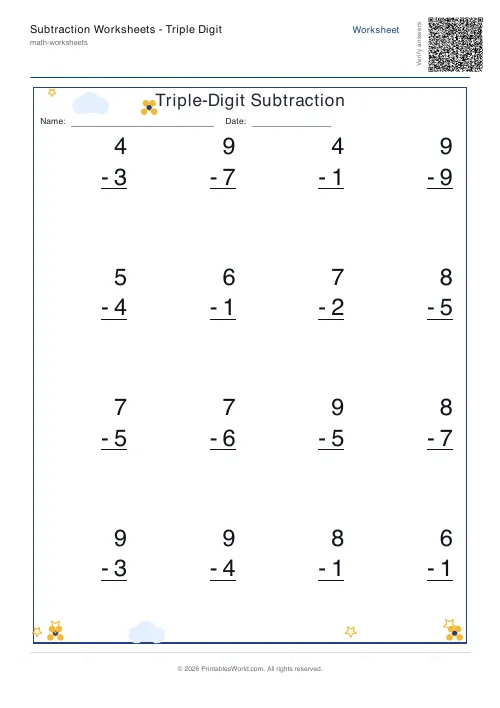
Subtraction Worksheet — 1-digit, with answer key
Completed answer key for the 1-digit subtraction worksheet — print-ready PDF for fast marking.
↓ Download PDF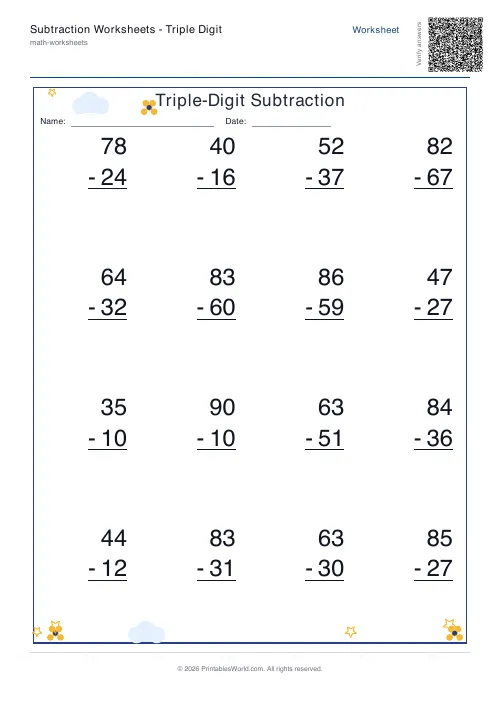
Subtraction Worksheet — 2-digit, with answer key
Completed answer key for the 2-digit subtraction worksheet — print-ready PDF for fast marking.
↓ Download PDF
Settings
Customize your subtraction worksheet
Line-by-line · none theme · 3-digit · A4
Worksheet style
Output
Paper size
Preview
Live PDF preview
The actual PDF, updated as you change settings.
People also used
Subtraction Worksheets — Single Digit
Free printable single-digit subtraction worksheets with numbers 0–9 in vertical or table layouts.
Subtraction Worksheets — Double Digit
Generate custom double-digit subtraction worksheets with regrouping, in vertical or table layouts.
Subtraction Worksheets Generator
Free printable subtraction worksheets in tables or line-by-line layouts.
Feedback
Spotted something off with this tool?
Create printable triple-digit subtraction practice sheets
This generator produces subtraction worksheets built around three-digit numbers—typically 100 through 999—that require multi-step borrowing and solid place-value understanding. You choose between vertical column layouts (stacked problems down the page) or table-style grids (subtraction facts arranged in rows and columns). Each worksheet downloads as a PDF formatted for A4 or US Letter paper, so you can print directly from any browser without resizing.
What you can customise
- Worksheet style: vertical columns or subtraction tables.
- Range preset: fixed table (e.g. subtracting from 10 or 12) or random three-digit pairs.
- Problems per sheet: 8 to 30 problems, depending on page space and font size.
- Include zero: toggle whether zero appears as a digit in the hundreds, tens or ones place.
- Output type: blank (student copy), filled (answer key), or both in one PDF.
- Title and theme: custom header text plus optional decorative borders (space, ocean, woodland).
- Name and date fields: pre-printed lines at the top for student details.
How to use the tool
- Pick vertical if you want traditional stacked subtraction problems, or tables for grid-based fact drills.
- Set the digit count to 3 (already the default for this page) and confirm the range ends at 999.
- Adjust problems per sheet—more problems yield smaller font sizes automatically.
- Choose output type: blank worksheets for students, filled sheets as answer keys, or both.
- Click Generate PDF. The file opens in a new tab; print or save it locally.
Why teachers choose triple-digit subtraction worksheets
By third and fourth grade, students move from two-digit borrowing to problems that cross the hundreds boundary multiple times. Three-digit subtraction forces learners to track carries across three columns, reinforcing place value and mental decomposition. Printable worksheets let you assign timed drills, homework packets, or assessment probes without hunting for textbook pages. Generating both blank and filled versions in one click saves prep time and guarantees that every answer key matches the student copy exactly.
Worked classroom example
Mrs. Patel needs 25 unique three-digit subtraction problems for a Friday quiz. She selects vertical style, sets problems per sheet to 25, chooses random range preset, and picks both for output type. The generator produces a two-page PDF: page one shows 25 blank problems (e.g. 847 − 259, 634 − 178), page two prints the same problems with answers filled in. She photocopies page one for the class and keeps page two as her marking guide. Total prep time: under two minutes.
Designed for A4 and US Letter printing
Every PDF auto-scales to fit standard A4 (210 × 297 mm) and US Letter (8.5 × 11 in) sheets without clipping margins. The generator calculates row height, column width and font size so that 8 to 30 problems fit legibly on a single page. Print from any device—desktop, tablet or phone—and the layout remains consistent.
Notes and limitations
- The tool does not generate word problems or mixed operations; it focuses exclusively on numeric subtraction.
- Table mode shows subtraction facts for a single minuend (e.g. subtracting 1 through 12 from a fixed number); vertical mode pairs random numbers within the digit range.
- Font scaling is automatic; manual point-size control is limited to three presets (small, medium, auto).
- Missing-number (find-the-minuend or find-the-subtrahend) modes exist but are disabled by default on this page.
FAQs
Quick answers
How many problems fit on one page?
Between 8 and 30, depending on the digit count, worksheet style and font size you select. Vertical layouts typically hold 20–25 three-digit problems comfortably; table layouts hold fewer because each table requires a grid header and multiple rows.
Can I print the answer key separately?
Yes. Set output type to 'both' and the PDF will include a blank student sheet followed by a filled answer key. Alternatively, generate blank and filled versions separately if you prefer to store them as distinct files.
What does 'include zero' do?
When enabled, zero may appear in the hundreds, tens or ones place of any number. For example, 305 − 108 or 700 − 42. When disabled, only numbers from 100 to 999 without internal zeros are used.
Will the worksheets print correctly on US Letter paper?
Yes. The generator detects your paper size and adjusts margins and row heights so problems never get cut off. Both A4 and US Letter formats are fully supported.
Can I change the worksheet title?
Absolutely. The title field accepts any text you type. Leave it blank and the generator uses a default heading ('Subtraction' or 'Subtraction Tables') based on the style you choose.
What is the difference between vertical and table styles?
Vertical style stacks individual subtraction problems in columns down the page, ideal for varied practice. Table style arranges problems in grids, showing a series of subtractions from a fixed minuend—useful for memorising fact families.
Do the worksheets include decorative themes?
Yes. You can add optional borders and icons (space, ocean, woodland or plain) around the page. Themes are subtle and print-friendly, designed not to distract from the problems or consume excessive ink.
Related tools
Subtraction Worksheets — Single Digit
Free printable single-digit subtraction worksheets with numbers 0–9 in vertical or table layouts.
Subtraction Worksheets — Double Digit
Generate custom double-digit subtraction worksheets with regrouping, in vertical or table layouts.
Subtraction Worksheets Generator
Free printable subtraction worksheets in tables or line-by-line layouts.
More like this
 Addition Worksheets Generator
 Visual Addition Worksheets Generator
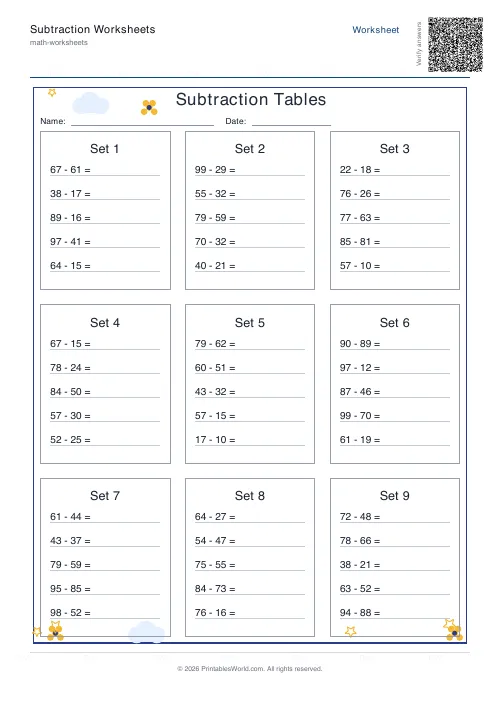 Subtraction Worksheets Generator
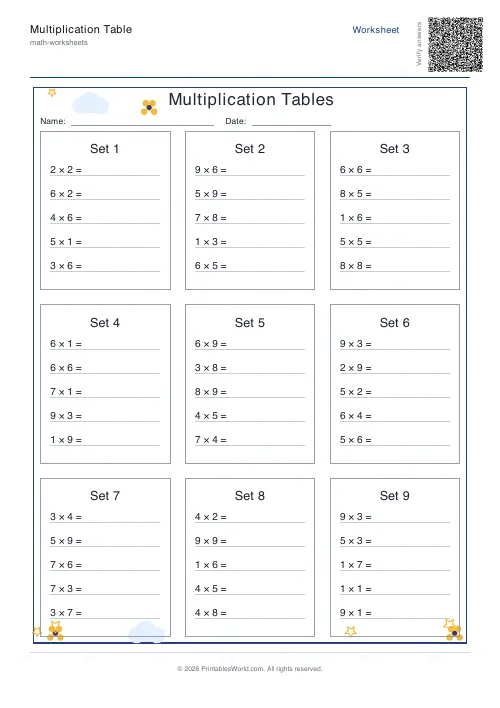 Multiplication Table Generator
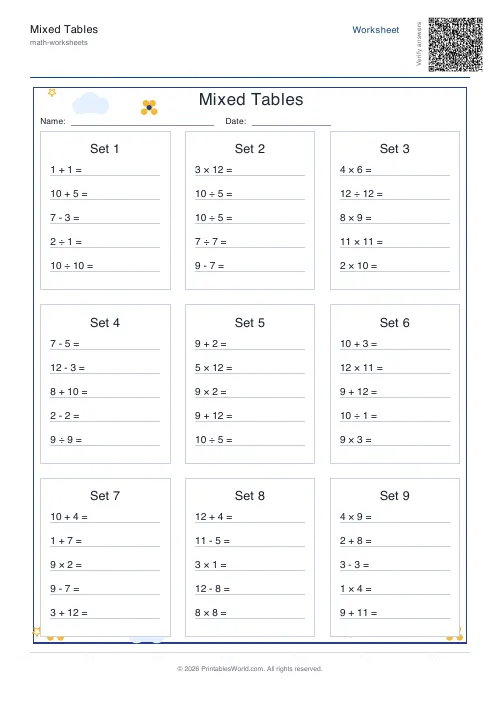 Mixed Tables Generator
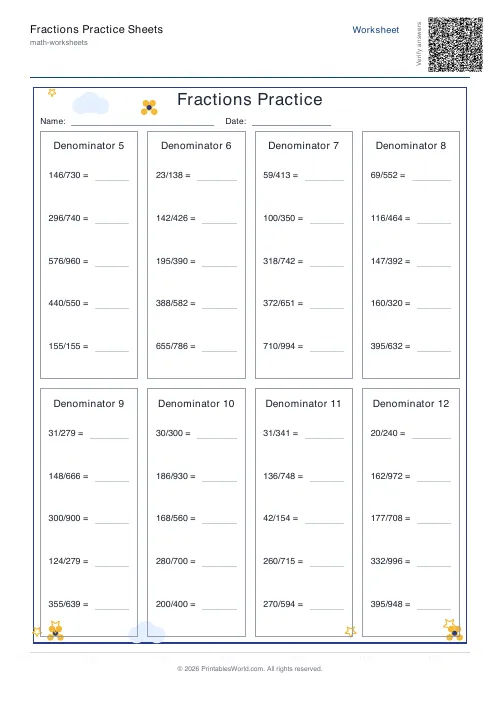 Fractions Practice Sheets Generator
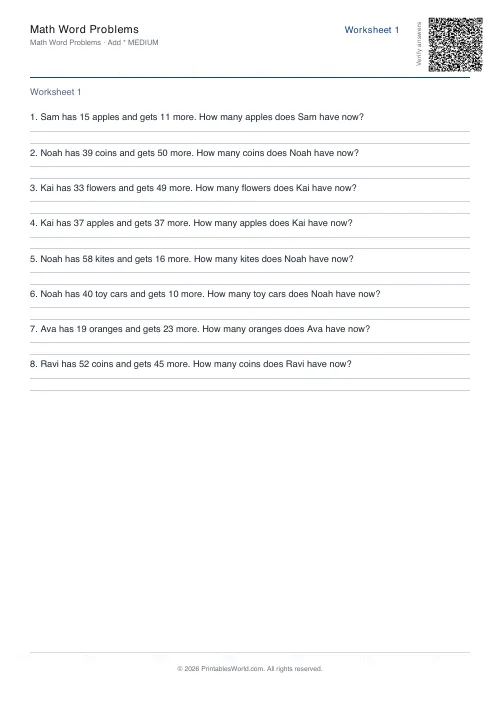 Math Word Problems Generator
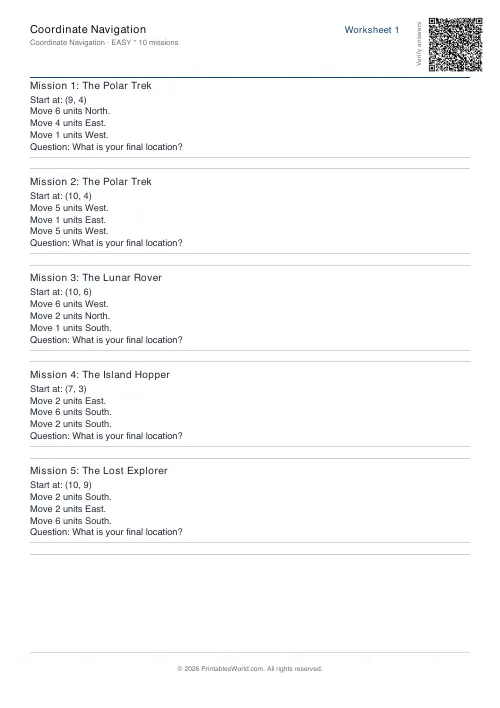 Coordinate Navigation Generator
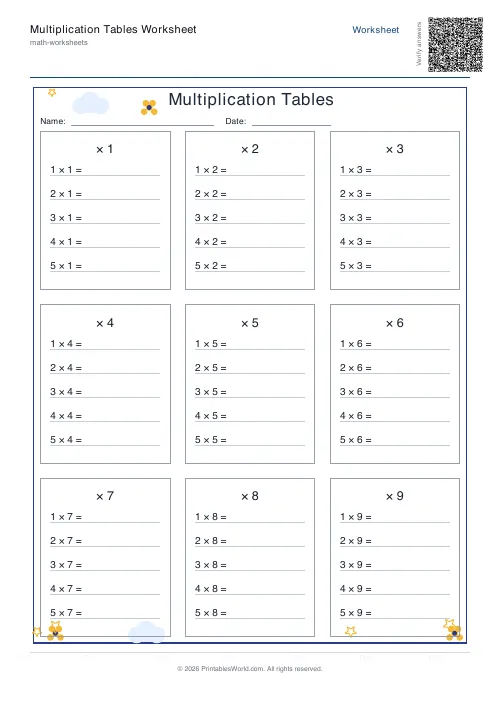 Multiplication Tables Worksheet
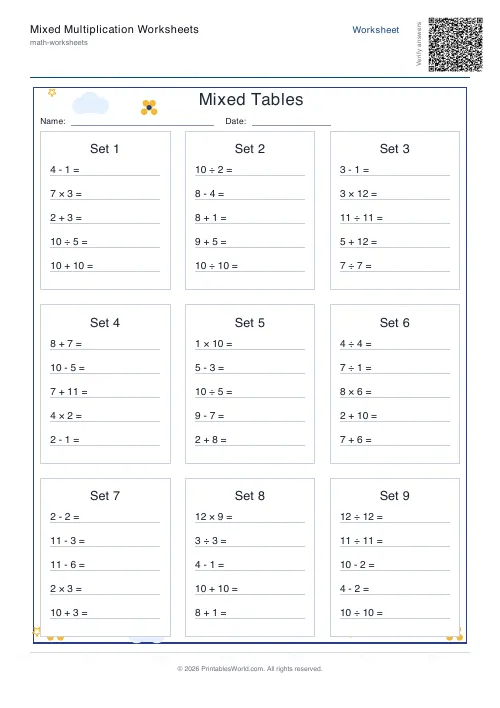 Mixed Multiplication Worksheets
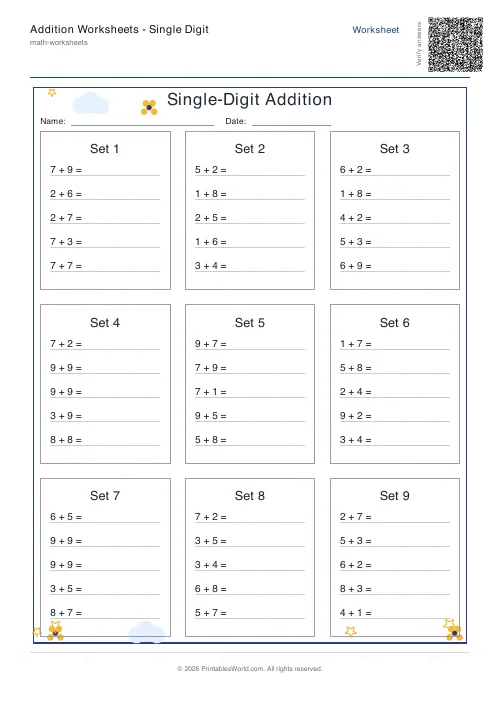 Addition Worksheets — Single Digit
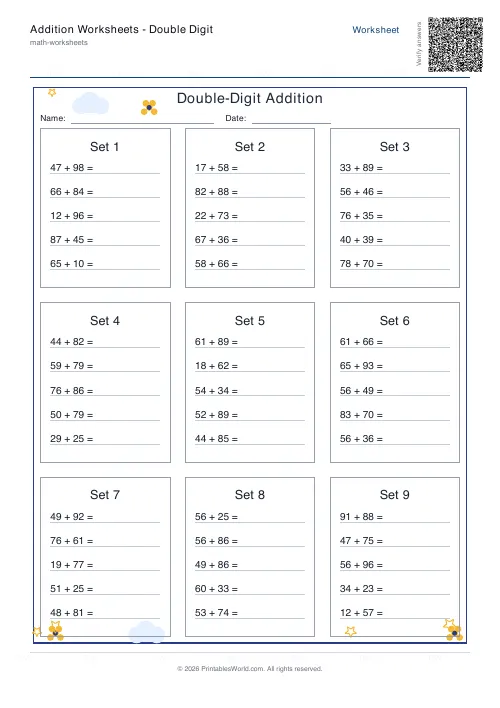 Addition Worksheets — Double Digit
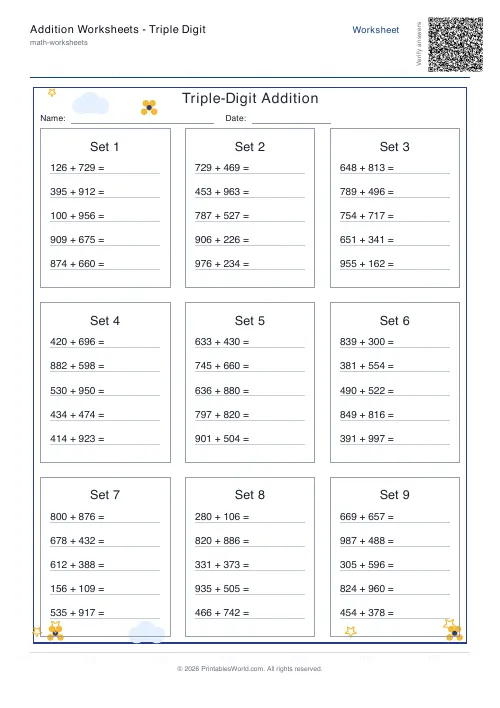 Addition Worksheets — Triple Digit
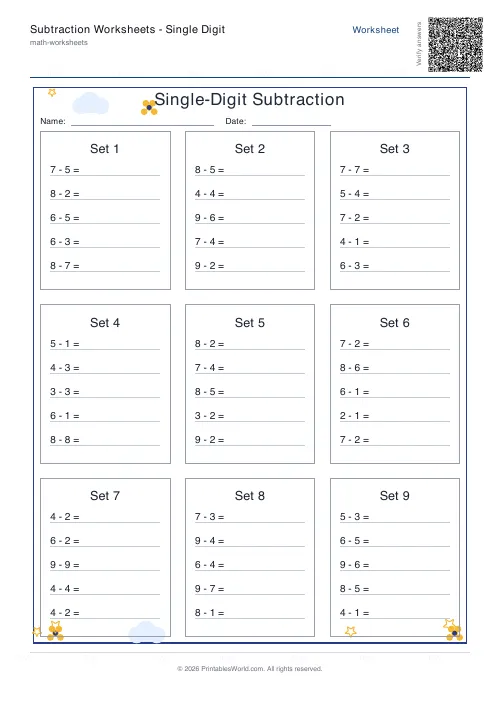 Subtraction Worksheets — Single Digit