What this tool does
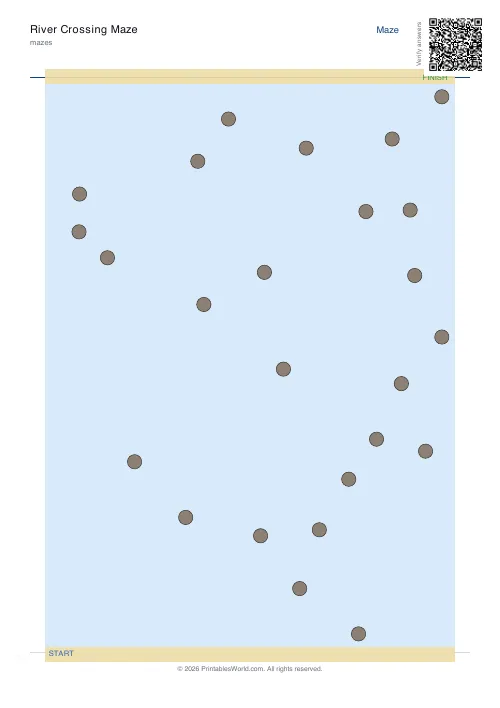
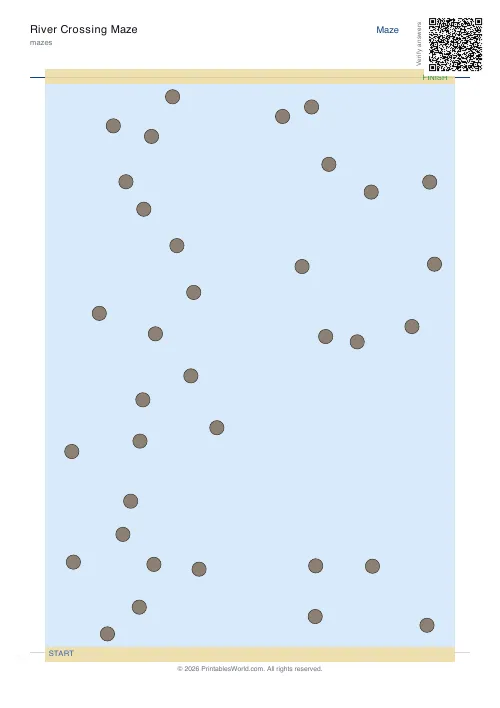
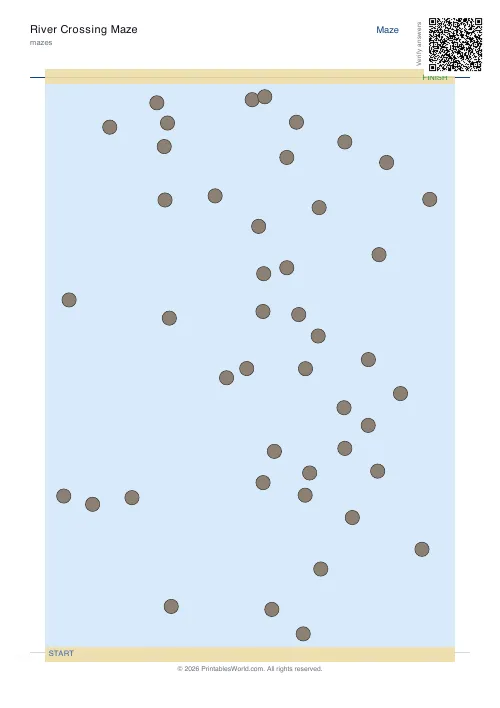
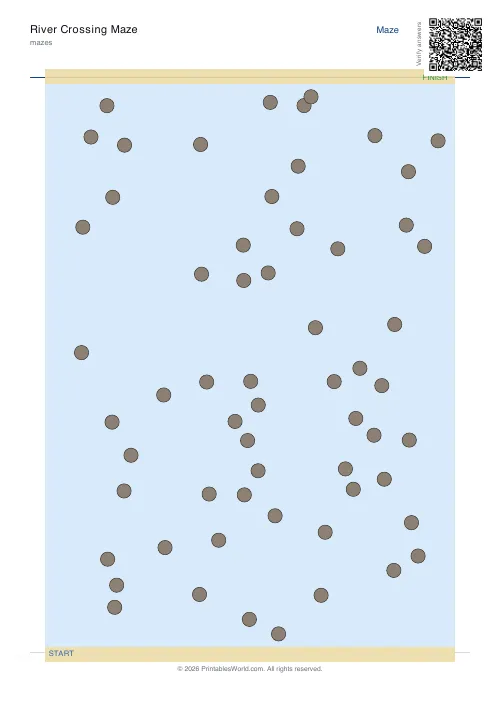
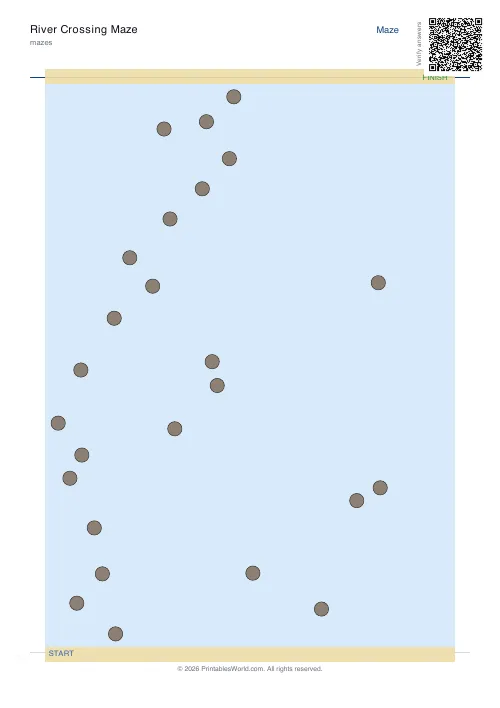
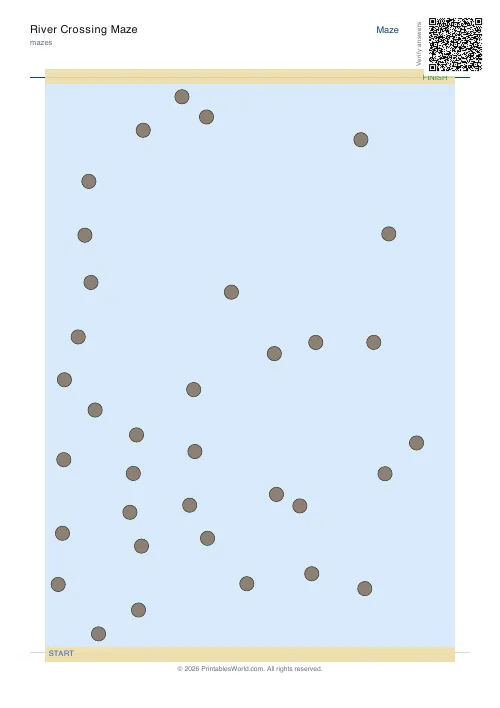
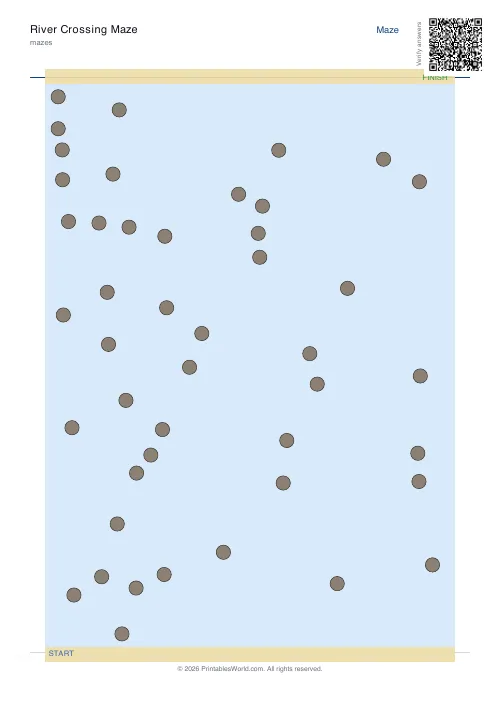
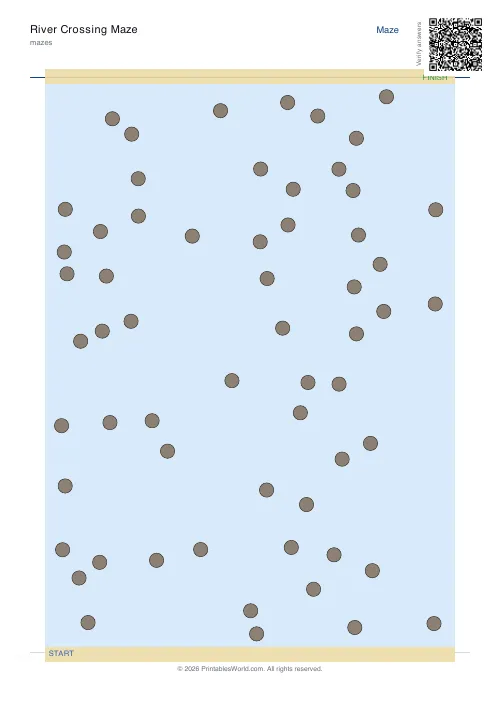
A river with stones scattered across it. Pick a sequence of stones from the south bank to the north, jumping only between stones close enough to reach. Decoys make the route ambiguous. 20 to 80 stones.
People also used
Island Maze Puzzles
Maze on a treasure-map island. Navigate from coast to centre.
Spiral Maze Puzzles
Navigate a spiralling path from outside to centre or vice versa.
Maze Generator: Printable PDF
Generate printable maze PDFs with custom grid size, difficulty, and layout. Perfect, braided, or room-based.
Feedback
Spotted something off with this tool?
Not a maze with walls
Two banks and a river between them, with stones scattered across the water. You cross by hopping from stone to stone, and you can only jump between stones that are close enough together.
There are no corridors and nothing to trace along. The puzzle is deciding which stones form a chain.
What makes it different from a grid maze
A wall maze tells you where you cannot go. This tells you nothing — every stone looks the same as every other, and the constraint is a distance you have to judge by eye.
So the solving move is different. Instead of following a corridor until it stops, you work backwards and forwards from both banks, looking for stones with a reachable neighbour on the far side and ruling out the ones stranded in open water. It is closer to route-finding on a map than to maze-tracing.
The decoys are the difficulty
A real path is laid across the river first, then extra stones are scattered around it.
Those extras do nothing, and that is exactly why they work: a stone sitting temptingly near the route pulls the eye, and following it leads into a cluster that goes nowhere. A wrong route here looks as plausible as a right one until it dead-ends in the middle of the water, which is unusual in a puzzle and is why it repays working slowly.
Stone count
Twenty to eighty, with forty as the default.
Twenty is sparse: the route is close to obvious because there is nothing else to consider. Eighty fills the river, the true path is buried among decoys, and the puzzle becomes a genuine search.
The path itself does not get longer as the count rises — only the noise around it does. That is worth knowing when you are choosing a setting for a child: more stones is more searching, not more jumping.
Where it fits
It works with children who have got bored of ordinary mazes, because it does not look like one. It also gives you something to talk about that a wall maze does not: what "close enough" means, how you judge a distance by eye, and why checking a route backwards from the far bank is often quicker than working forwards.
The theme carries a story with it, which younger children take up immediately — the stones become a river to cross, and the puzzle becomes a thing that is happening rather than a sheet.
Controls and printing
Stone count, the solution page, and a seed. A4 or US Letter, printed at 100%.
Solutions are on by default here, unlike most of the shaped mazes, because the correct route is genuinely hard to check by eye once the river is crowded.
FAQs
Quick answers
How is a solvable layout generated?
A reference winding path of stones is laid down from south to north. Decoy stones are then sprinkled around it, never closer than a small spacing.
How many stones can I have?
Anywhere from 20 to 80. More stones means more decoys and a harder puzzle.
Can I print the solution?
Yes. Toggle the solution option to add a page with the correct stone sequence drawn in.
Is there a stricter "max jump" rule?
In v1 the puzzle is open to interpretation. The printed solution is one valid route. Future versions will print an explicit max-jump distance for stricter scoring.
Related tools
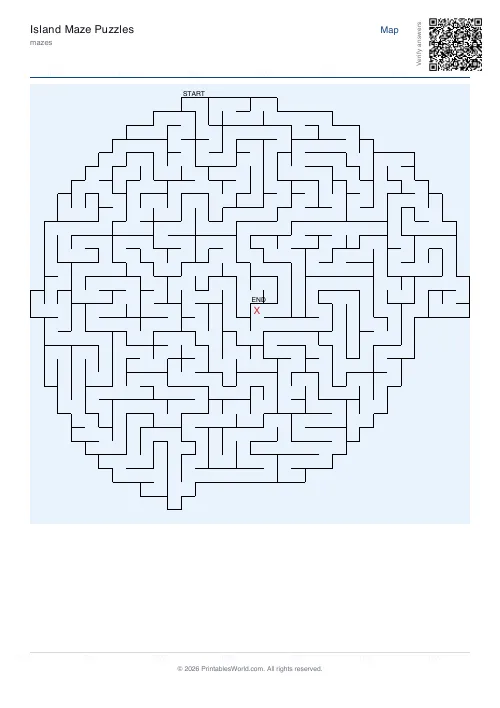
Island Maze Puzzles
Maze on a treasure-map island. Navigate from coast to centre.
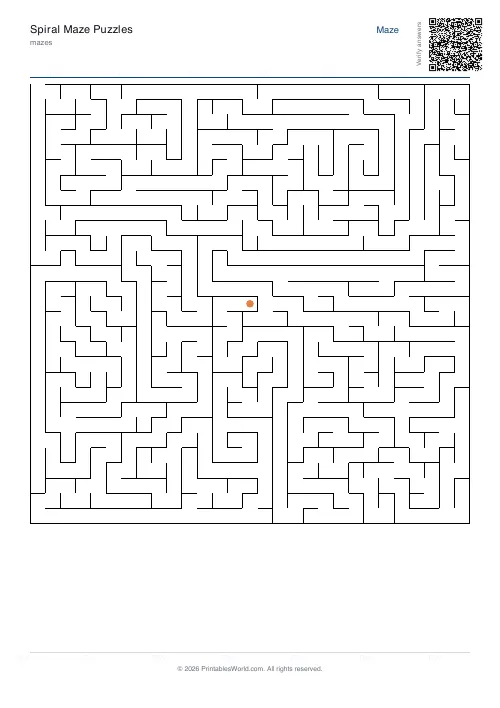
Spiral Maze Puzzles
Navigate a spiralling path from outside to centre or vice versa.
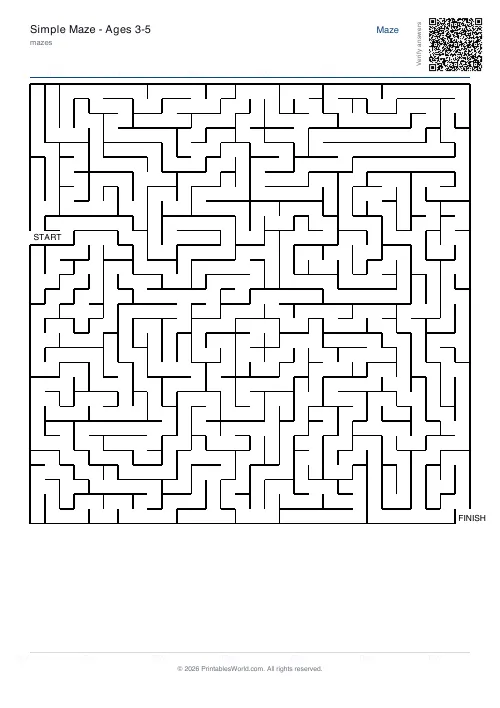
Maze Generator: Printable PDF
Generate printable maze PDFs with custom grid size, difficulty, and layout. Perfect, braided, or room-based.
Further reading
Mazes
Why mazes are great for kids' development
Mazes are one of the few activities that exercise pencil control and forward planning at the same time. Which is why they suit the years just before formal handwriting.
4 min read
Mazes
Printable maze difficulty: matching mazes to ages
Maze difficulty has two independent dials, and confusing them is why a maze is either too fiddly or too easy. Here is which to turn for which child.
4 min read