Printable Paper
Graph Paper — 2mm Grid
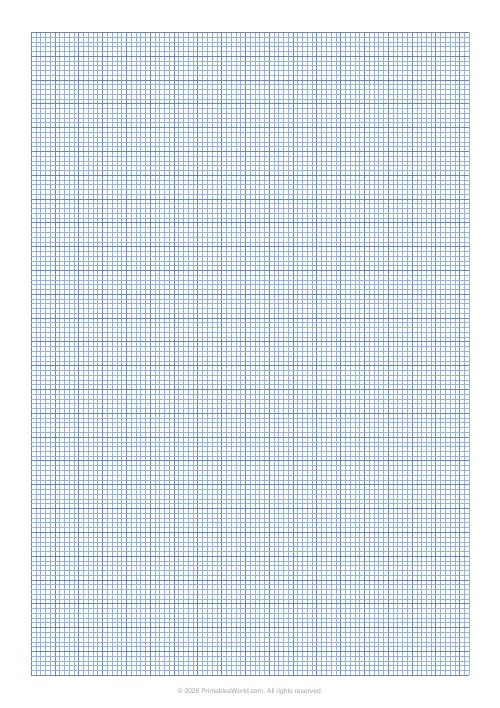
Fine 2 mm grid for technical drawing and detailed plots.
Last updated:
What this tool does
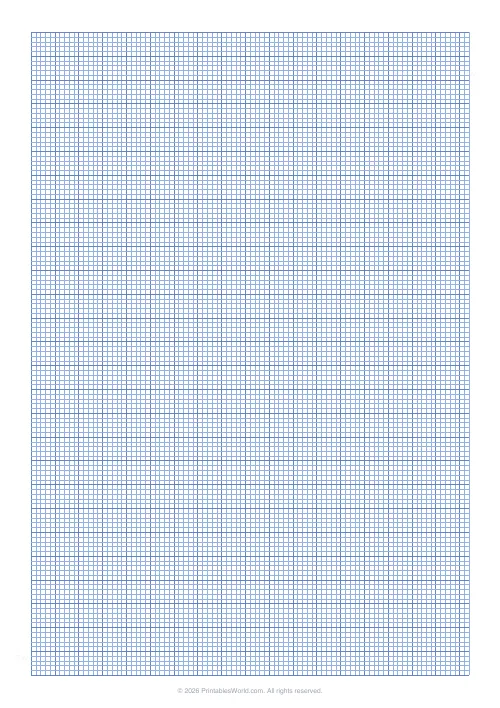
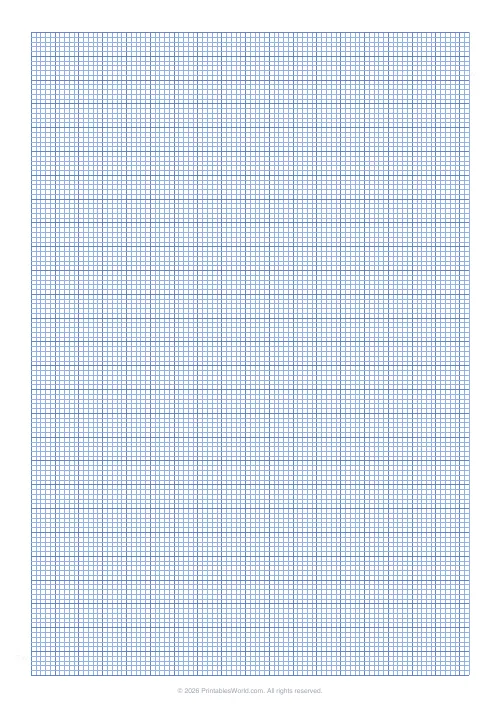
A finer 2 mm grid for technical drawing, electronics layouts, and precise plotting. Bold rules every 5 squares (every 1 cm) help orient larger features.
Free downloads
Ready-made Graph Paper printables — free PDF downloads
No setup needed — download these print-ready graph paper as free PDFs. Each one was made with the generator above, so you can recreate or fully customize any of them.
Graph Paper — 2 mm
Print-ready graph paper (2 mm) as a free PDF — made with the generator above so you can tweak and reprint.
↓ Download PDF
Graph Paper — 2.5 mm
Print-ready graph paper (2.5 mm) as a free PDF — made with the generator above so you can tweak and reprint.
↓ Download PDF
Graph Paper — 4 mm
Print-ready graph paper (4 mm) as a free PDF — made with the generator above so you can tweak and reprint.
↓ Download PDF
Graph Paper — 5 mm
Print-ready graph paper (5 mm) as a free PDF — made with the generator above so you can tweak and reprint.
↓ Download PDF
Graph Paper — 10 mm (1 cm)
Print-ready graph paper (10 mm (1 cm)) as a free PDF — made with the generator above so you can tweak and reprint.
↓ Download PDF
Graph Paper — Lines
Print-ready graph paper (Lines) as a free PDF — made with the generator above so you can tweak and reprint.
↓ Download PDF
Graph Paper — Dot grid
Print-ready graph paper (Dot grid) as a free PDF — made with the generator above so you can tweak and reprint.
↓ Download PDF
Graph Paper — Blue
Print-ready graph paper (Blue) as a free PDF — made with the generator above so you can tweak and reprint.
↓ Download PDF
Graph Paper — Gray
Print-ready graph paper (Gray) as a free PDF — made with the generator above so you can tweak and reprint.
↓ Download PDF
Graph Paper — Green (engineering)
Print-ready graph paper (Green (engineering)) as a free PDF — made with the generator above so you can tweak and reprint.
↓ Download PDF
Graph Paper — Light
Print-ready graph paper (Light) as a free PDF — made with the generator above so you can tweak and reprint.
↓ Download PDF
Graph Paper — Medium
Print-ready graph paper (Medium) as a free PDF — made with the generator above so you can tweak and reprint.
↓ Download PDF
Graph Paper — Dark
Print-ready graph paper (Dark) as a free PDF — made with the generator above so you can tweak and reprint.
↓ Download PDF
Graph Paper — On
Print-ready graph paper (On) as a free PDF — made with the generator above so you can tweak and reprint.
↓ Download PDF
Settings
Customize your graph paper
2 mm grid on A4 paper, bold every 5, light blue lines.
Line weight
Line colour
Paper size
Preview
Sample grid
On-screen mock of the chosen pattern. The PDF prints at exact millimetre spacing.
People also used
Feedback
Spotted something off with this tool?
Printable 2 mm Fine Graph Paper for Technical Drawing and Detailed Plots
This tool produces free printable 2 mm fine graph paper with bold lines every fifth square. Each small square is exactly 2 mm; ten small squares form a 2 cm heavy-lined block. The result is a dense but legible grid suited to engineering sketches, electronics layouts, fine plotting and precise scale work.
Generate the sheet in A4 or US Letter PDF. The page uses the shared branded template so the header and footer stay consistent even when you staple multiple pages together for a long drawing.
Why choose 2 mm graph paper?
2 mm is the grid spacing at the boundary between "coarse enough to read" and "fine enough to plot precise data". It is the classic ruling for engineering notebooks in Europe, and a favoured scale for scientific plotting where 1 mm graph paper would be too dense to label. At 1:25 scale, each small square represents 5 cm on the real object; at 1:5 scale, each small square represents 1 cm.
Typical uses include:
- Detailed technical drawing and drafting
- Electronics breadboard and PCB sketches
- Fine scientific plotting, especially physics lab data
- Small-scale architecture and joinery plans
- Precise scale-modelling plans
- Miniature maps and RPG dungeon design
- Fine pattern work in cross stitch, knitting and beadwork
- High-resolution pixel-art planning on paper
What you can customise
- Grid spacing: 2 mm squares (default) with heavier rules every 5 squares (each 1 cm)
- Line colour: blue is the traditional technical choice, with gray and green also available
- Line weight: intentionally light by default to keep the fine grid legible
- Paper size: A4, US Letter or US Legal
- Outer border: on or off
- Page count: one sheet or an entire notebook's worth
Because the grid is dense, the default line weight is deliberately lighter than the 5 mm or 1 cm variants. Heavier weights are available but can make the page feel cluttered; experiment with your printer.
Notes and limitations
- 2 mm squares are small — use a 0.3 mm or 0.5 mm mechanical pencil for plotting.
- Any printer capable of at least 600 dpi will render the grid cleanly; below that, fine lines can smudge.
- Always print at 100% scale so 2 mm squares stay at their true size and scale ratios remain valid.
- Coloured inks can make the grid harder to read; the intended use is plotting over the grid, so lighter weights help.
Who this paper is for
Students
Physics, chemistry and engineering students use 2 mm graph paper for laboratory write-ups where precise plotting matters. It is the standard paper for A Level physics experiments and first-year university lab reports.
Designers and makers
Electronics hobbyists sketching breadboard layouts, model makers drawing ships and trains to scale, and product designers drafting small parts all benefit from the extra resolution. Each bold 2 cm block gives an anchor every centimetre without forcing you to work at a coarse scale.
Teachers
Science teachers can hand out 2 mm graph paper for practical lessons involving careful measurement, such as pendulum timings, spring extensions or titration curves. The finer grid lets pupils pick out small variations that would be lost on 5 mm paper.
Hobbyists
Hobbyists designing fine cross-stitch patterns, planning board-game maps, or sketching steampunk machinery enjoy the density. For tabletop RPG referees, a single A4 sheet of 2 mm graph paper maps a surprisingly detailed dungeon.
How to use the tool
- Open the 2 mm Graph Paper generator.
- Keep the default spacing or adjust if needed.
- Pick your line colour and weight.
- Choose A4, US Letter or US Legal.
- Click Generate.
- Preview the sheet to confirm the fine grid prints clearly on your printer.
- Download the PDF and print at 100% scale.
Worked example
A student is plotting data from a spring-extension experiment. Forces run from 0 N to 10 N and extensions range from 0 mm to about 80 mm. They print one A4 sheet of 2 mm graph paper. They choose a scale of 1 cm per newton on the x-axis (one heavy block per newton) and 1 cm per 10 mm on the y-axis. The bold rules every 2 cm give obvious anchor points at 2 N, 4 N, 6 N and so on, and each small square is fine enough to resolve a 1 mm or 0.1 N variation. The plotted line of best fit is noticeably more accurate than it would be on a coarser grid.
Methodology
The page is rendered through the shared graph-paper engine. A fine line is drawn at every 2 mm boundary, and a darker, slightly thicker line overrides it at every fifth boundary to create the 1 cm heavy-lined pattern. The whole grid is aligned within the usable printable area of the page so no half-squares appear in the margins. Line weights are tuned lower than the coarser grids so the dense pattern does not overpower the data you plot on top of it.
Tips for plotting on a fine grid
- Label your heavy rules (every 10 small squares) to speed up reading.
- Use different colours for raw data and lines of best fit.
- Keep a soft eraser handy; fine plots benefit from small, controlled corrections.
- For critical readings, plot each point in pencil first, then ink when you are confident.
Designed for A4 and US Letter printing
2 mm graph paper supports A4, US Letter and US Legal. Because the 2 mm cell is fixed, switching paper size only changes how many cells fit on the page — the underlying scale stays correct. That matters for lab reports and cross-site experiments where data must be comparable regardless of paper format.
Related printable paper tools
- Graph Paper — 1 cm Grid for broader plots
- Engineering Paper for green-tinted technical work
- Cross Stitch Grid for craft charts
- Graph Paper Generator
- Lined Paper Generator
FAQs
Quick answers
What is 2 mm graph paper used for?
Detailed technical drawing, circuit layouts, fine plotting, and precise scale work.
Are bold lines every centimetre?
Yes — bold lines every 5 squares fall on each centimetre.
Will it print clearly?
On any 600 dpi printer, yes. The light line weight is intentional so the grid stays legible.
Can I switch to gray lines?
Yes — choose blue, gray, or green from the line colour control.
Related tools
Graph Paper — 5mm Grid
Five-millimetre square grid — the most popular maths paper.
Graph Paper — 1cm Grid
Standard 1 cm square grid paper for maths and design.
Engineering Paper
Classic green-tinted engineering grid for technical work.
Perspective Drawing Grid
Printable one-point and two-point perspective guides with a horizon line, vanishing points, and radiating guide lines.