Logic Puzzles
Binary Puzzle — Hard
Hard binary puzzles on 12x12 and 14x14 grids.
Last updated:
What this tool does
Hard binary (Takuzu / Binairo) puzzles on a 12x12 grid. Far fewer starting clues mean each move requires careful counting and elimination. Six puzzles per page in a print-ready PDF, with optional solutions. (Note: this engine supports up to 12x12 — 14x14 is not currently available.)
Free downloads
Ready-made Binary Puzzle printables — free PDF downloads
No setup needed — download these print-ready binary puzzles as free PDFs. Each one was made with the generator above, so you can recreate or fully customize any of them.
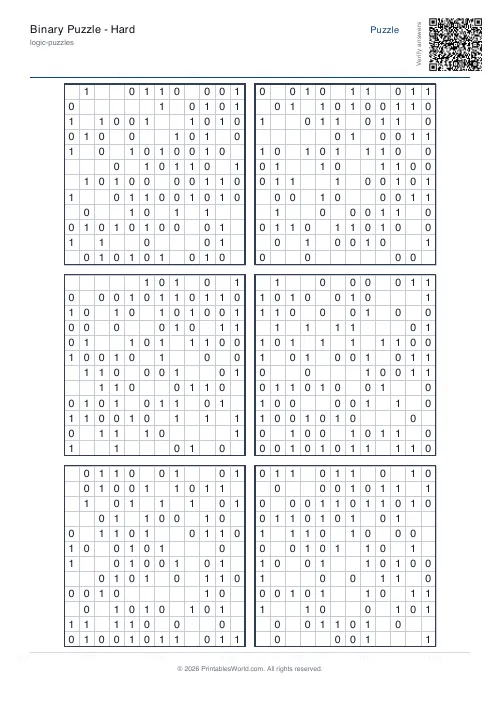
Binary Puzzle — Easy
Print-ready binary puzzle (Easy) as a free PDF — made with the generator above so you can tweak and reprint.
↓ Download PDF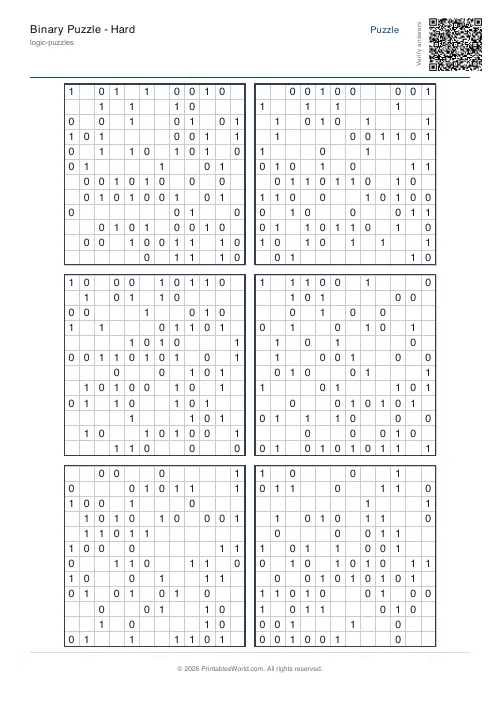
Binary Puzzle — Medium
Print-ready binary puzzle (Medium) as a free PDF — made with the generator above so you can tweak and reprint.
↓ Download PDF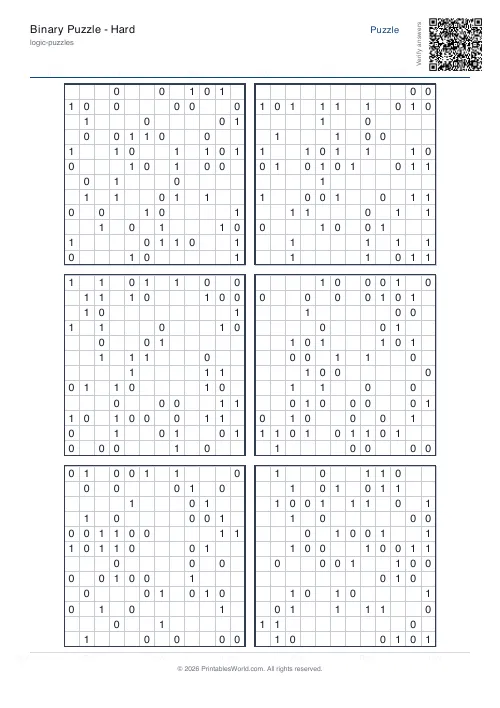
Binary Puzzle — Hard
Print-ready binary puzzle (Hard) as a free PDF — made with the generator above so you can tweak and reprint.
↓ Download PDF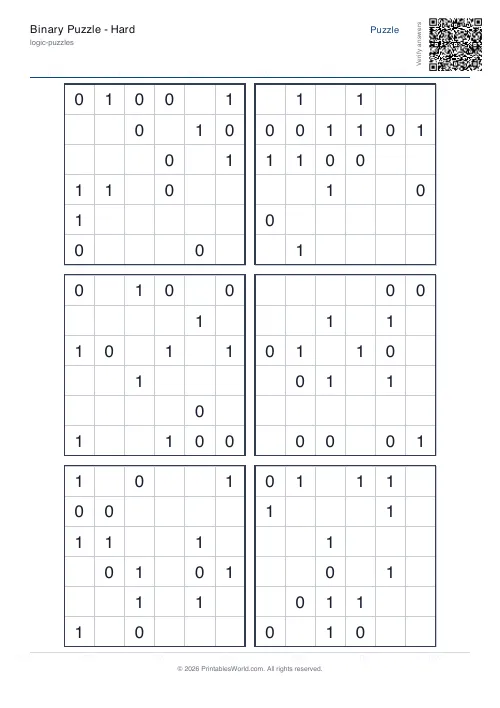
Binary Puzzle — 6x6
Print-ready binary puzzle (6x6) as a free PDF — made with the generator above so you can tweak and reprint.
↓ Download PDF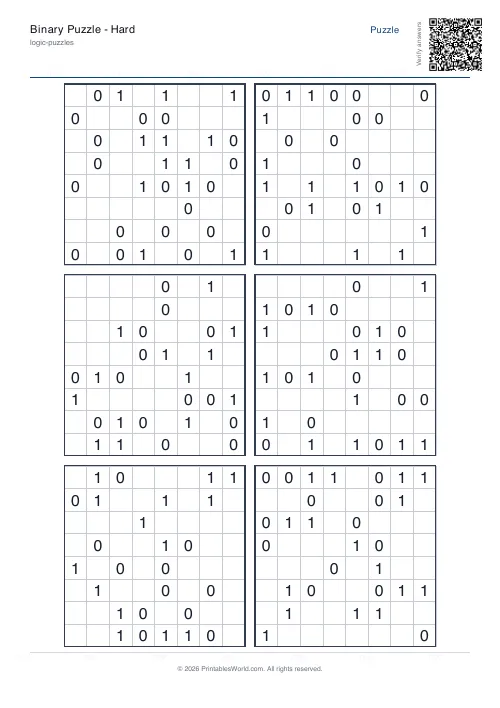
Binary Puzzle — 8x8
Print-ready binary puzzle (8x8) as a free PDF — made with the generator above so you can tweak and reprint.
↓ Download PDF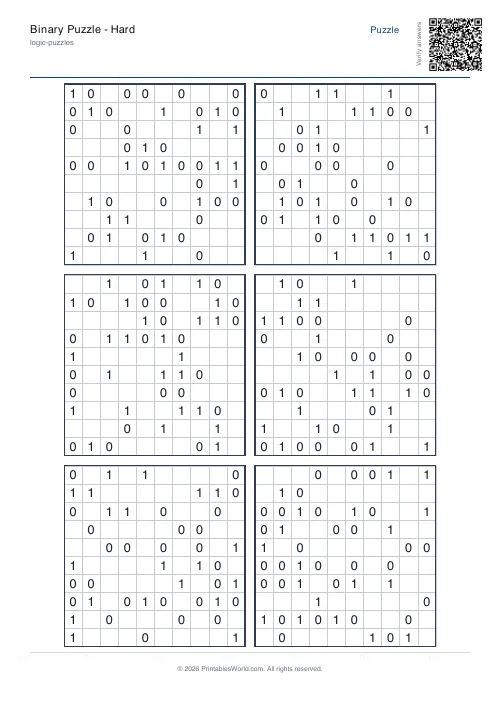
Binary Puzzle — 10x10
Print-ready binary puzzle (10x10) as a free PDF — made with the generator above so you can tweak and reprint.
↓ Download PDF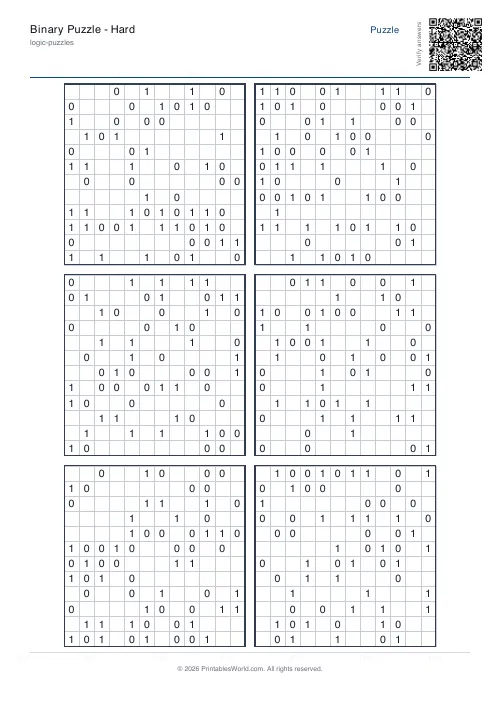
Binary Puzzle — 12x12
Print-ready binary puzzle (12x12) as a free PDF — made with the generator above so you can tweak and reprint.
↓ Download PDF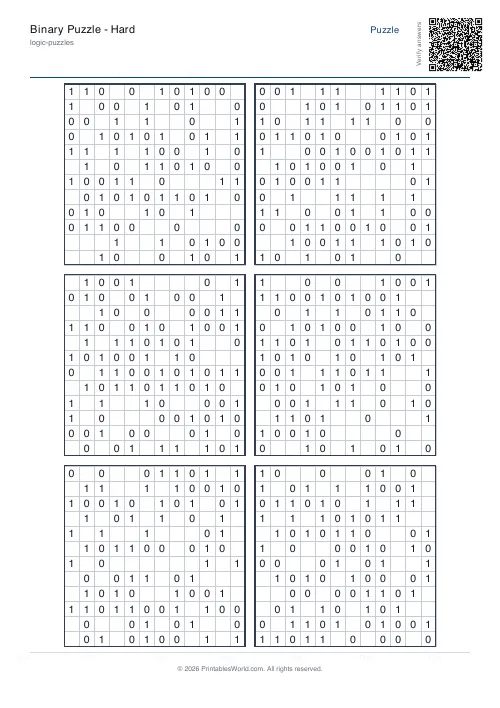
Binary Puzzle — Easy, with answer key
Completed answer key for the Easy binary puzzle — print-ready PDF for fast marking.
↓ Download PDF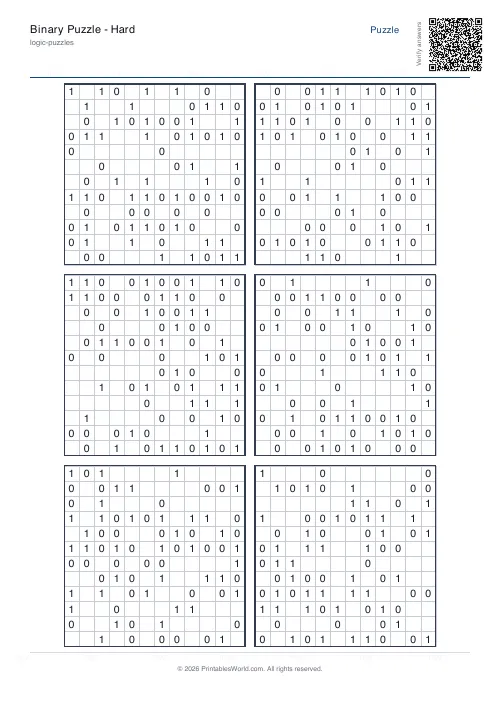
Binary Puzzle — Medium, with answer key
Completed answer key for the Medium binary puzzle — print-ready PDF for fast marking.
↓ Download PDF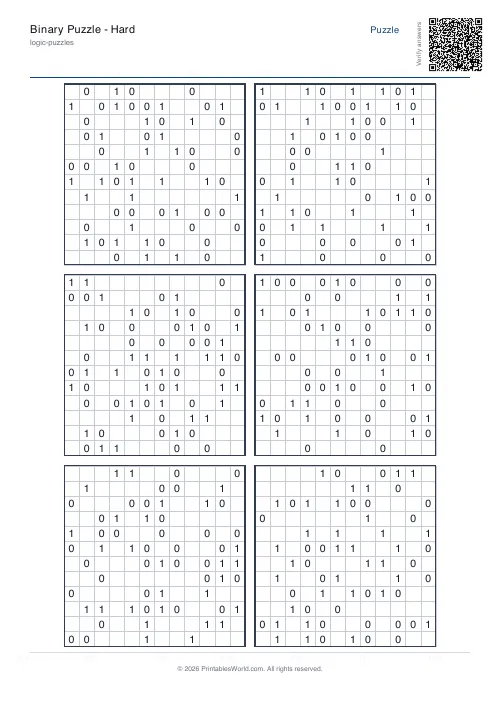
Binary Puzzle — Hard, with answer key
Completed answer key for the Hard binary puzzle — print-ready PDF for fast marking.
↓ Download PDF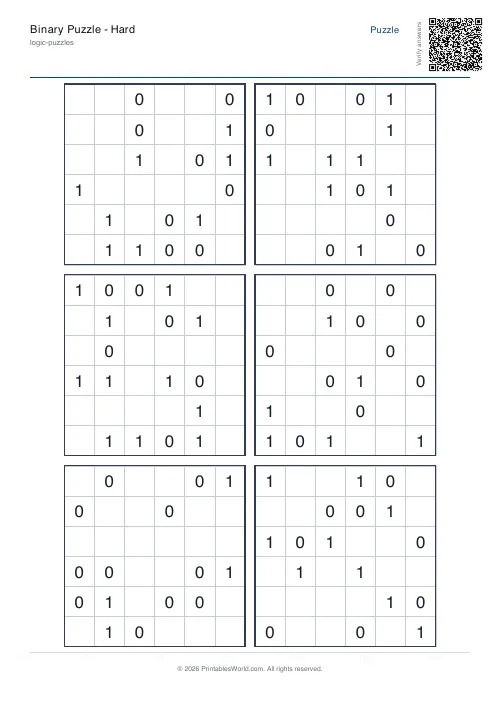
Binary Puzzle — 6x6, with answer key
Completed answer key for the 6x6 binary puzzle — print-ready PDF for fast marking.
↓ Download PDF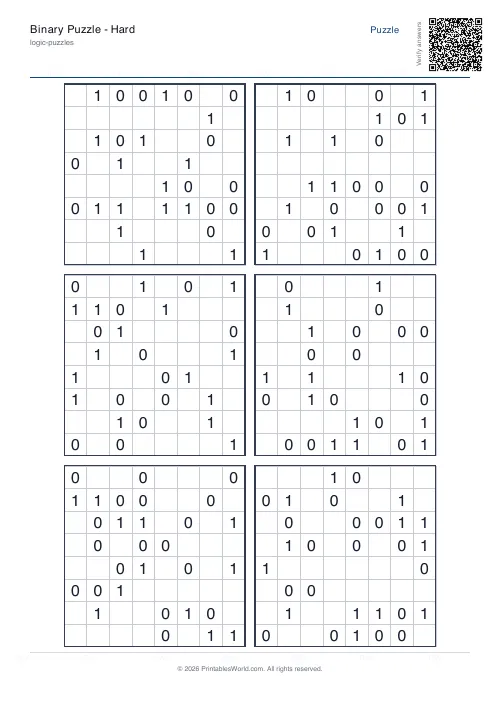
Binary Puzzle — 8x8, with answer key
Completed answer key for the 8x8 binary puzzle — print-ready PDF for fast marking.
↓ Download PDF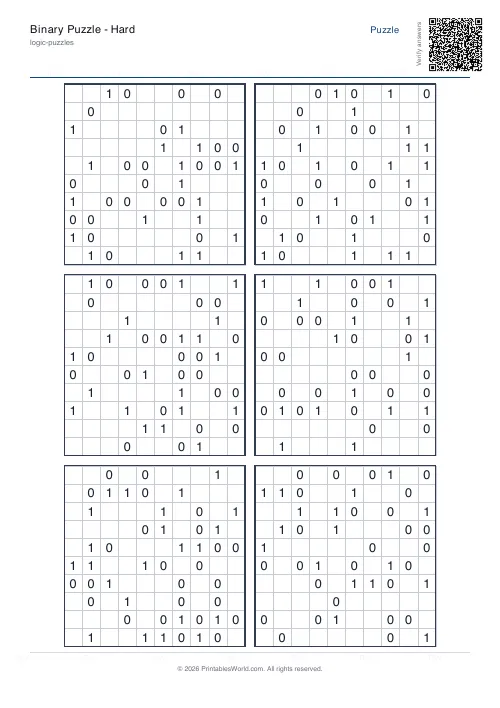
Binary Puzzle — 10x10, with answer key
Completed answer key for the 10x10 binary puzzle — print-ready PDF for fast marking.
↓ Download PDF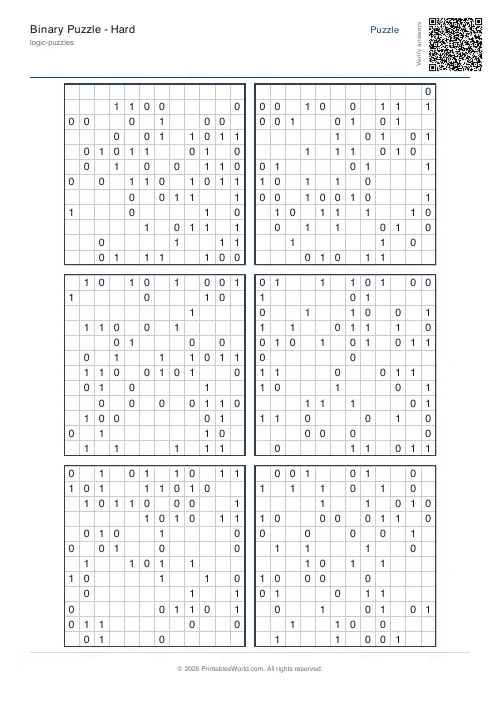
Binary Puzzle — 12x12, with answer key
Completed answer key for the 12x12 binary puzzle — print-ready PDF for fast marking.
↓ Download PDF
Settings
Customize your binary puzzle sheet
Six hard 12×12 puzzles per page on A4 paper.
Grid size
Difficulty
Paper size
Preview
Sample puzzle
One puzzle shown for layout. Your PDF contains six puzzles per page.
People also used
Feedback
Spotted something off with this tool?
Hard Binary Puzzles for Serious Solvers
Hard binary puzzles (also known as Binairo or Takuzu) are designed for solvers who want a real logic challenge. The 12x12 grid leaves very few starting clues, which means every move relies on tight deduction from the three standard binary rules. A single puzzle can occupy a patient solver for twenty minutes or more.
This generator produces print-ready PDFs in both A4 and US Letter format. Six puzzles fit per page, with optional solutions on a separate sheet for checking. Hard binary puzzles make excellent travel puzzles, quiet-time brain training for adults, and a satisfying treat after a long day.
Pattern recognition, candidate tracking and deductive reasoning are all stretched by this difficulty level. If you already enjoy hard Sudoku, 12x12 binary puzzles fill a similar niche with their own distinct flavour.
How the rules work
Every empty cell must be filled with either a 0 or a 1, according to three rules.
- Every row and column contains six 0s and six 1s.
- No three 0s or three 1s appear consecutively in any row or column.
- No two rows are identical, and no two columns are identical.
At 12x12 the no-duplicate-row rule does real work. Rows can have hundreds of legal starting positions, so near-duplicates are common and ruling them out often provides the move you need.
Who the hard binary puzzle is for
Beginners
Hard binary is not the place to start. Work through easy and medium grids first so the forced-move patterns feel automatic before tackling a 12x12.
Puzzle enthusiasts
This is the variant for people who like logic that rewards patience. Expect to make just one or two moves per scan in the opening stages before the board opens up.
Classroom teachers
Hard binary grids work for older pupils in puzzle clubs, extension tasks and logic enrichment sessions. Younger learners should stick to easier sizes.
Parents
A hard 12x12 binary puzzle is a fine screen-free evening activity for adults in the household, and a quiet-time treat for teenagers who enjoy Sudoku and similar logic games.
What you can customise
- Grid size: 12x12 is the default (the engine supports sizes up to 12x12).
- Solutions: toggle a separate answer page.
- Paper size: A4 or US Letter PDF output.
Note: the current engine supports up to 12x12, so even harder 14x14 grids are not yet available.
Worked example
Imagine a 12x12 row that already contains six 1s, with several cells still empty. Because each row holds exactly six 1s and six 0s, every remaining empty cell in that row must be a 0. Fill them in and the column constraints often cascade.
Now imagine you have a row that is one digit away from matching another completed row. The no-duplicate-row rule forces at least one differing digit, so the ambiguous cell must take a specific value.
How to use the tool
- Confirm the hard 12x12 preset is selected.
- Decide whether to include the solution page.
- Choose A4 or US Letter paper.
- Click Generate and preview the puzzles.
- Download the PDF and print at 100% scale.
Methodology
The generator builds a fully solved 12x12 grid that respects all three binary puzzle rules. It then removes cells aggressively while checking that the puzzle still has a unique solution. Hard puzzles leave the minimum clues that logic alone can uncover, so a good balance of row/column counting and no-duplicate reasoning is usually required.
Tips for solving
- Write candidate marks lightly. 12x12 grids are big enough that mental tracking becomes error-prone.
- Look for three-in-a-row threats across both rows and columns simultaneously. A single 0 can be forced by either direction.
- Use row/column counts whenever a row is nearly complete.
- Compare near-duplicate rows or columns late in the solve.
Designed for A4 and US Letter printing
The PDF respects either paper size without rescaling. Six puzzles per page keeps cell sizes workable on the 12x12 grid, so you can write 0s and 1s without cramping.
Why hard binary puzzles build real logic skills
Hard binary is not about arithmetic, it is about sustained deductive reasoning. Each move has to be justified by one of the three rules, and the justification often draws on two or even three of them at once. That careful chaining of constraints is exactly the kind of brain training that transfers to other logic puzzles, to programming, and to everyday problem-solving.
Pattern recognition plays a role too. Once you have solved a dozen hard 12x12 grids you start to see common shapes immediately: the “sandwich” pattern where a lone 0 sits between two 1s, the “almost-complete row” where a count rule forces the last few cells, and the rare “duplicate-row save” where ruling out a near-duplicate row unlocks a digit you had been chasing for minutes.
A good quiet-time habit
A single hard 12x12 puzzle can fill a quiet evening or stretch across a long train journey. Solvers who enjoy daily brain training often keep a small stack of printed puzzles as a screen-free alternative to scrolling. The puzzles travel well, do not need batteries and come with a built-in reward: the satisfying moment when the last cell clicks into place.
Related logic puzzles
FAQs
Quick answers
Why is hard binary so difficult?
Larger grids and fewer given digits mean you need to track candidates carefully and chain several rules together to make progress.
How big are the grids?
The default is 12x12. The current generator supports up to 12x12, so 14x14 is not yet available.
How many puzzles per page?
Six per page on A4 or US Letter — large enough to write into.
Can I get the solutions?
Yes. Toggle the solutions option for a second page with the completed grids.
Related tools
More like this
 Sudoku Generator
 Binary Puzzle Generator — Printable
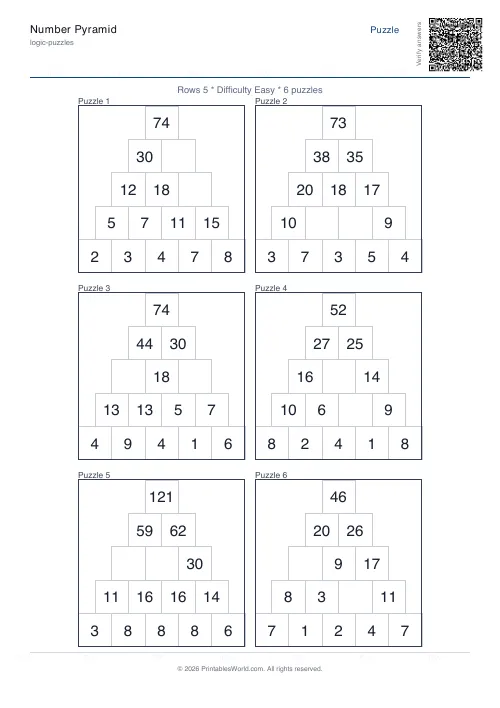 Number Pyramid Generator
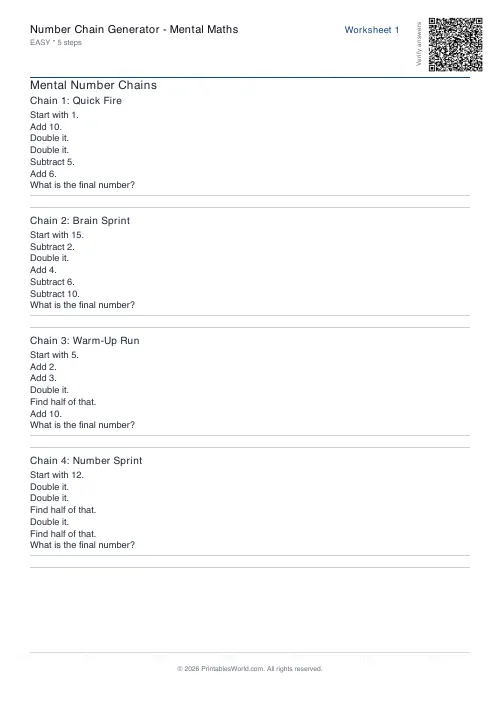 Number Chain Generator — Mental Maths
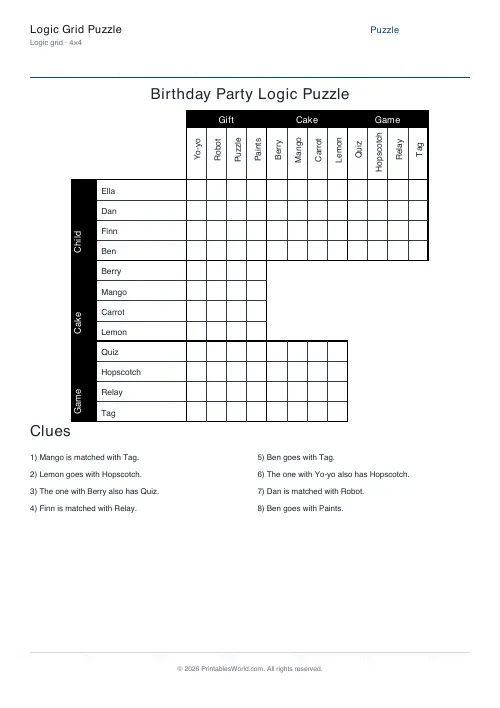 Logic Grid Puzzle Generator — Printable
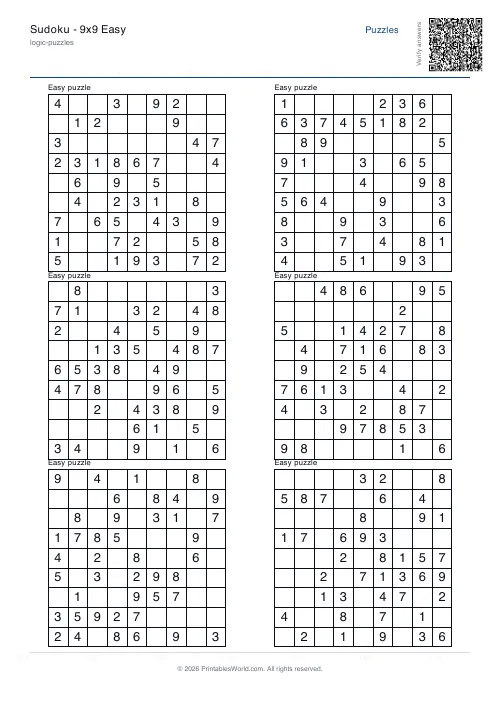 Sudoku — 9x9 Easy
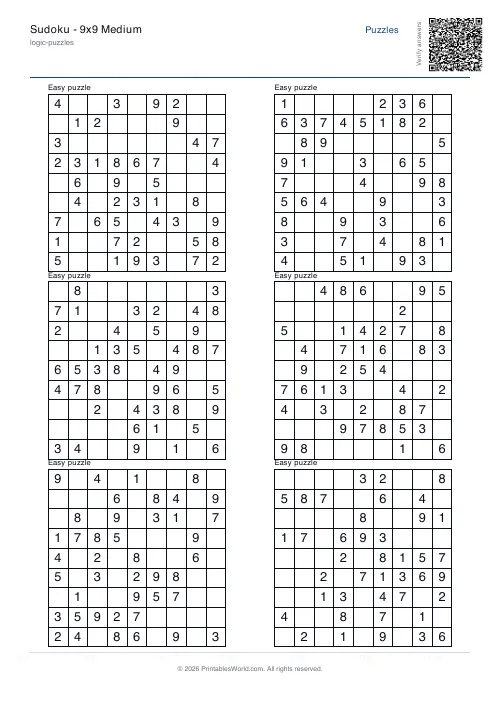 Sudoku — 9x9 Medium
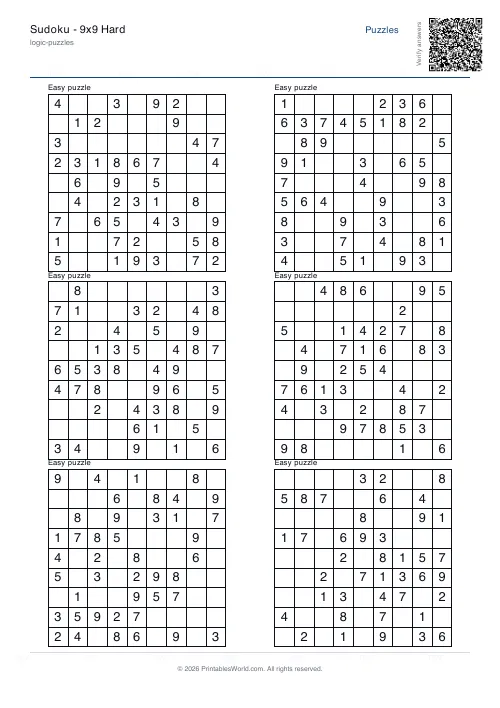 Sudoku — 9x9 Hard
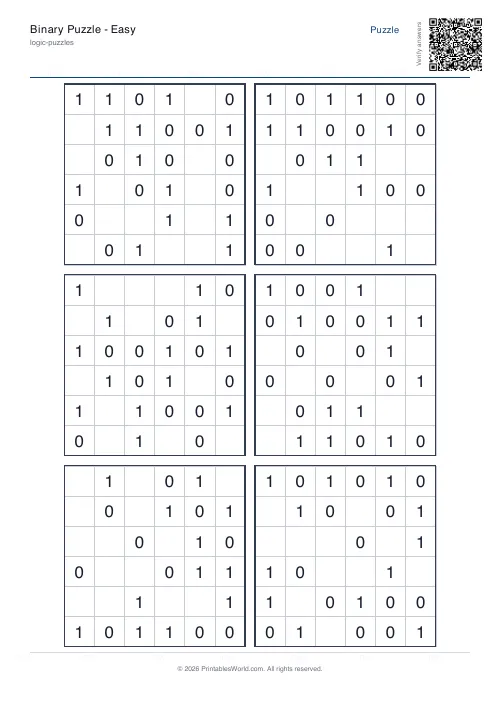 Binary Puzzle — Easy
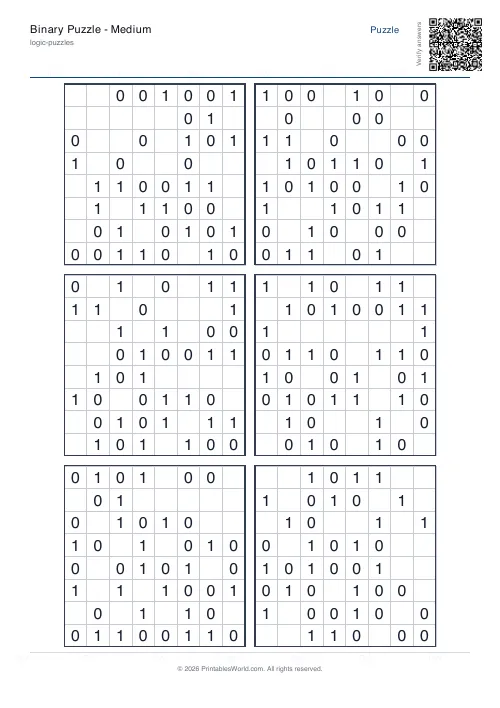 Binary Puzzle — Medium
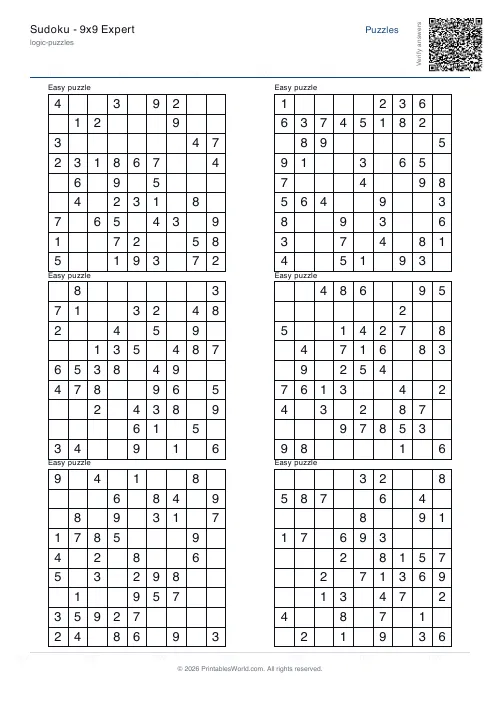 Sudoku — 9x9 Expert
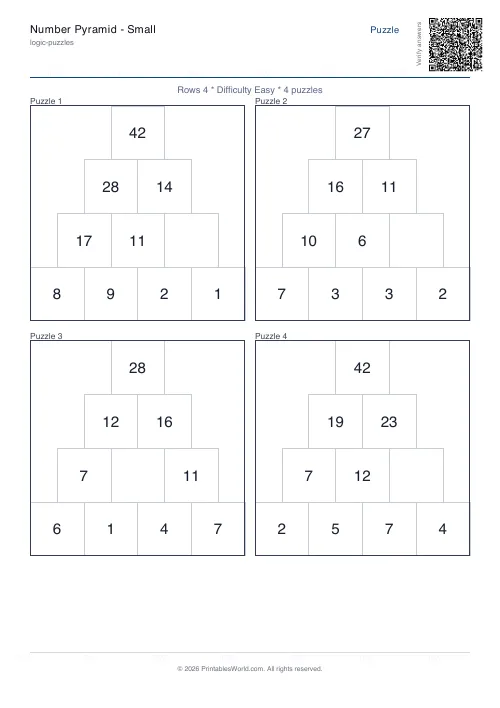 Number Pyramid — Small
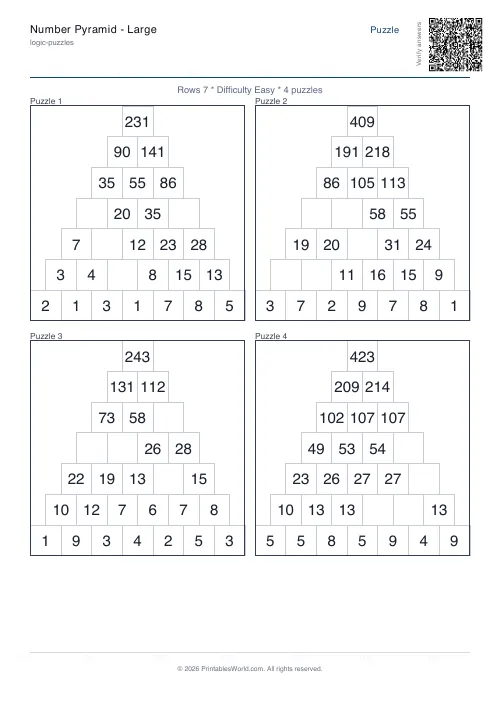 Number Pyramid — Large
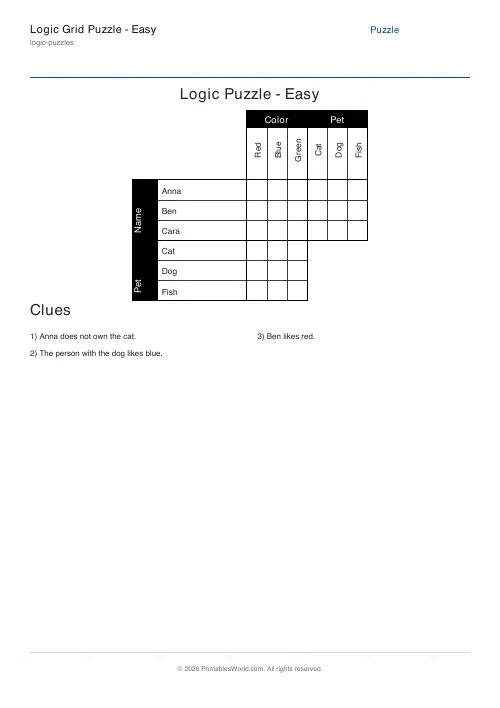 Logic Grid Puzzle — Easy