Printable Paper
Lined Paper — Wide Ruled
Wide-ruled lined paper (8.7 mm) for early writers.
Last updated:
What this tool does
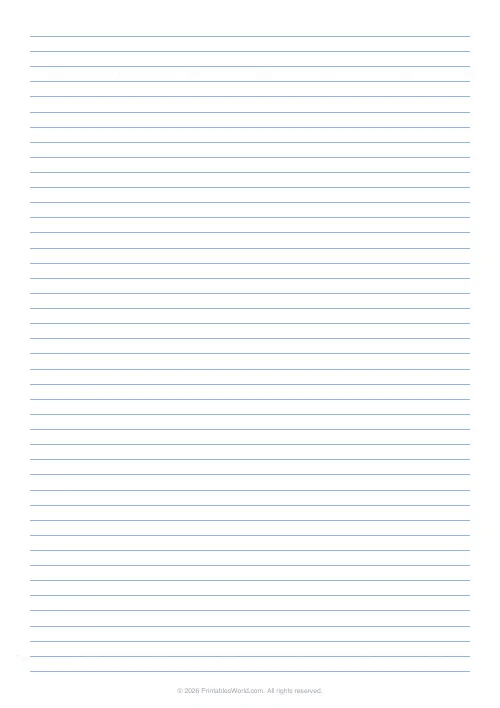
Wide-ruled lined paper at the standard 8.7 mm spacing — the classic ruling for early writers and large handwriting. Includes a vertical margin guide and works on A4 or US Letter.
Free downloads
Ready-made Lined Paper printables — free PDF downloads
No setup needed — download these print-ready lined paper as free PDFs. Each one was made with the generator above, so you can recreate or fully customize any of them.
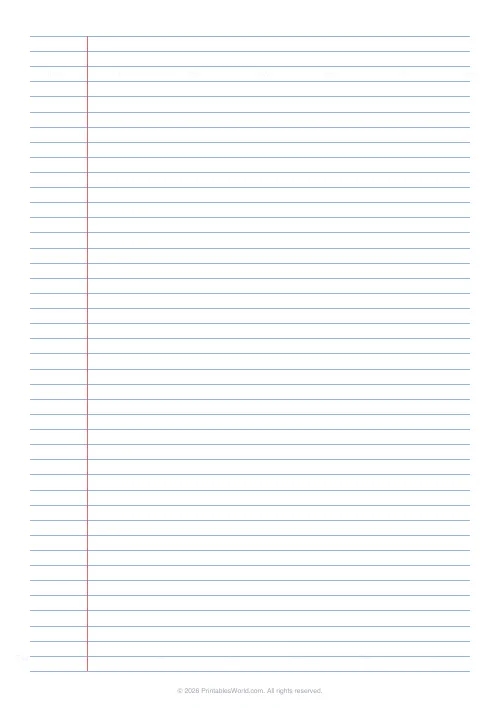
Lined Paper — 6.35 mm (narrow ruled)
Print-ready lined paper (6.35 mm (narrow ruled)) as a free PDF — made with the generator above so you can tweak and reprint.
↓ Download PDF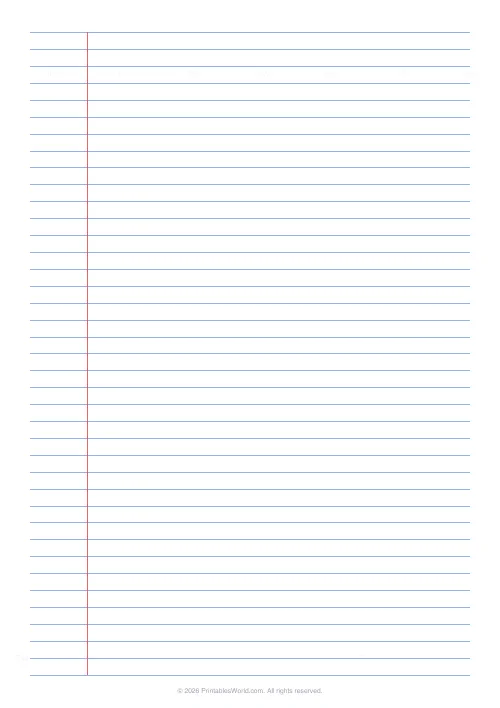
Lined Paper — 7.1 mm (college ruled)
Print-ready lined paper (7.1 mm (college ruled)) as a free PDF — made with the generator above so you can tweak and reprint.
↓ Download PDF
Lined Paper — 8.7 mm (wide ruled)
Print-ready lined paper (8.7 mm (wide ruled)) as a free PDF — made with the generator above so you can tweak and reprint.
↓ Download PDF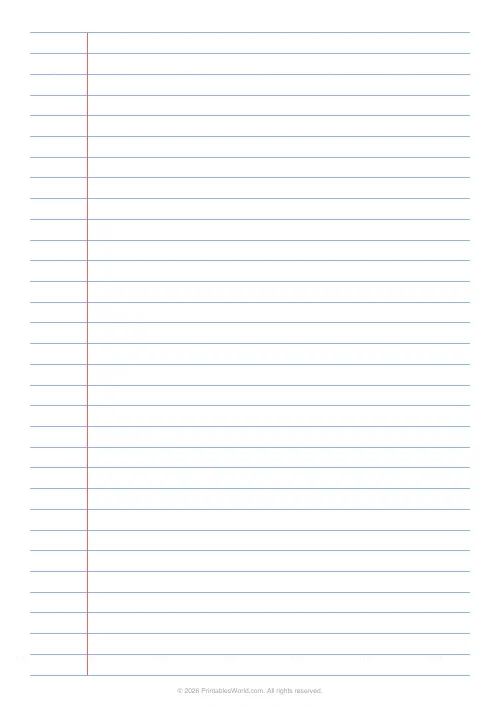
Lined Paper — Plain ruled
Print-ready lined paper (Plain ruled) as a free PDF — made with the generator above so you can tweak and reprint.
↓ Download PDF
Lined Paper — Primary (three-line)
Print-ready lined paper (Primary (three-line)) as a free PDF — made with the generator above so you can tweak and reprint.
↓ Download PDF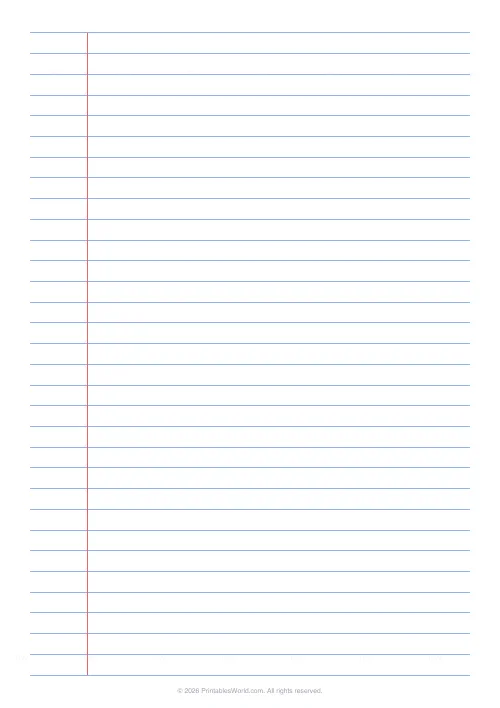
Lined Paper — With margin line
Print-ready lined paper (With margin line) as a free PDF — made with the generator above so you can tweak and reprint.
↓ Download PDF
Lined Paper — No margin
Print-ready lined paper (No margin) as a free PDF — made with the generator above so you can tweak and reprint.
↓ Download PDF
Lined Paper — Blue
Print-ready lined paper (Blue) as a free PDF — made with the generator above so you can tweak and reprint.
↓ Download PDF
Lined Paper — Gray
Print-ready lined paper (Gray) as a free PDF — made with the generator above so you can tweak and reprint.
↓ Download PDF
Settings
Customize your lined paper
8.7 mm spacing on A4 paper, with a 24 mm margin guide, light blue lines.
Line weight
Line colour
Paper size
Preview
Sample sheet
On-screen mock of the chosen pattern. The PDF prints at exact millimetre spacing.
People also used
Feedback
Spotted something off with this tool?
Printable Wide Ruled Lined Paper at 8.7 mm Spacing
Wide ruled lined paper sits at 11/32 of an inch spacing, or about 8.7 mm, with a 24 mm vertical margin guide on the left. It is the standard US primary-school notebook ruling, and it suits anyone whose handwriting is still tall, loopy, or on the larger side. Grab a print-ready PDF in A4 or US Letter in seconds — no sign-up, no watermarks on your content, just a clean, consistent ruling.
If 8.7 mm feels too generous, step down to College Ruled at 7.1 mm or Narrow Ruled at 6.35 mm. Need a fully customisable ruling? Use the Lined Paper Generator.
Why wide ruled?
Wide ruling leaves room above the baseline for tall ascenders and gives early writers the space to form letters cleanly. It is also the kind paper for anyone learning to write in a new script. Use it for:
- Years 2 to 5 classroom writing
- US elementary (Grades 2 to 4) notebook pages
- early essay writing and creative writing
- cursive practice (which needs room above and below the baseline)
- language learning for scripts with descenders and ascenders
- users with motor or visual challenges that suit bigger letters
- journalling when you write big and relaxed
Larger spacing means fewer lines per page, so wide rule is the opposite end of the spectrum to narrow rule. Choose it when comfort beats density.
What is on the page
- 8.7 mm line spacing — the standard US wide-ruled measurement.
- 24 mm margin guide — a vertical red line on the left at the classic offset.
- Header strip at the top for Name / Date / Class.
- Line colour options — blue (default), grey, or green.
- Line weight — light, medium, or dark depending on how prominent you want the rules.
Who this paper is for
Students
Primary-school and early secondary students learning to write at a comfortable size.
Designers & makers
Useful for low-density journalling and for written-out design notes you want to scan at a glance.
Teachers
Print whole-class sets for creative writing, story drafting, and early essays. Wide rule also works for students with visual or motor needs who benefit from more room.
Hobbyists
Hand-letterers use wide rule to practise scripts and flourishes where both ascenders and descenders need generous breathing room.
Wide ruled versus the alternatives
Versus college ruled (7.1 mm)
About 22% wider spacing. That translates to around 8 fewer lines per page on an A4 sheet, so you fit less text but each line is much easier to keep neat.
Versus narrow ruled (6.35 mm)
Wide rule gives nearly 40% more vertical space per line. It is a comfort choice, not a density choice.
Versus primary (three-line) ruling
Primary ruling teaches letter heights with a dotted midline; wide rule is the next step up for children who no longer need the midline guide.
How to use the tool
- Leave spacing at 8.7 mm or adjust in the advanced settings.
- Keep the 24 mm margin guide on, or turn it off for a clean left edge.
- Pick a line colour and line weight.
- Choose A4 or US Letter.
- Click Generate.
- Preview and download the PDF.
Print at 100% scale so the spacing stays true on the paper.
Worked example
A primary teacher needs writing paper for a 30-minute story-writing session. At 8.7 mm spacing on A4 (297 mm tall), she gets roughly 28 ruled lines per page after margins — enough space for a child to plan, write an opening paragraph, and still have room for corrections. She sets the line colour to blue, enables the 24 mm red margin, and prints a stack before the lesson. Students use the margin to draft a story map before starting their first paragraph.
Methodology
The template draws horizontal rules at exactly 8.7 mm intervals and a vertical red margin guide at 24 mm from the printable-area left edge. Line thickness is controlled in millimetres so the ruling stays consistent across paper sizes and zoom levels. Every PDF goes through the shared printable-paper pipeline, which applies the site branding and QR code in the same place on every template.
Designed for A4 and US Letter printing
Spacing stays at 8.7 mm on both paper sizes; the number of lines per page shifts slightly because the sheets are different heights. Print at 100% scale so the ruling matches standard wide-ruled notebooks.
Tips for writing on wide-ruled paper
- Aim for an x-height of about 5 to 6 mm on 8.7 mm ruling — that leaves a comfortable cap-height margin above.
- Use a wider-tip pen (0.7 mm or 1.0 mm) if you want your handwriting to match the generous spacing.
- Reserve the 24 mm left margin for dates, page numbers, or a vertical doodle strip.
- For cursive, the extra space between lines stops descenders of one line colliding with ascenders of the next.
- If the paper feels too spacious, try the college-ruled template as an intermediate step before narrow.
Related printable paper tools
- College Ruled Lined Paper — 7.1 mm for older students
- Narrow Ruled Lined Paper — 6.35 mm for dense notes
- Primary Lined Paper — three-line rule with dotted midline
- Lined Paper Generator — any ruling you need
- Graph Paper Generator — grid alternative
FAQs
Quick answers
What is "wide ruled" spacing?
8.7 mm between lines — the standard wide-rule used in primary schools.
Is there a margin line?
Yes — a vertical red guide on the left at 24 mm from the page edge, like classic notebook ruling.
Will this match standard wide-ruled notebook paper?
Yes, the spacing matches widely-used wide-ruled notebooks.
Can I make the lines darker?
Yes — pick medium or dark from the line weight control.
Related tools