What this tool does
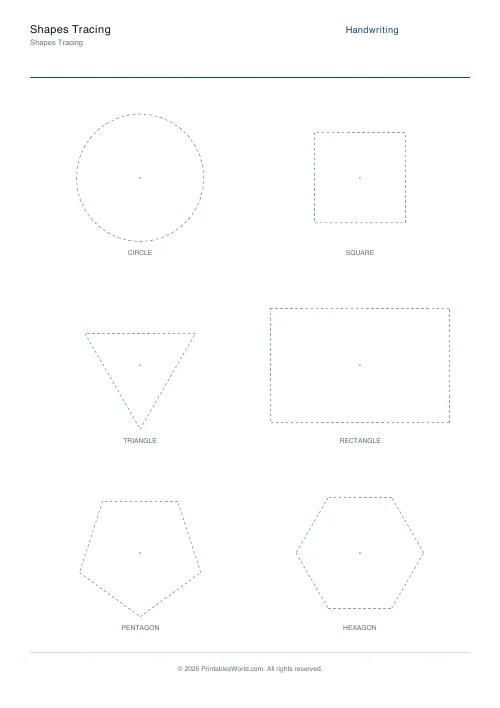
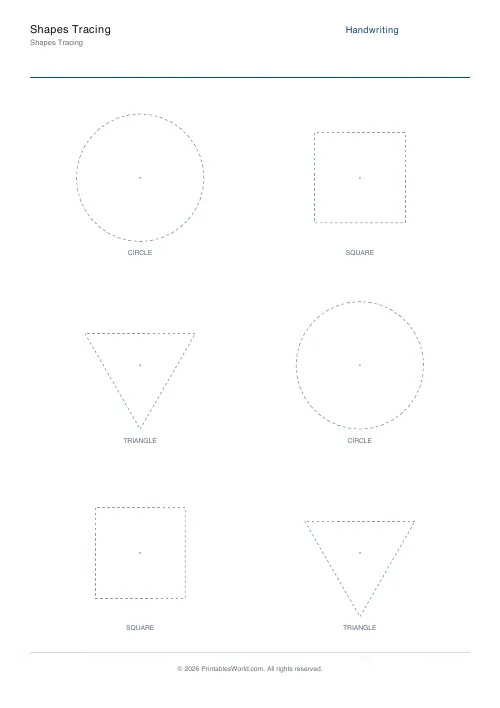
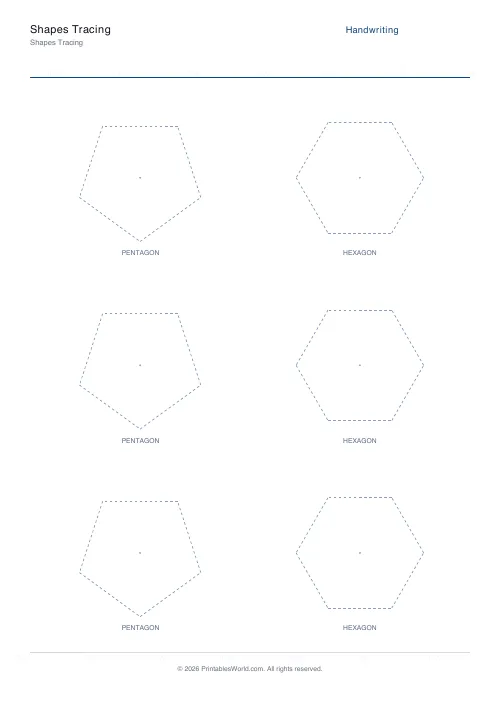
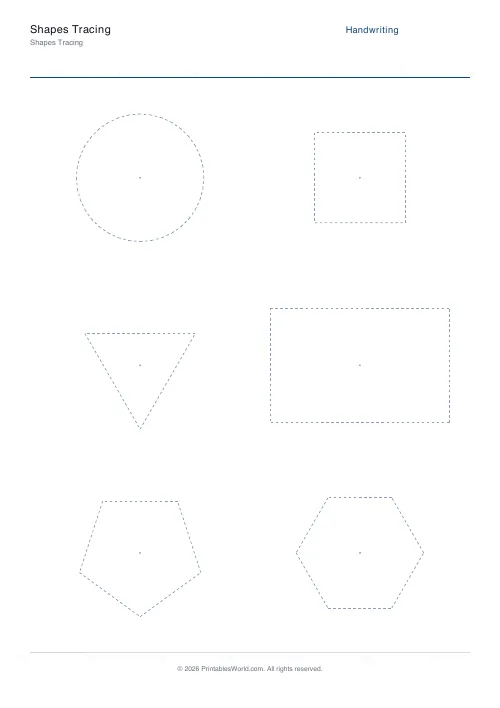
Large 2D shapes in a faint dotted outline to trace over. Circle, square, triangle, rectangle, pentagon and hexagon, in a grid of up to 6 columns by 8 rows, with optional name labels.
People also used
Feedback
Spotted something off with this tool?
Six shapes, printed big and dotted
A grid of large shapes in faint dotted outline. Circle, square, triangle. Rectangle, pentagon, hexagon. You set how many columns and rows, and whether the name prints underneath each one.
Two columns by three rows is the default, which gives six generous shapes on a page.
Shapes before letters
This sheet sits earlier than any letter tracing, and the order is not arbitrary.
Every letter is built from a handful of movements: a vertical line, a horizontal one, a circle, a diagonal, a curve. A child who can produce those reliably picks up letters quickly, while a child who cannot will spend the whole of Reception fighting the pencil rather than learning the alphabet, and no amount of letter practice fixes that because the letters were never the problem.
A circle needs continuous rotation. A triangle needs three straight lines meeting at points, which requires stopping deliberately — a genuinely hard skill for a three-year-old, who tends to sail past the corner. A hexagon needs six of them.
The developmental order
Vertical line, horizontal line, circle, cross, square, diagonal, triangle. That is roughly the sequence in which children become able to copy shapes, and it is fairly stable across children.
The diagonal is the one that arrives late, which is why triangles are harder than squares despite having fewer sides. If a child can copy a square and cannot manage a triangle, that is normal and is not a reason to drill triangles.
Print only the shapes they are close to. Six shapes including a pentagon on a page for a three-year-old is four shapes of failure.
Big is deliberate
Two or three shapes to a page makes each one large. Large is easier.
Young children draw from the shoulder and elbow rather than the fingers, so a shape the size of a hand is within reach when a small one is not. Fine motor control develops outward from the body, and asking for small before big is asking in the wrong order.
Increase the grid density as control improves, not before.
The labels
On by default, and worth keeping. Say the name every time the shape is traced — the vocabulary comes free and it is vocabulary children are expected to have before formal geometry starts.
Turn them off if you would rather ask what each shape is called than tell them.
Adjustments
Which shapes, columns from 1 to 6, rows from 1 to 8, and the labels. A4 or US Letter.
Ordinary paper, and expect to print several, because this is a sheet that gets used up rather than kept. A thick pencil or a crayon beats a sharp one here. At this age the grip matters considerably more than the point does.
Print at 100%.
FAQs
Quick answers
Which shapes are included?
Circle, square, triangle, rectangle, pentagon and hexagon. The most common 2D shapes children meet in early geometry.
Can I print more or fewer shapes per page?
Yes. Use the rows and columns selectors to set the grid size. From a single large shape per page up to a 6 × 8 grid.
Why are the outlines dotted?
Dotted (dashed) outlines make it clear that the shape is for tracing. Children pencil over the dashes to draw the shape.
Are the shape names shown?
Yes by default. Toggle Show labels off to use the sheet for free tracing without the vocabulary.
Related tools
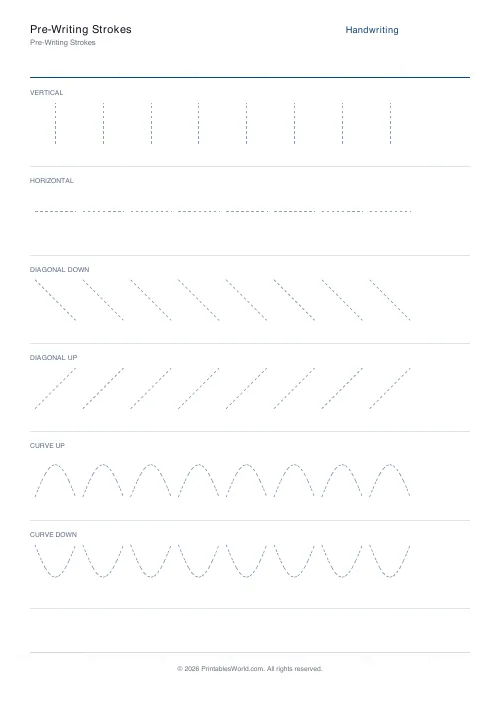
Pre-Writing Strokes
Trace vertical, horizontal, diagonal and curved strokes for pencil control.
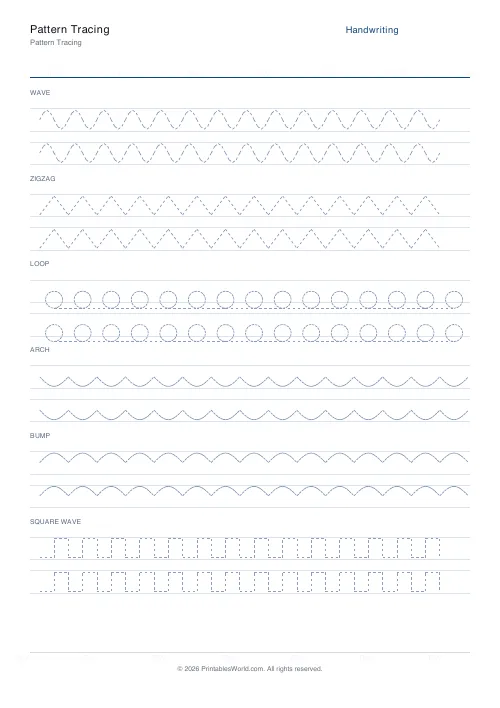
Pattern Tracing
Repeating patterns, zigzags, waves and loops, for pencil control.
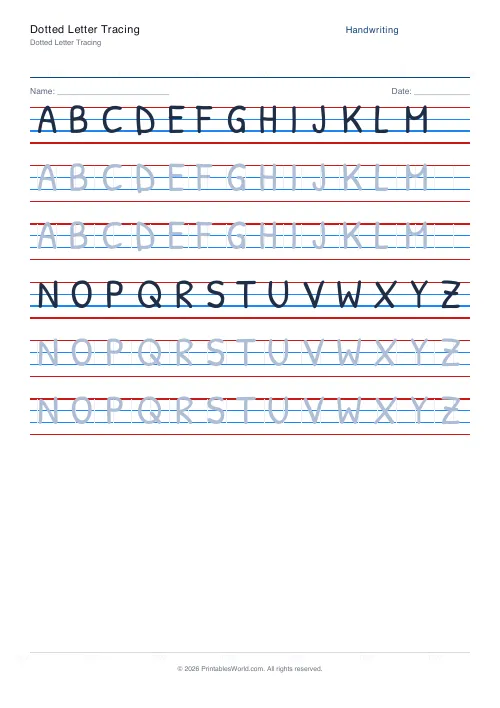
Dotted Letter Tracing
Large dotted letters for fine motor development and letter formation.
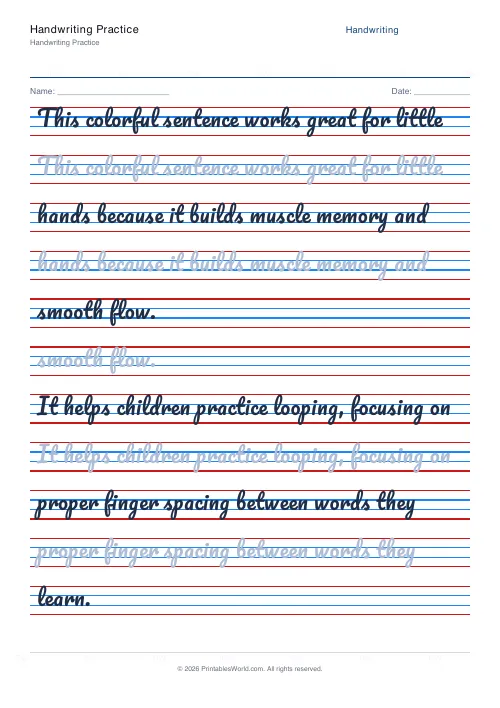
Handwriting Practice Generator
Create custom 4-line handwriting practice sheets with trace rows, adjustable guides, and your own text.
Further reading
Handwriting
Dotted vs solid trace lines: what works best for beginners
Each trace style removes a different amount of support. The mistake is staying on one too long. Tracing feels productive and teaches less than copying.
4 min read
Handwriting
How to fix reversed letters (b and d) in young writers
Reversing b and d is normal up to around seven. The fix is not more practice of both together. It is teaching them apart, by movement rather than by shape.
5 min read
More like this
- Handwriting Practice Generator
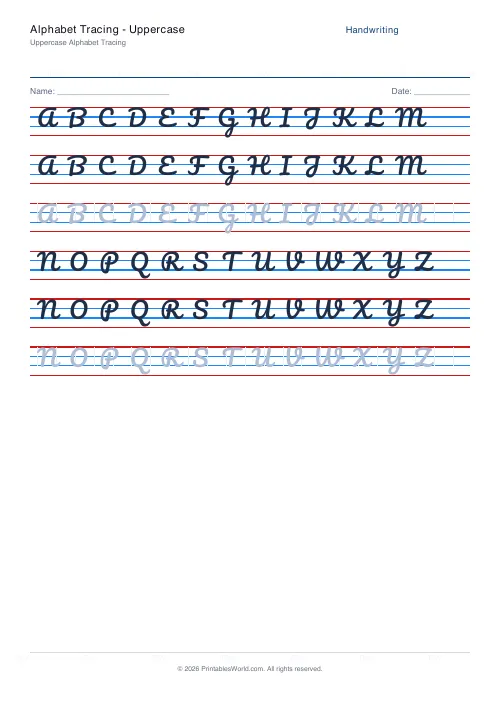 Alphabet Tracing: Uppercase
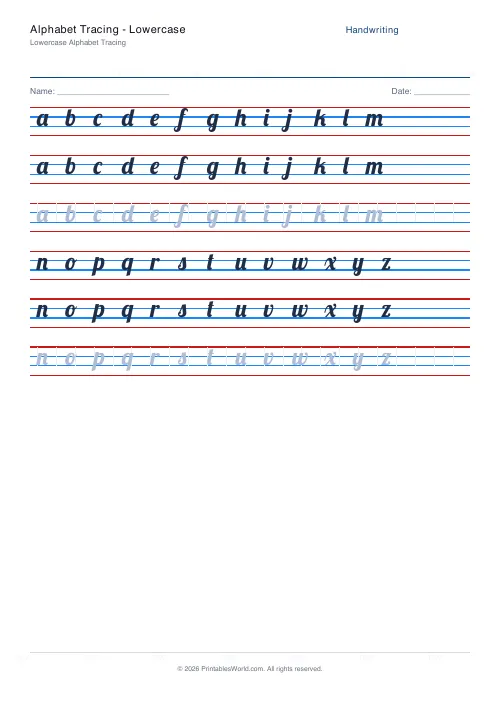 Alphabet Tracing: Lowercase
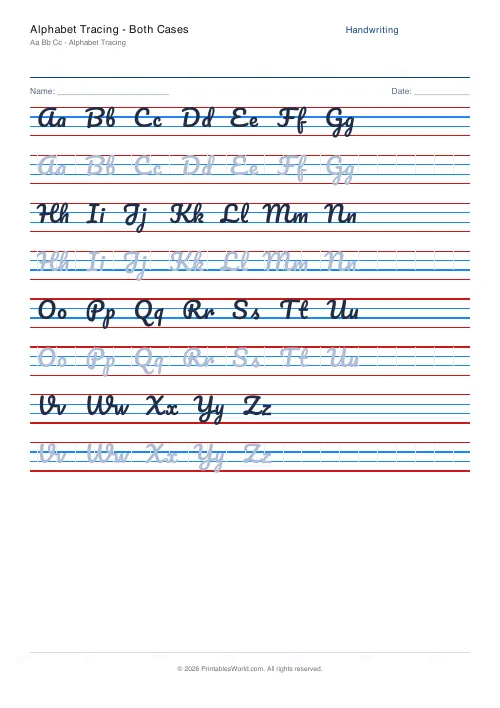 Alphabet Tracing: Both Cases
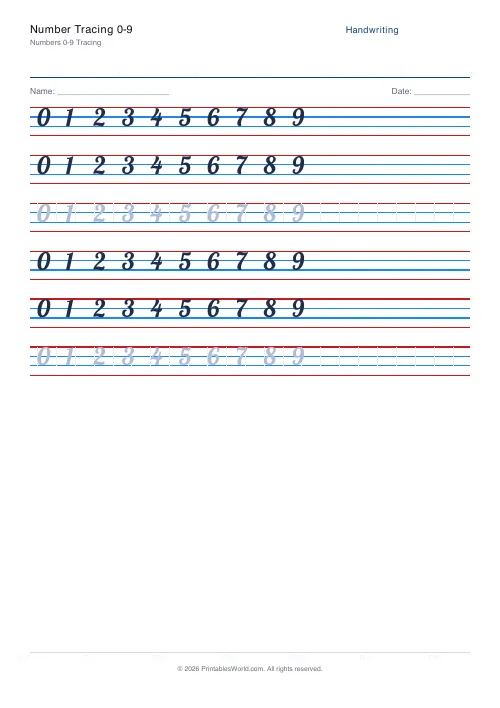 Number Tracing 0-9
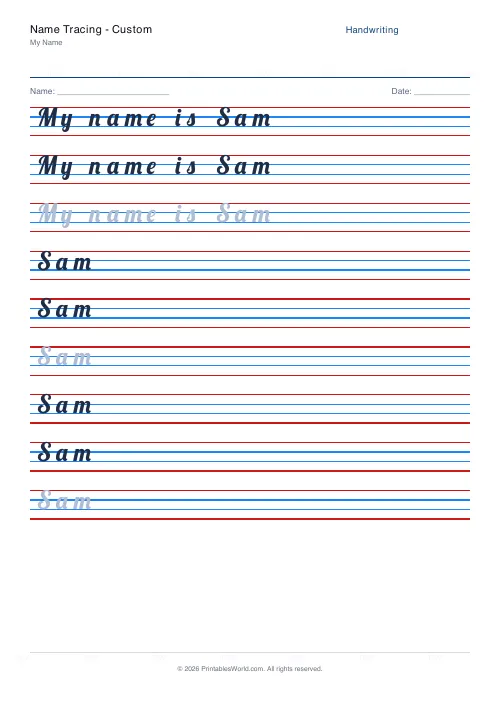 Name Tracing: Custom
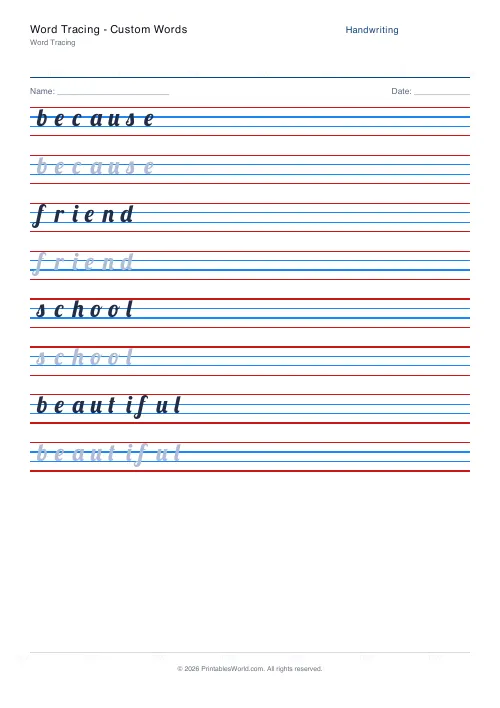 Word Tracing: Custom Words
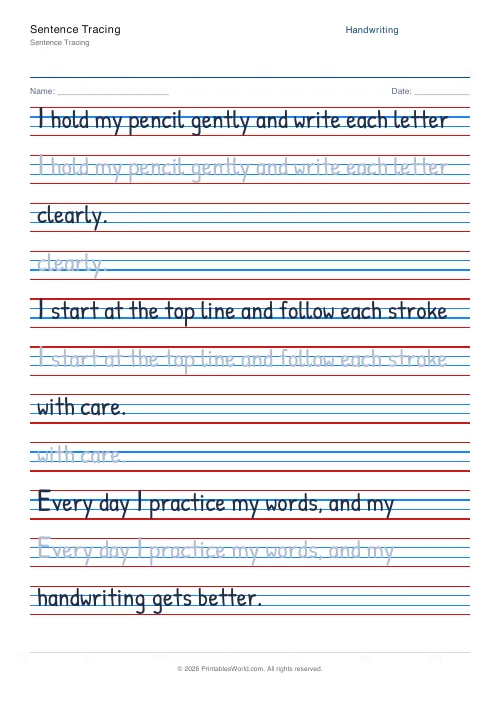 Sentence Tracing
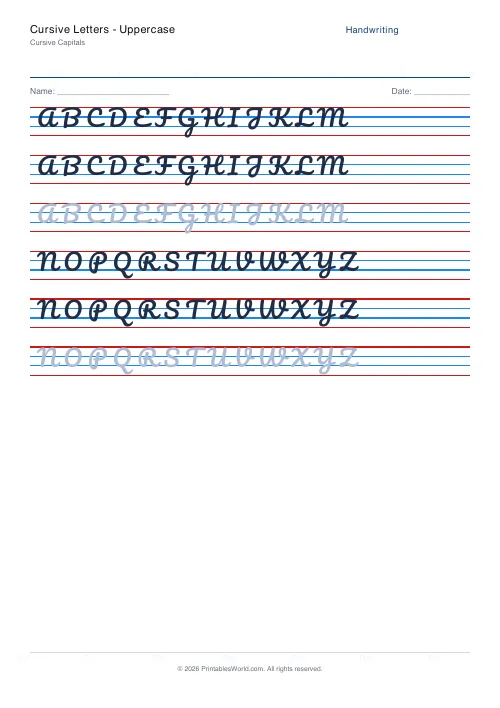 Cursive Letters: Uppercase
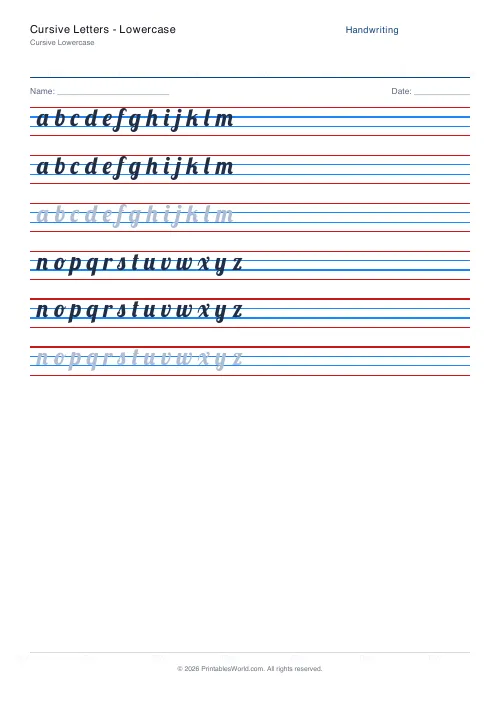 Cursive Letters: Lowercase
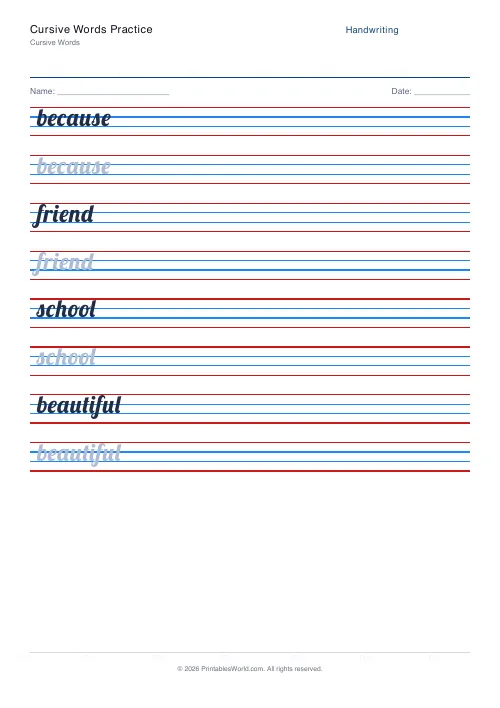 Cursive Words Practice
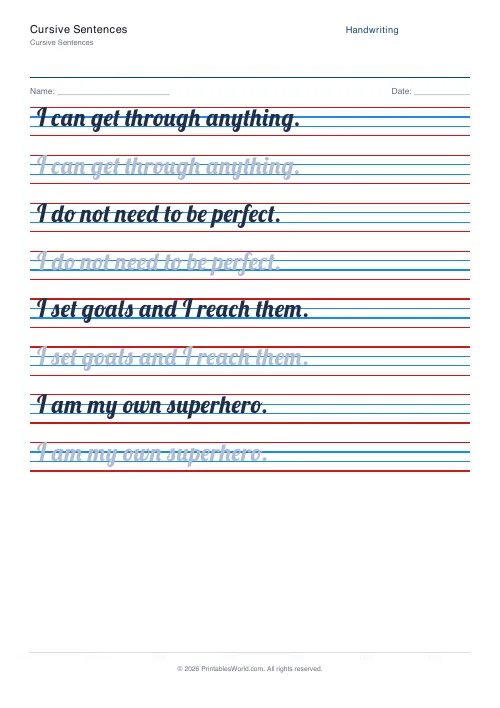 Cursive Sentences
- Dotted Letter Tracing
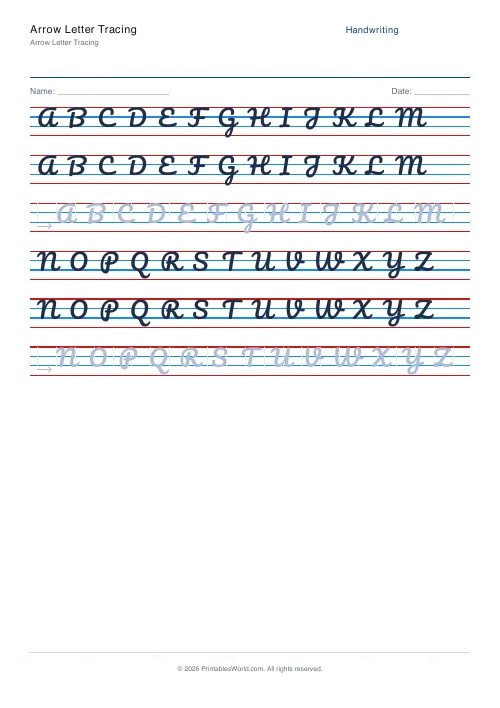 Arrow Letter Tracing