Math Worksheets
Addition Worksheets — Single Digit
Printable single-digit addition practice (1–9).
Last updated:
What this tool does
Single-digit addition practice sheets for early learners. Problems are drawn from the 1–9 range so sums stay under 20, ideal for beginners building fact fluency.
Free downloads
Ready-made Addition Worksheet printables — free PDF downloads
No setup needed — download these print-ready addition worksheets as free PDFs. Each one was made with the generator above, so you can recreate or fully customize any of them.
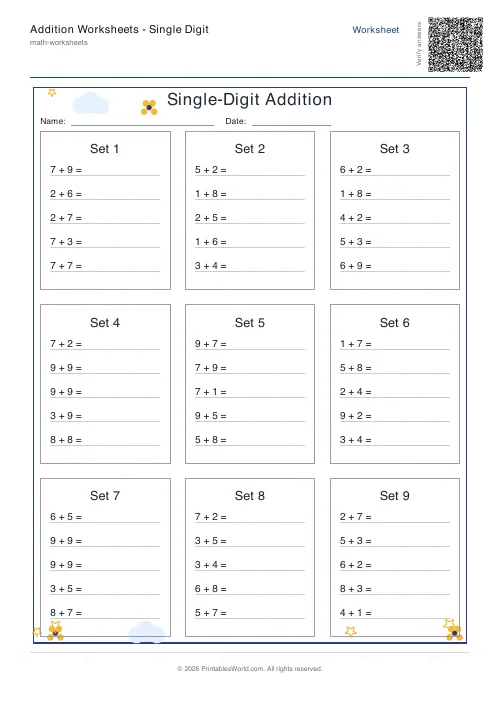
Addition Worksheet — Table style
Print-ready addition worksheet (Table style) as a free PDF — made with the generator above so you can tweak and reprint.
↓ Download PDF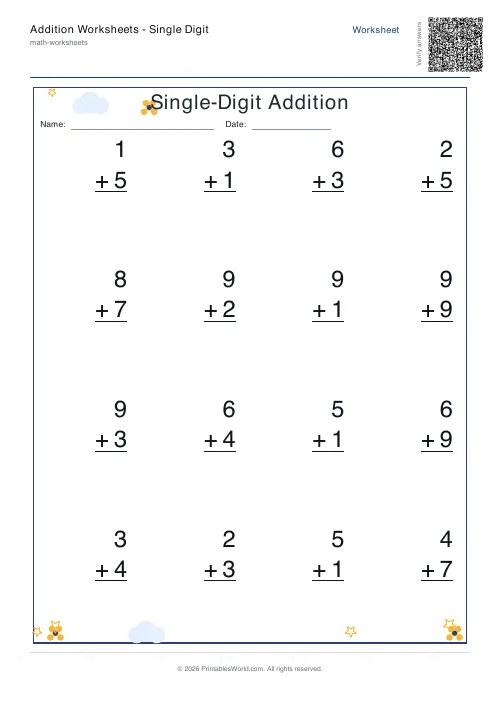
Addition Worksheet — Vertical / line-by-line
Print-ready addition worksheet (Vertical / line-by-line) as a free PDF — made with the generator above so you can tweak and reprint.
↓ Download PDF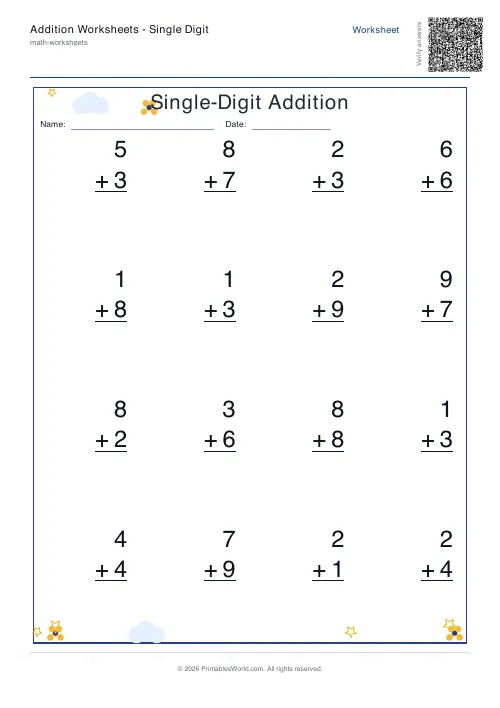
Addition Worksheet — 1-digit
Print-ready addition worksheet (1-digit) as a free PDF — made with the generator above so you can tweak and reprint.
↓ Download PDF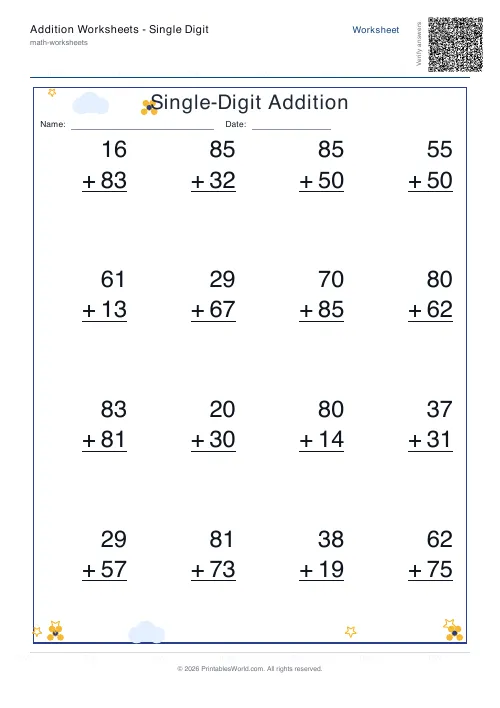
Addition Worksheet — 2-digit
Print-ready addition worksheet (2-digit) as a free PDF — made with the generator above so you can tweak and reprint.
↓ Download PDF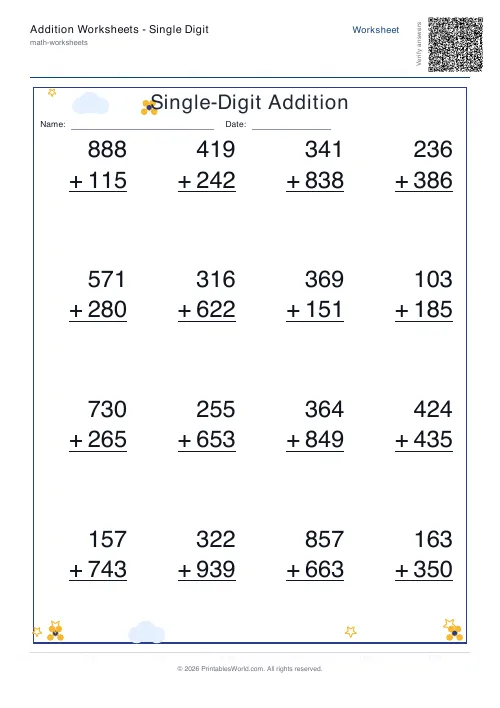
Addition Worksheet — 3-digit
Print-ready addition worksheet (3-digit) as a free PDF — made with the generator above so you can tweak and reprint.
↓ Download PDF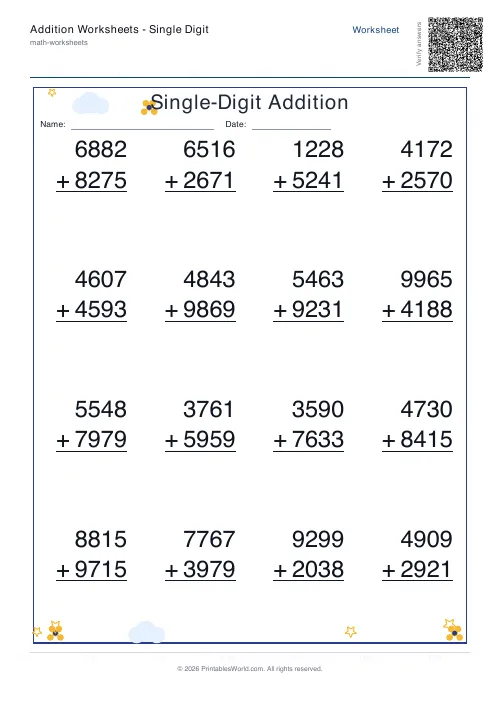
Addition Worksheet — 4-digit
Print-ready addition worksheet (4-digit) as a free PDF — made with the generator above so you can tweak and reprint.
↓ Download PDF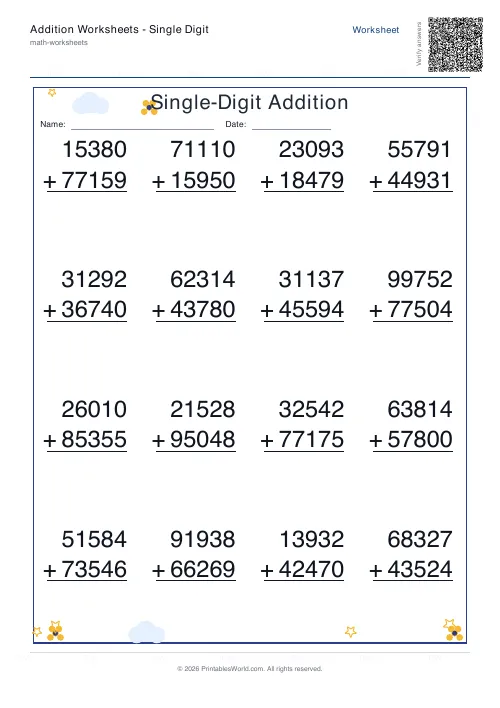
Addition Worksheet — 5-digit
Print-ready addition worksheet (5-digit) as a free PDF — made with the generator above so you can tweak and reprint.
↓ Download PDF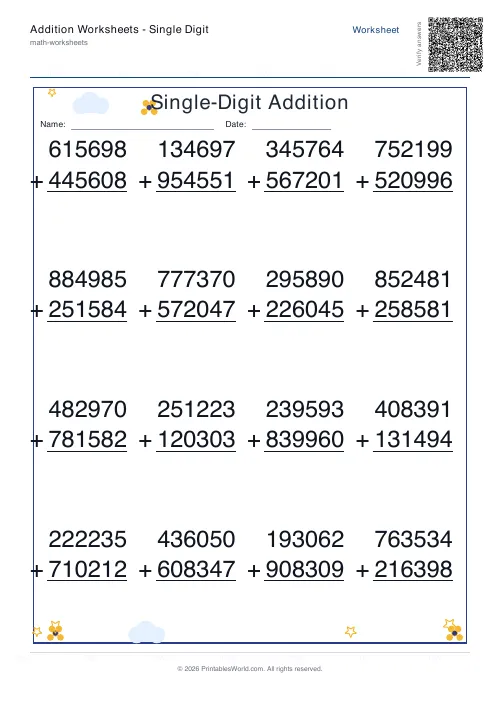
Addition Worksheet — 6-digit
Print-ready addition worksheet (6-digit) as a free PDF — made with the generator above so you can tweak and reprint.
↓ Download PDF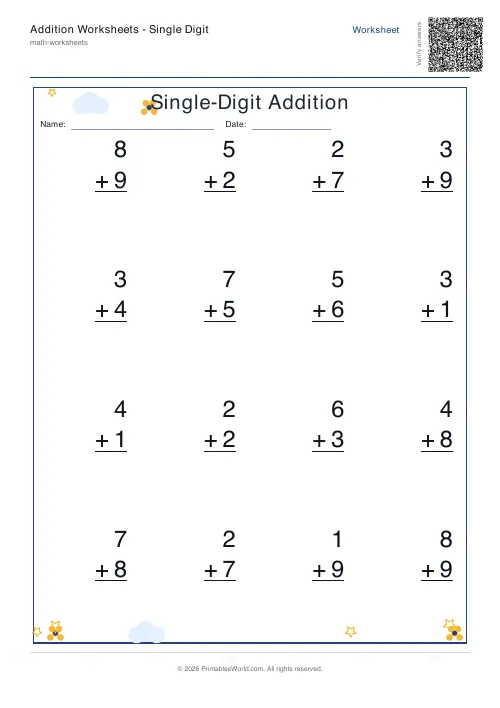
Addition Worksheet — Standard
Print-ready addition worksheet (Standard) as a free PDF — made with the generator above so you can tweak and reprint.
↓ Download PDF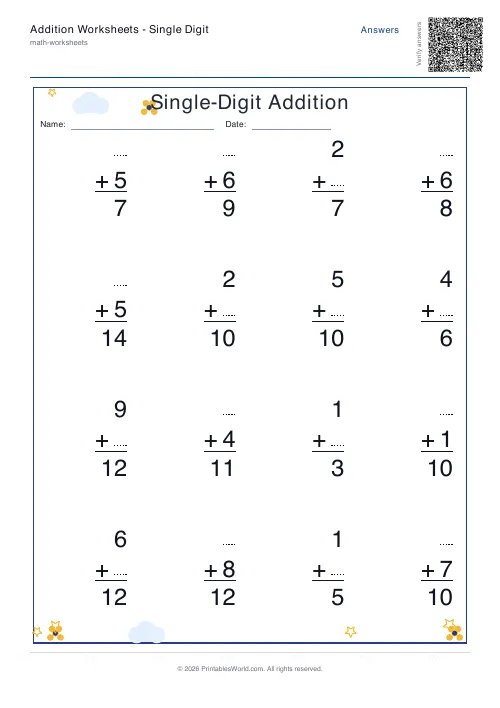
Addition Worksheet — Find the missing number
Print-ready addition worksheet (Find the missing number) as a free PDF — made with the generator above so you can tweak and reprint.
↓ Download PDF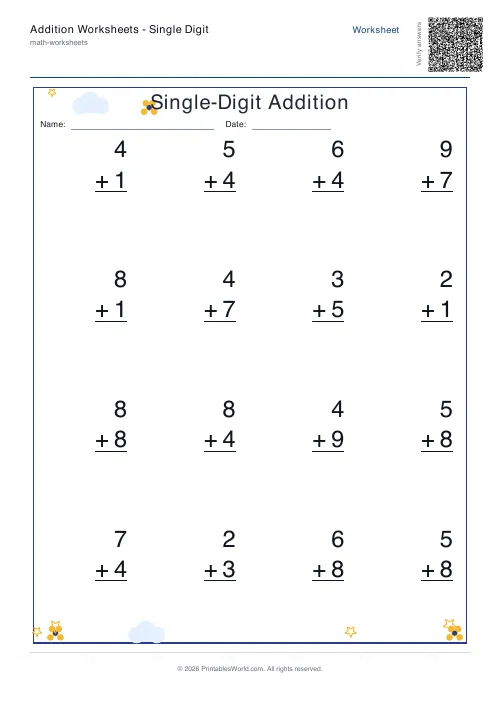
Addition Worksheet — No zero
Print-ready addition worksheet (No zero) as a free PDF — made with the generator above so you can tweak and reprint.
↓ Download PDF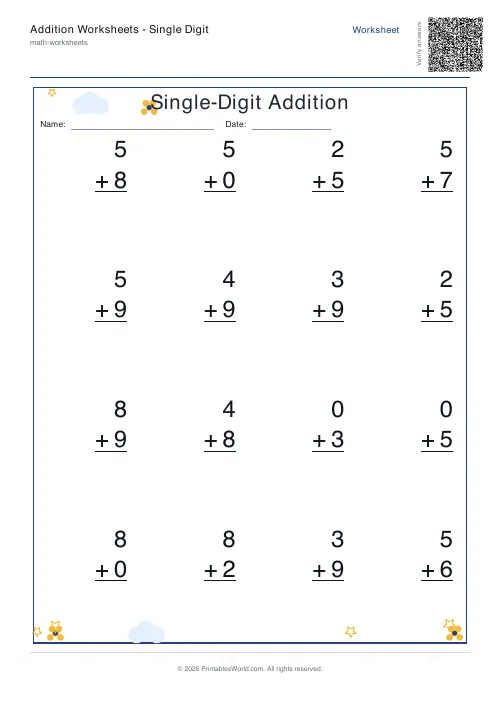
Addition Worksheet — Include zero
Print-ready addition worksheet (Include zero) as a free PDF — made with the generator above so you can tweak and reprint.
↓ Download PDF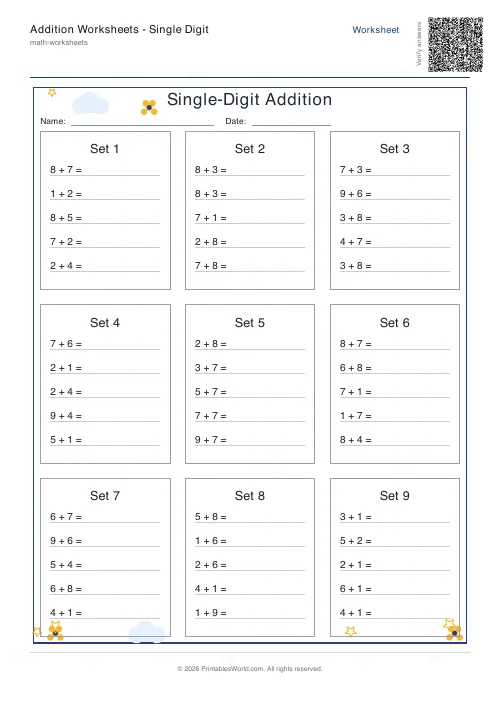
Addition Worksheet — Table style, with answer key
Completed answer key for the Table style addition worksheet — print-ready PDF for fast marking.
↓ Download PDF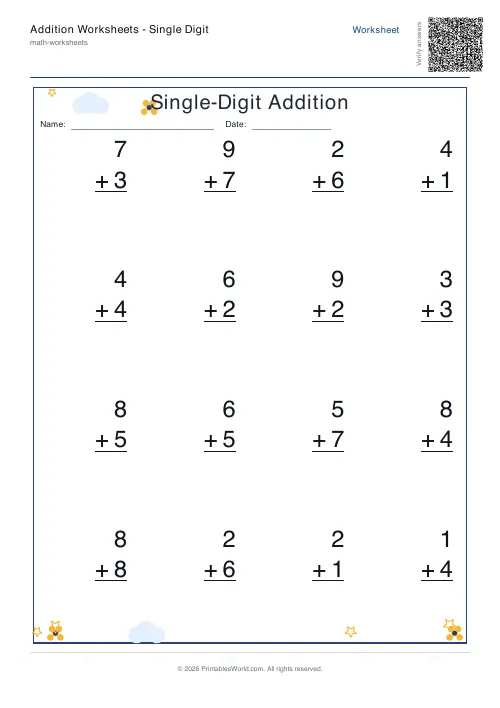
Addition Worksheet — Vertical / line-by-line, with answer key
Completed answer key for the Vertical / line-by-line addition worksheet — print-ready PDF for fast marking.
↓ Download PDF
Settings
Customize your addition worksheet
Line-by-line · none theme · 1-digit · A4
Worksheet style
Output
Paper size
Preview
Live PDF preview
The actual PDF, updated as you change settings.
People also used
Feedback
Spotted something off with this tool?
Create Printable Single-Digit Addition Worksheets for Home and Classroom Use
Quickly create free printable single-digit addition worksheets tailored to the learner, number range, and worksheet style.
This generator produces A4 or US Letter PDFs for home, school, tutoring and early maths practice. Every addend stays in the 1–9 range, so sums stay under 20 and the focus remains on number bonds and fact fluency. Download a blank worksheet, an answer sheet, or both in one click.
Parents, teachers, homeschoolers and tutors can use the tool to produce fresh single-digit practice without tracking down printable PDFs or reusing the same sheet twice.
Why use this single-digit addition generator?
Single-digit addition is the foundation of every later arithmetic skill. The quicker a learner can recall sums such as 6 + 7 or 8 + 5, the easier column addition, times tables and word problems become. This generator gives you an endless supply of clean, focused practice sheets for:
- kindergarten and Reception warm-ups
- Year 1 and Grade 1 fact fluency
- daily "number of the day" routines
- homework sheets
- tutor sessions
- homeschool maths blocks
- revision before a timed assessment
Because every page is fresh, learners cannot memorise the position of answers — they must actually recall each fact.
What you can customise
The generator keeps decisions simple so you can print in under a minute:
- Worksheet style: Table or Line-by-line layout
- Number range: locked at 1–9 for true single-digit practice, with an option to include zero
- Include zero: add sums like 0 + 4 or 7 + 0 for learners working on the identity rule
- Download type: Blank, Answers, or Both
- Missing question mode: show the total and hide one addend for number-bond work
- Paper type: A4 or US Letter PDF
- Theme style: pick a friendlier visual look for younger learners
- Font size: keep it on Auto or make the digits larger for young hands
- Worksheet title: swap in your own heading
- Name and Date fields: useful for classwork and homework
Notes and limitations
- Problems are drawn randomly, so two downloads rarely match exactly.
- Sums stay under 20; the tool does not cross into double-digit territory even when zero is included.
- Table layout packs more problems onto a page but can feel dense for very young learners.
- Print at 100% scale for the cleanest spacing, especially if you enlarge the font.
Who these worksheets are for
Single-digit addition worksheets suit a specific but broad audience.
Parents
Five-minute practice sheets for evenings, weekends or half-term revision.
Teachers
Morning work, starters, exit tickets and fluency drills for Reception, Year 1 and early Year 2.
Homeschool families
Fresh pages each day without buying a workbook, with answers on hand for quick marking.
Tutors
Diagnostic sheets to spot which facts a learner still counts on fingers, so sessions can target the gap.
Worksheet style options
Table style
Grouped cards of problems that fit many sums onto one page — good for timed drills and pattern spotting.
Line-by-line
Traditional vertical format with space to work beneath each problem — easiest for very young learners and tidiest for handwriting practice.
Missing question mode
The answer is printed and one addend is hidden. Excellent for building number bonds to 10 and 20.
How to use the tool
- Choose Table or Line-by-line layout.
- Decide whether to include zero.
- Turn Missing question mode on if you want number-bond practice.
- Show or hide Name and Date fields.
- Select Blank, Answers or Both.
- Pick A4 or US Letter.
- Add a worksheet title if needed.
- Click Generate Worksheet and preview the page.
- Download the PDF.
Worked example
To make a classic Year 1 starter, choose Line-by-line layout, keep the range at 1–9, leave Missing question mode off, tick Include zero, and set Download type to Both.
The blank PDF gives you around twenty sums such as 3 + 6, 0 + 8 and 9 + 4, and the matching answer sheet lets you mark in a few seconds.
Methodology
The generator draws random single-digit pairs from 0–9 (or 1–9 when zero is excluded), ensuring sums stay under 20. It lays the problems out in the selected layout and stamps every page through the shared branded PDF template. Random mode reshuffles the problem set each time you click Generate, so repeated prints give fresh practice.
Helpful preset ideas
- Line-by-line with zero included for the first week of Year 1
- Table layout for timed-drill days
- Missing question mode for number bonds to 10
- Blank + Answers for parent-led homework
- Large font size for learners still forming digits
Best ways to practise single-digit addition
- Keep sessions short — five to ten minutes is enough for young learners.
- Mix oral recall and written practice across the week.
- Celebrate speed improvements, not just accuracy.
- Pair the worksheet with ten-frames or counters for learners still building fluency.
- Use Missing question mode once basic sums feel easy, to deepen number-bond thinking.
Designed for A4 and US Letter Printing
Every worksheet exports at the exact paper size your printer expects. Pick A4 for UK, Europe and most of Asia, or US Letter for North America. Layout, margins and font sizes are tuned for each paper size, so the sheet looks right whether you are running off copies for a class or printing a single page at home.
Related maths practice tools
Other printable maths tools you may find useful:
FAQs
Quick answers
What number range does this use?
Single-digit addition uses numbers 0–9, so most sums stay under 20.
Good for kindergarten or Year 1?
Yes. Single-digit sums are a core kindergarten and Year 1 target for fact fluency.
Can I switch to table layout?
Yes. Table layout groups problems into cards; line-by-line is simpler for beginners.
What paper sizes can I print on?
Every sheet prints cleanly on A4 or US Letter. The branded template scales the problem grid and answer key to fit either size without cutting anything off, so it works the same on classroom printers in the UK, US and elsewhere.
Related tools
Addition Worksheets — Double Digit
Printable double-digit addition practice (10–99).
Addition Worksheets — Triple Digit
Printable triple-digit addition practice (100–999).
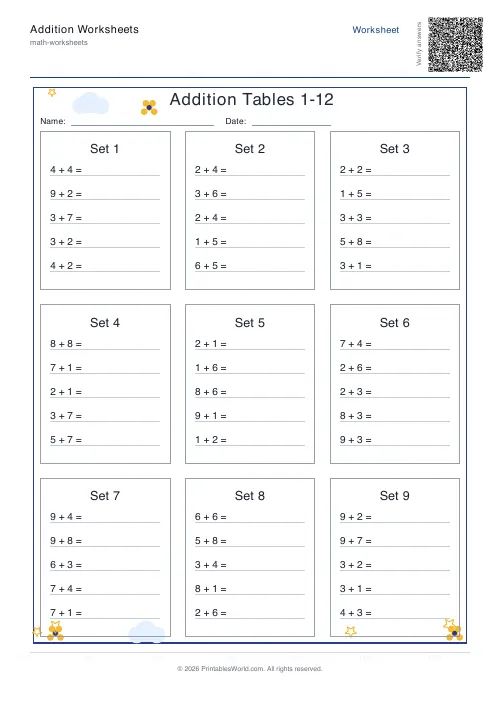
Addition Worksheets Generator
Free printable addition worksheets in tables or line-by-line layouts.
Symmetry Worksheets
Printable lines-of-symmetry and complete-the-figure practice.
More like this
 Addition Worksheets Generator
 Visual Addition Worksheets Generator
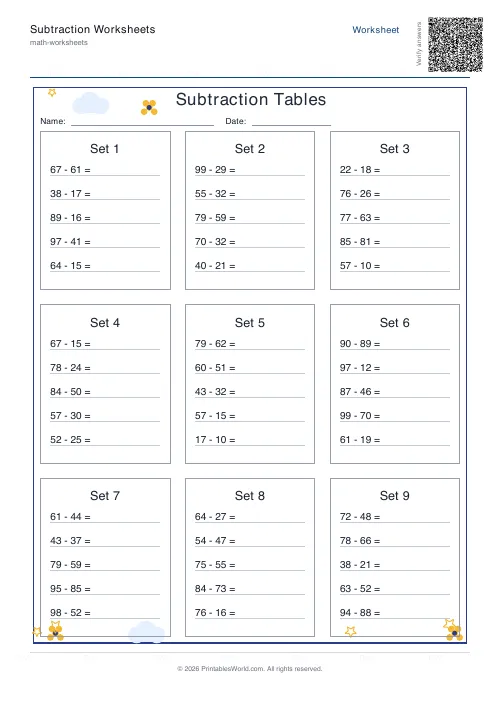 Subtraction Worksheets Generator
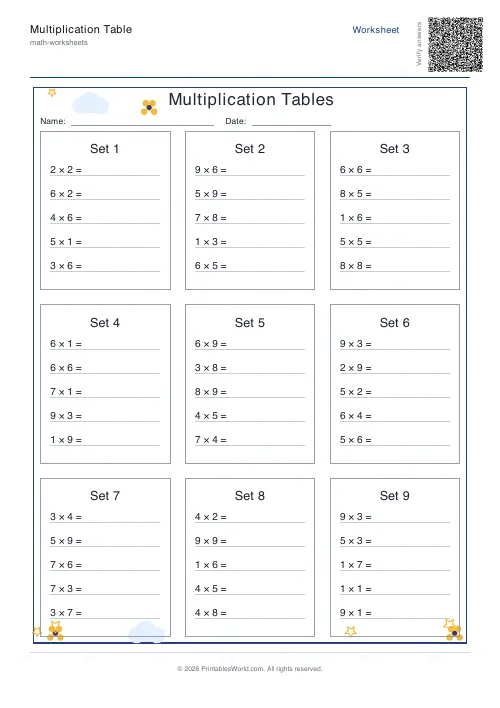 Multiplication Table Generator
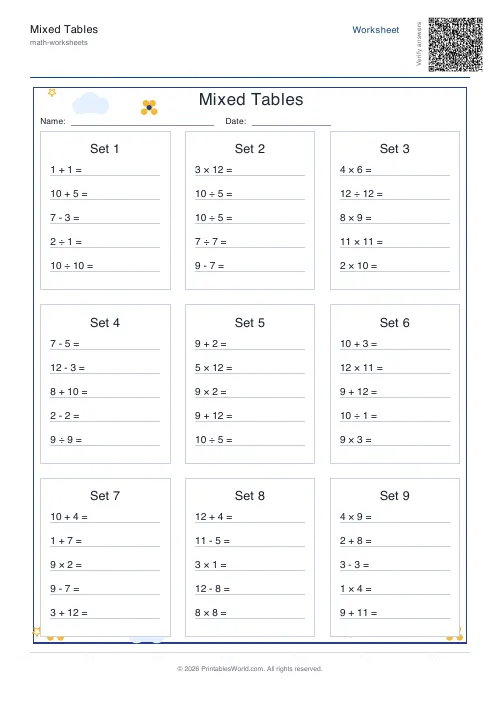 Mixed Tables Generator
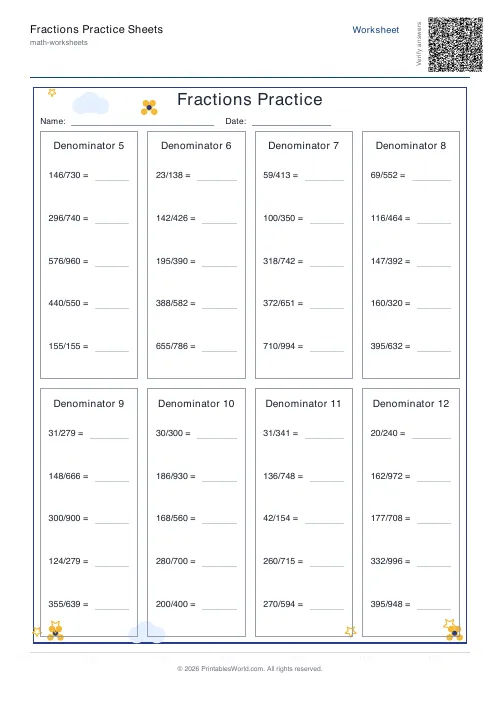 Fractions Practice Sheets Generator
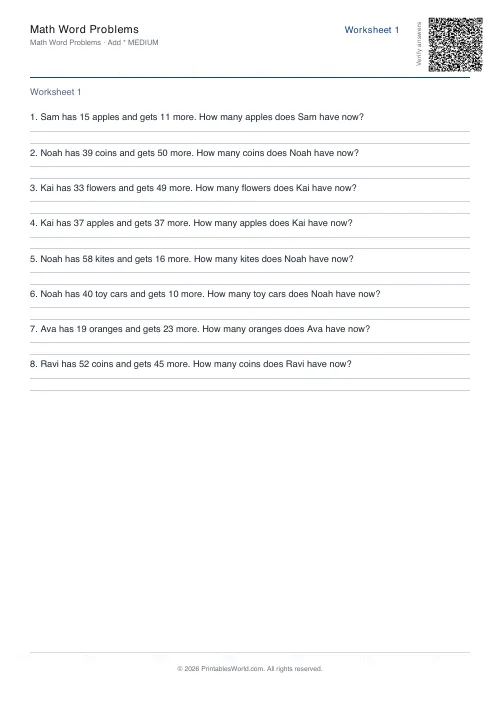 Math Word Problems Generator
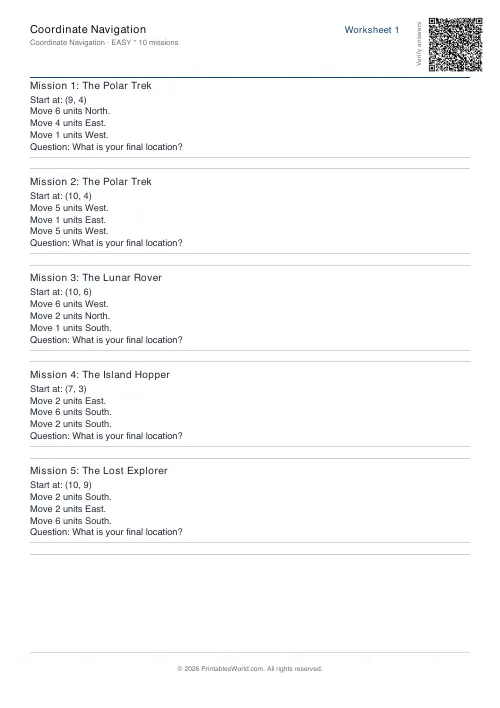 Coordinate Navigation Generator
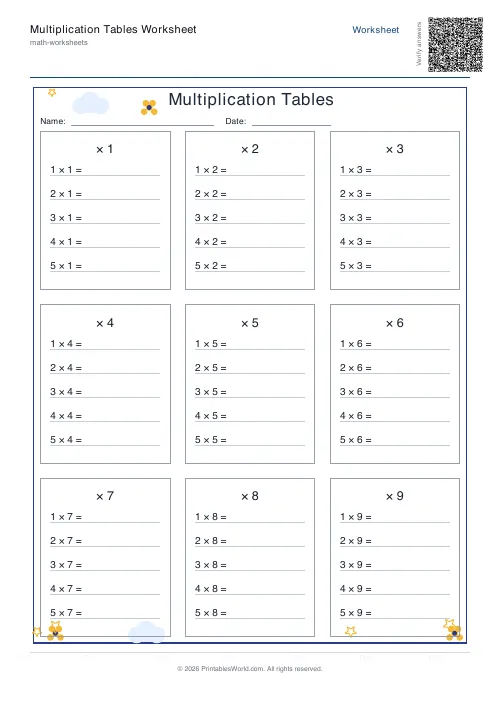 Multiplication Tables Worksheet
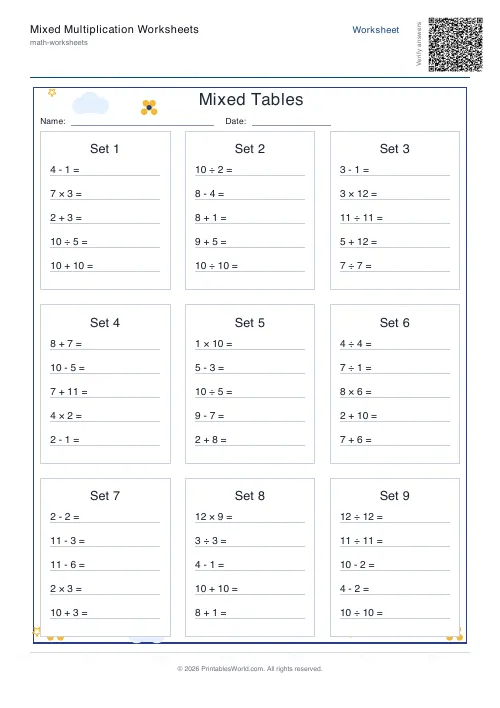 Mixed Multiplication Worksheets
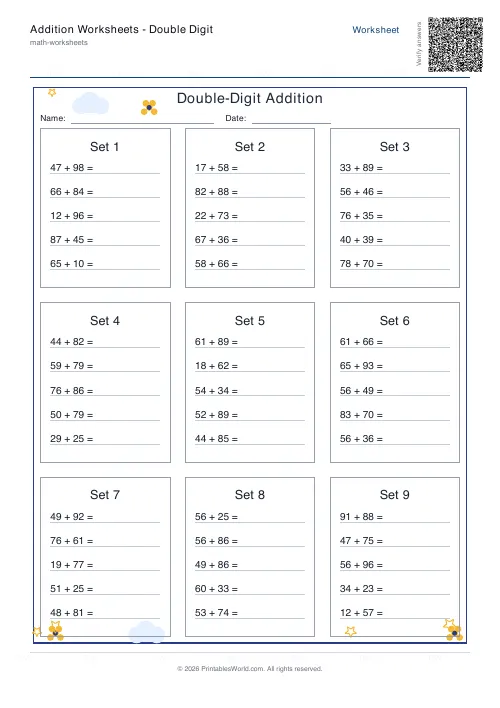 Addition Worksheets — Double Digit
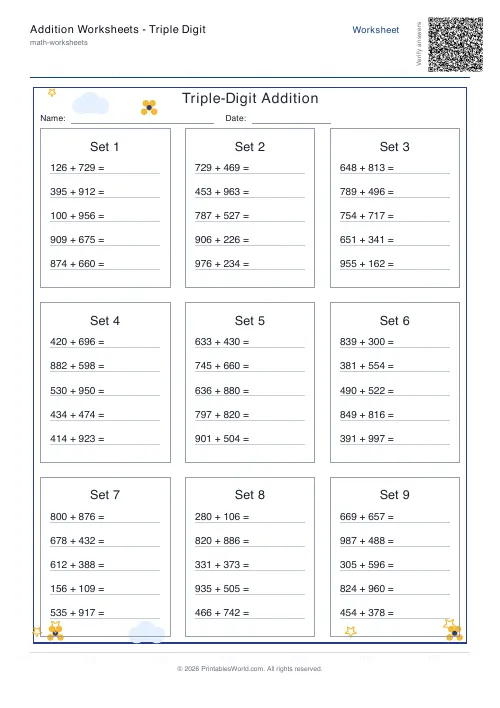 Addition Worksheets — Triple Digit
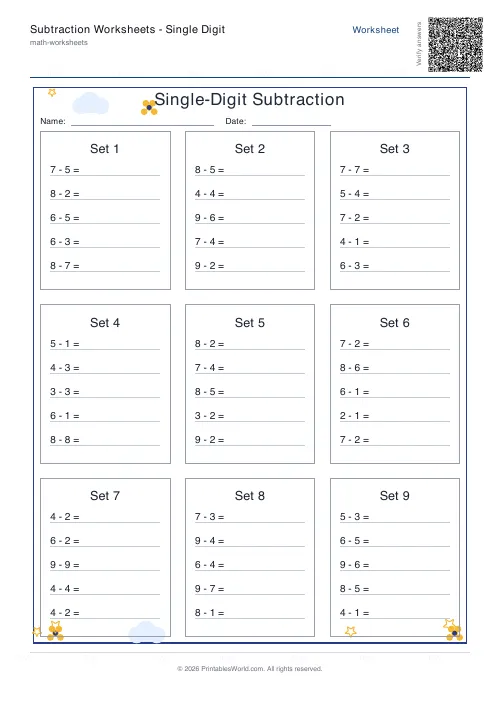 Subtraction Worksheets — Single Digit
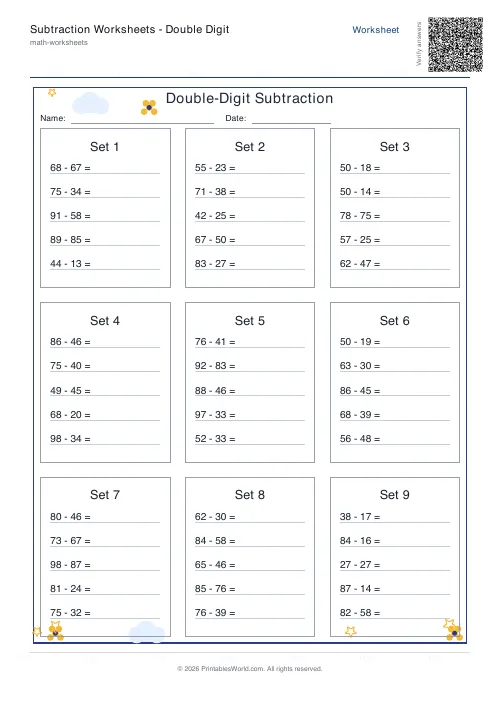 Subtraction Worksheets — Double Digit