Mazes
Easy Maze — Ages 6-8
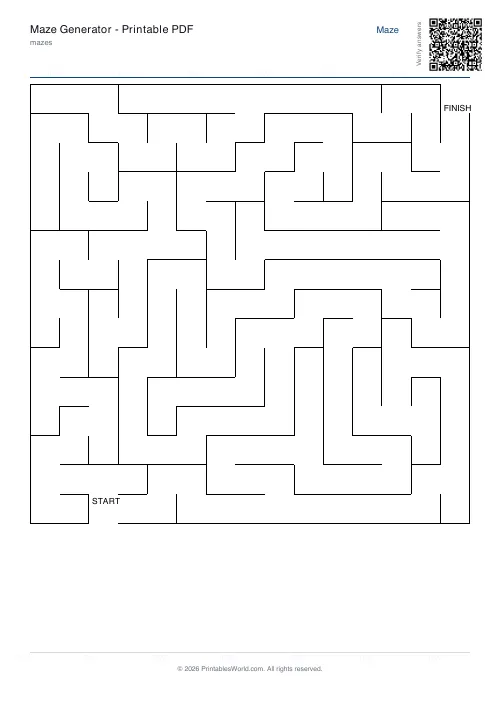
Moderately complex maze with a few dead ends. Fun for primary school kids.
Last updated:
What this tool does
An easy maze for primary school children. Small grid with a few dead ends to keep things interesting without being frustrating. Print-ready PDF with optional solution overlay.
Free downloads
Ready-made Maze printables — free PDF downloads
No setup needed — download these print-ready mazes as free PDFs. Each one was made with the generator above, so you can recreate or fully customize any of them.
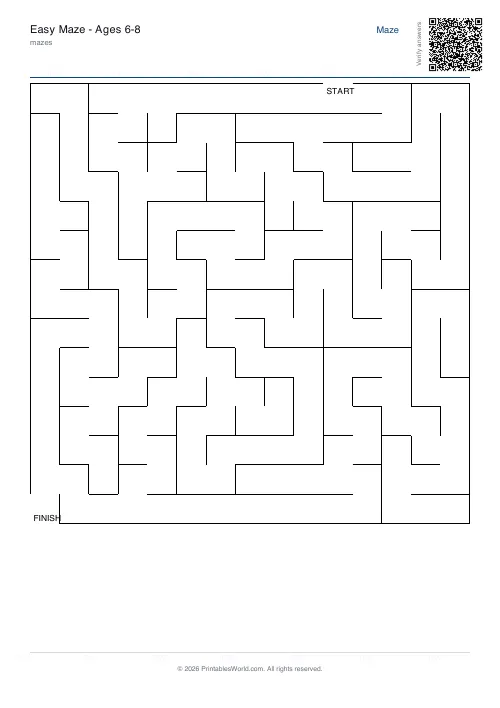
Maze — Easy
Print-ready maze (Easy) as a free PDF — made with the generator above so you can tweak and reprint.
↓ Download PDF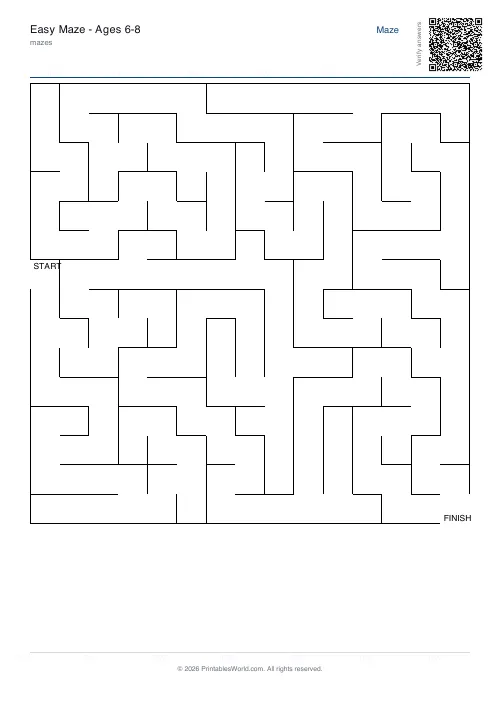
Maze — Medium
Print-ready maze (Medium) as a free PDF — made with the generator above so you can tweak and reprint.
↓ Download PDF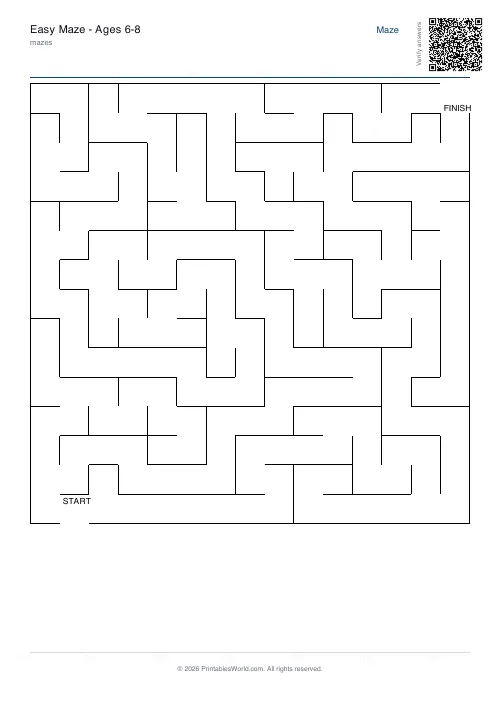
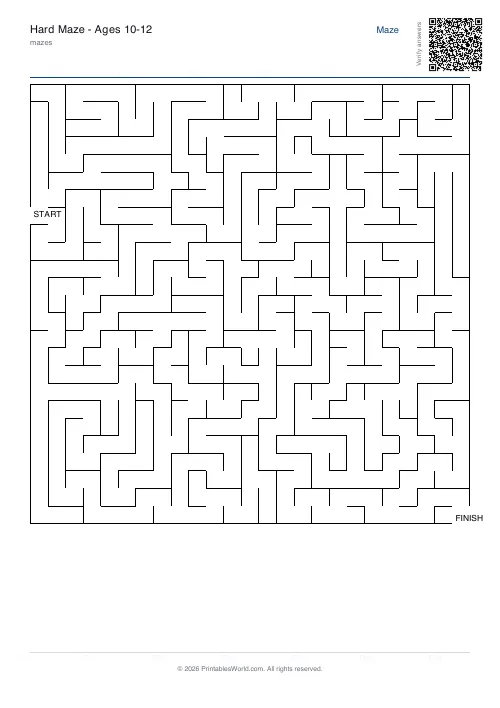
Maze — Hard
Print-ready maze (Hard) as a free PDF — made with the generator above so you can tweak and reprint.
↓ Download PDF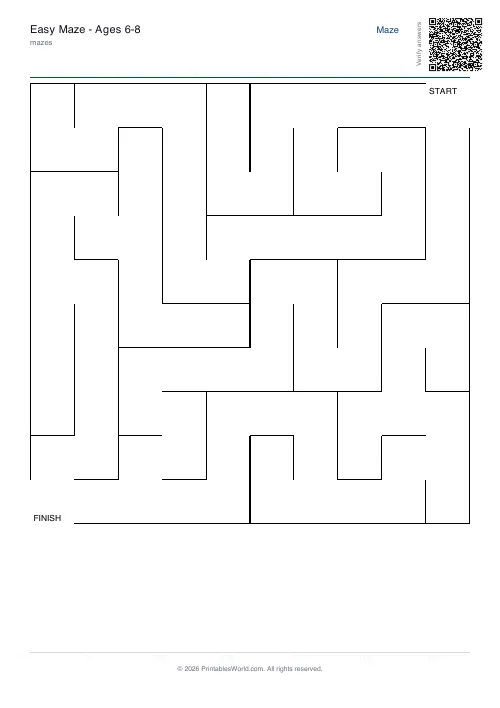
Maze — 10×10
Print-ready maze (10×10) as a free PDF — made with the generator above so you can tweak and reprint.
↓ Download PDF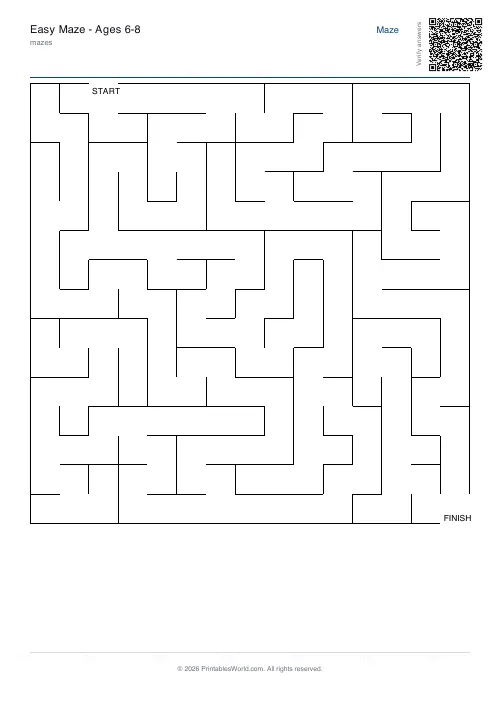
Maze — 15×15
Print-ready maze (15×15) as a free PDF — made with the generator above so you can tweak and reprint.
↓ Download PDF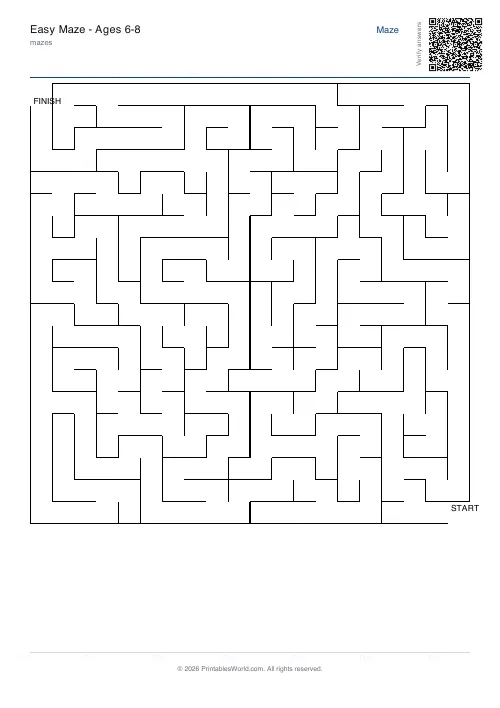
Maze — 20×20
Print-ready maze (20×20) as a free PDF — made with the generator above so you can tweak and reprint.
↓ Download PDF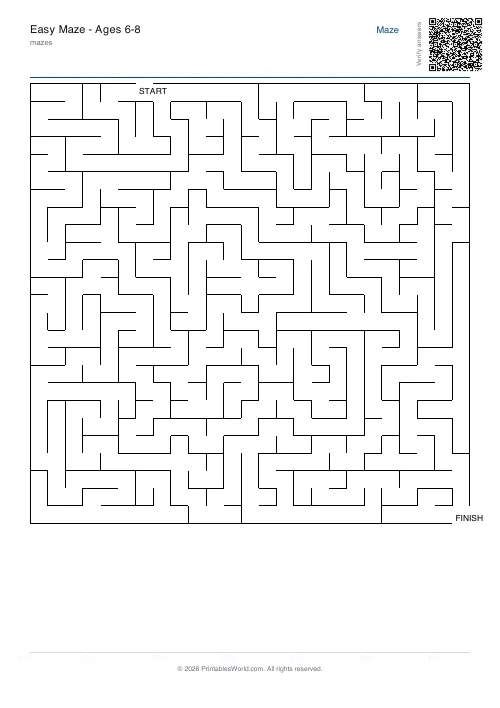
Maze — 25×25
Print-ready maze (25×25) as a free PDF — made with the generator above so you can tweak and reprint.
↓ Download PDF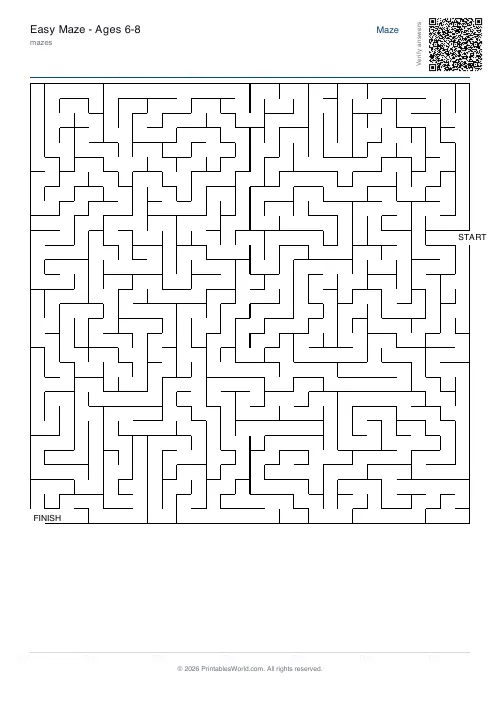
Maze — 30×30
Print-ready maze (30×30) as a free PDF — made with the generator above so you can tweak and reprint.
↓ Download PDF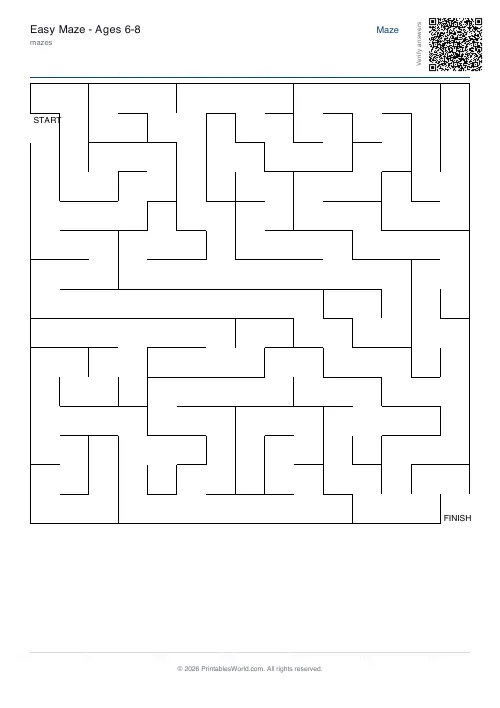
Maze — Perfect
Print-ready maze (Perfect) as a free PDF — made with the generator above so you can tweak and reprint.
↓ Download PDF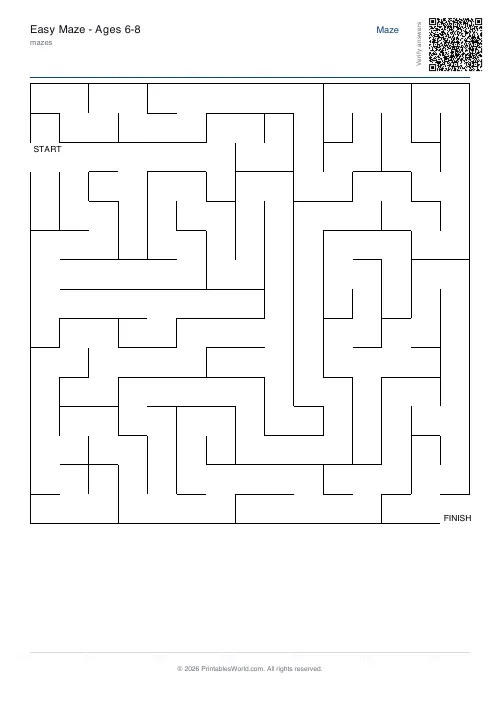
Maze — Braided
Print-ready maze (Braided) as a free PDF — made with the generator above so you can tweak and reprint.
↓ Download PDF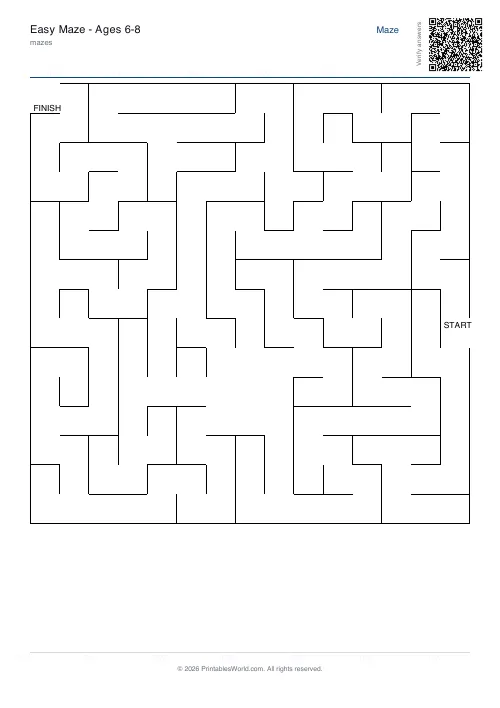
Maze — Rooms
Print-ready maze (Rooms) as a free PDF — made with the generator above so you can tweak and reprint.
↓ Download PDF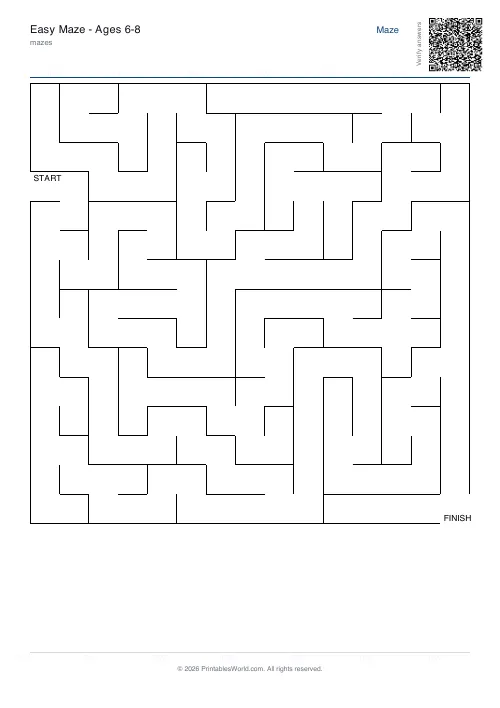
Maze — Easy, with answer key
Completed answer key for the Easy maze — print-ready PDF for fast marking.
↓ Download PDF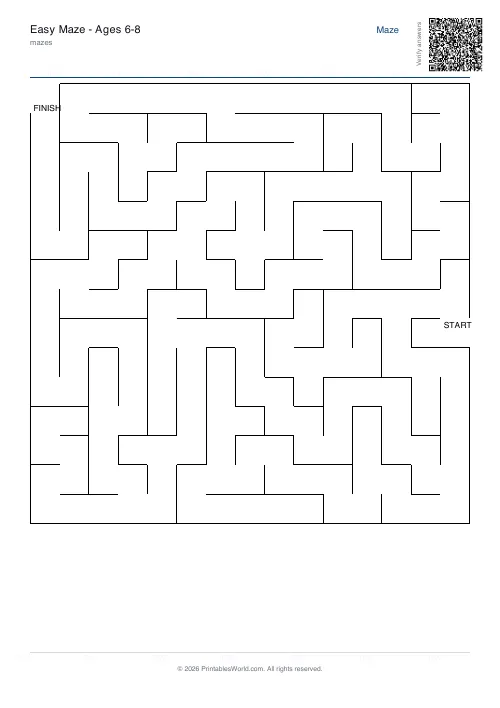
Maze — Medium, with answer key
Completed answer key for the Medium maze — print-ready PDF for fast marking.
↓ Download PDF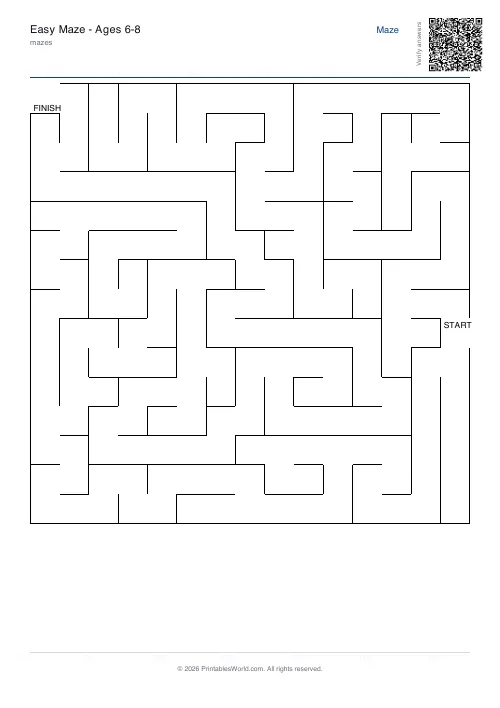
Maze — Hard, with answer key
Completed answer key for the Hard maze — print-ready PDF for fast marking.
↓ Download PDF
Settings
Customize your maze
perfect 15×15 maze on A4, plus a solution page.
Type
Difficulty
Grid size
Line thickness
Start / finish
Paper size
Preview
Sample maze
Live preview of the same maze your PDF will contain.
People also used
Feedback
Spotted something off with this tool?
Create Free Printable Easy Mazes for Ages 6-8
Generate free printable easy mazes sized for primary-school children, roughly ages 6-8 (Year 1 and Year 2). The grid is comfortably small, the walls are clearly drawn, and there are just enough dead ends to keep the puzzle interesting without being frustrating. Every maze has a clear start and finish and a single correct route.
Download a ready-to-print PDF in A4 or US Letter format for quiet-time activities at home, classroom starter tasks, finish-early worksheets, or party-pack printables. Every generation is random so you can print one per child in a class without anyone getting the same puzzle.
Easy mazes are one of the most requested printables for this age range because they hit the sweet spot of "challenging enough to feel like a win" and "not so hard that pencils get thrown". This tool is built to print that sweet spot in a few clicks.
Why use this easy maze generator?
Year 1 and Year 2 children love tracing pencil paths through a maze, but many free printables are either too simple (three dead ends, solved in ten seconds) or too hard (dense grids that leave a child staring at the page). Use it for:
- quiet-time activities at home
- classroom starter tasks
- finish-early worksheets
- homework supplements
- home-school early-morning warm-ups
- birthday party-pack printables
- rainy-day activity stacks
- waiting-room activity sheets
Because every print is random, reprints for a full class of pupils never repeat.
What you can customise
Settings are kept simple so you can print fast. You can choose:
- Difficulty: easy is the default and recommended
- Grid size: comfortable for age 6-8 by default
- Maze type: perfect (one route) or braided (loops) if you want variety
- Line thickness: thick for chunky pencils, medium or thin for more control
- Include solution: add a second page with the route highlighted
- Paper size: A4 or US Letter PDF output
The defaults work comfortably for Year 1 and Year 2 children.
Notes and limitations
- The maze is sized for ages 6-8 — younger solvers may prefer a simpler maze with fewer dead ends.
- Each print is random; two generations in a row will not match unless you reuse a seed.
- Thicker lines support young pencil control; thinner lines suit confident traceers.
- Print at 100% scale for the cleanest walls.
Who these mazes are for
Children
Year 1 and Year 2 pupils will comfortably solve a maze at this size in a couple of minutes. It supports pencil control and fine motor skills while giving a real puzzle-solving win.
Parents
A stack of easy mazes is gold for long car journeys, restaurant waits, or a calm pre-bedtime activity. Pair it with a single pencil and you have a zero-prep quiet activity.
Teachers
Run it as a settling task first thing in the morning, a finish-early extension, or a calming end-of-day activity.
Puzzle fans
Use it as a gentle warm-up before tackling harder puzzles, or print a stack for your children to learn the format.
How to use the tool
- Keep the difficulty on easy.
- Pick a grid size.
- Choose maze type: perfect or braided.
- Set line thickness.
- Turn the solution page on or off.
- Choose A4 or US Letter.
- Click Generate.
- Download the PDF.
Worked example
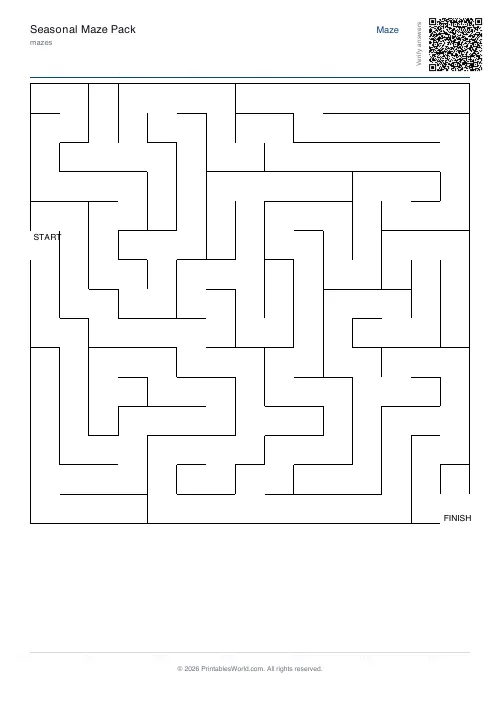
A default easy maze prints at 15 cells on easy difficulty. The page shows a neat square grid with a start arrow at the top-left and a finish arrow at the bottom-right. A few dead ends branch off the main corridors, just enough to require backtracking once or twice. A Year 2 child typically solves the maze in about two minutes.
Turn the solution on and a second page prints with the correct route drawn in red, ready for a parent or teacher to mark at a glance.
Methodology
The maze is built using a depth-first search recursive backtracker. The algorithm walks from a random cell, knocking down walls as it visits neighbours, and backtracks when every adjacent cell has been seen. The easy difficulty preset uses a smaller grid and thicker walls so the resulting maze is visually welcoming and quick to solve. The output is a perfect maze — exactly one route from start to finish — which is ideal for younger solvers.
Designed for A4 and US Letter printing
The PDF supports A4 and US Letter paper sizes. Print at 100% scale for sharp walls and a clear solving path. The branded header and footer stay consistent across both paper sizes.
Tips for younger solvers
- Keep line thickness on medium or thick for chunky pencils and new solvers.
- Encourage the child to use a finger to trace the route first, then go over it in pencil.
- Print three pages at a time so the activity is long enough to settle into.
- Pair with a favourite colouring pencil so the finished route feels like a little win.
- Turn solutions off so the child has to work it out; keep a solution copy for yourself.
Related maze tools
FAQs
Quick answers
Who is this maze for?
It is sized for ages 6-8: a comfortable grid with a few dead ends and a clear start-to-finish.
Can I print the solution?
Yes. Enable the solution toggle for a page with the route highlighted.
How long does it take to solve?
Most kids in this age range finish it in a couple of minutes.
Want something harder?
Try Medium Maze (8-10) or Hard Maze (10-12) for more branching and dead ends.
Related tools
Simple Maze — Ages 3-5
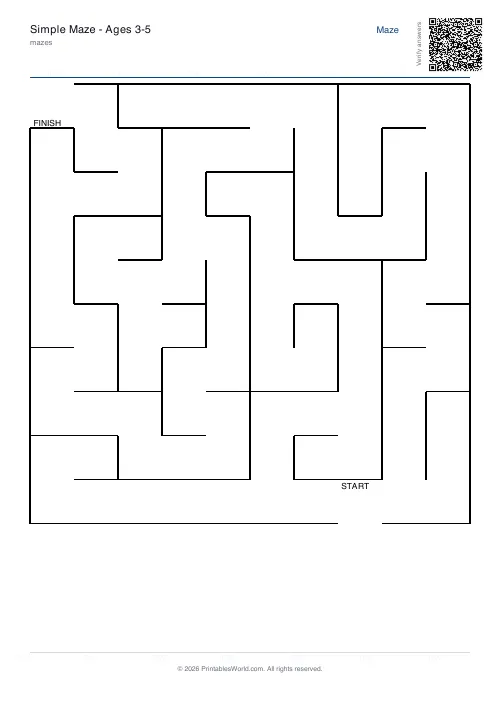
Wide-path maze for preschoolers. Single clear route from start to finish.
Medium Maze — Ages 8-10
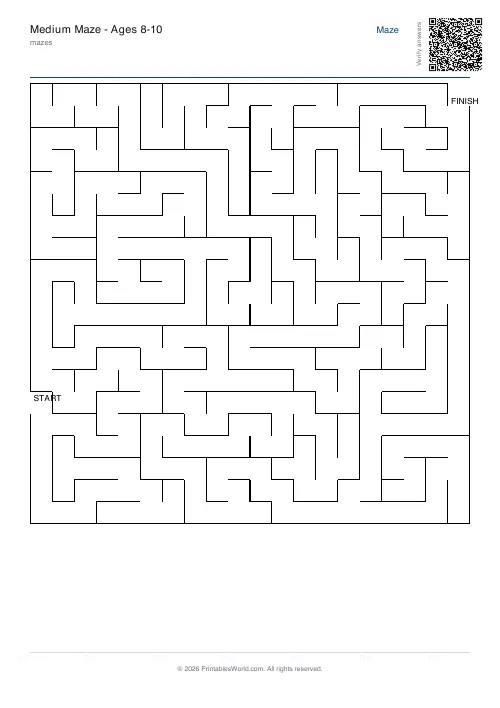
More complex branching paths. Multiple dead ends. Print-ready PDF.
Hard Maze — Ages 10-12
Complex maze with many dead ends and branching paths.
Maze Generator — Printable PDF
Generate printable maze PDFs with custom grid size, difficulty, and layout—perfect, braided, or room-based.
Braid Maze (No Dead Ends)
A looping maze with no dead ends — every cell has at least two ways out.