What this tool does
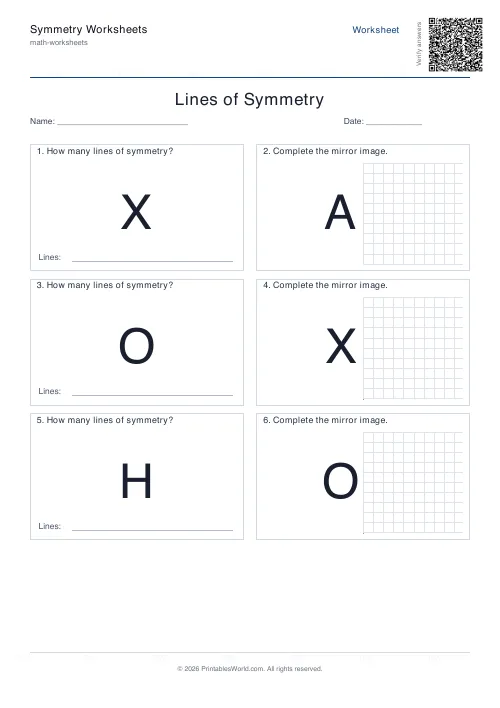
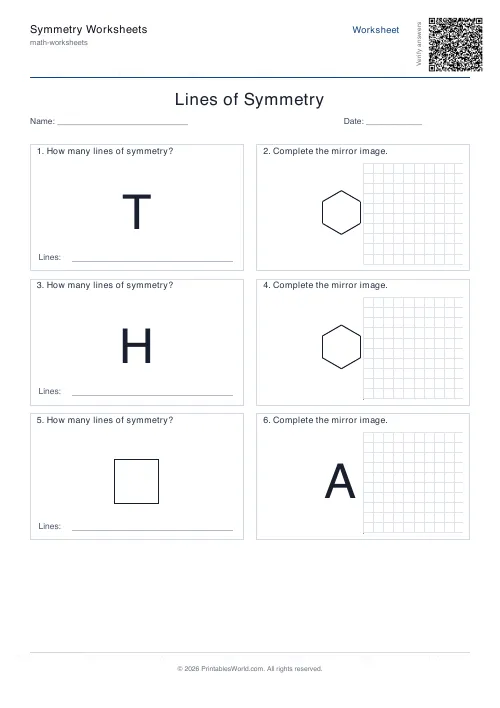
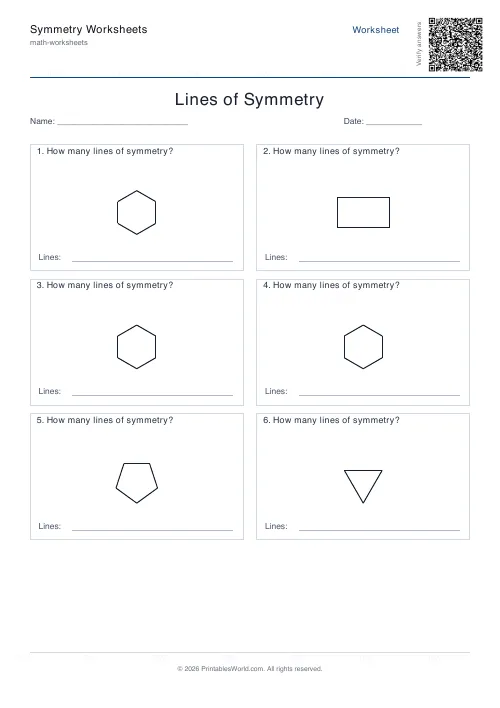
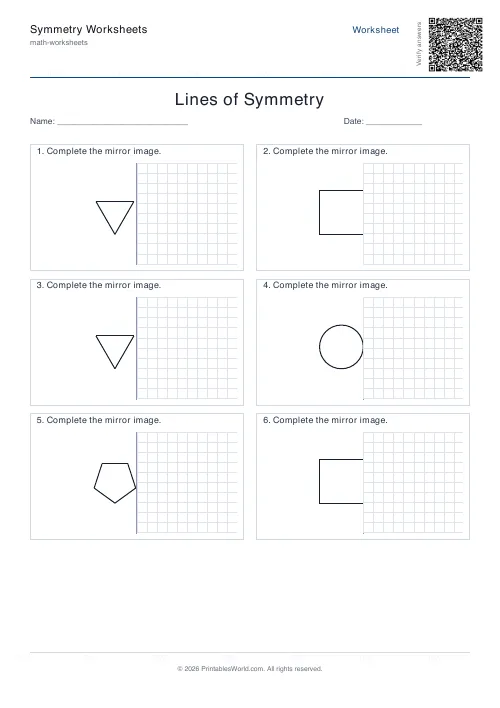
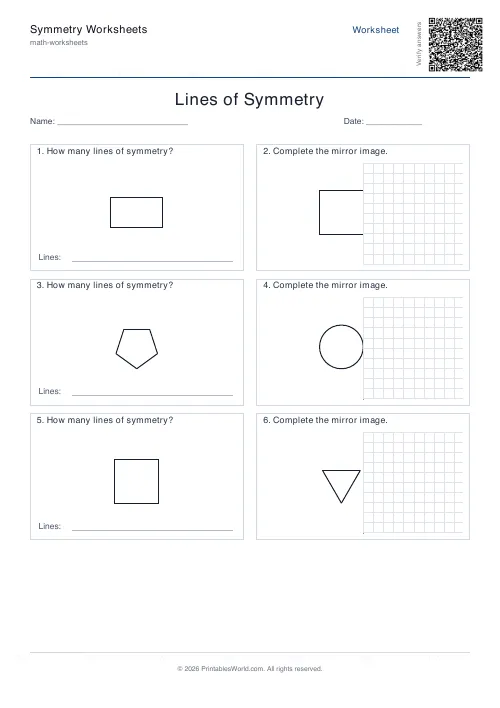
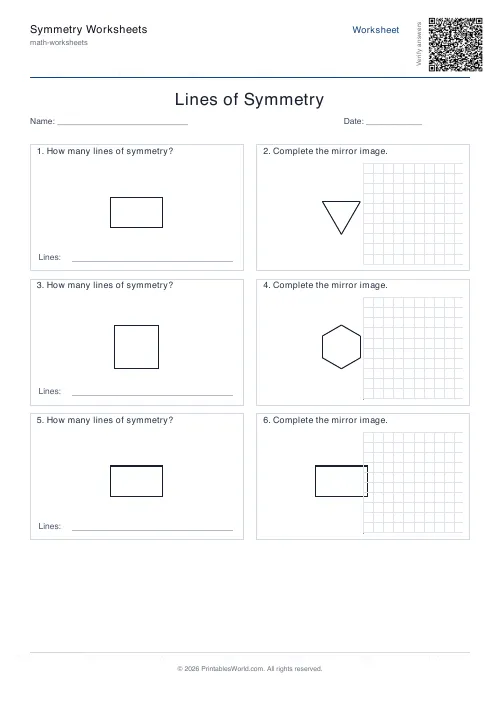
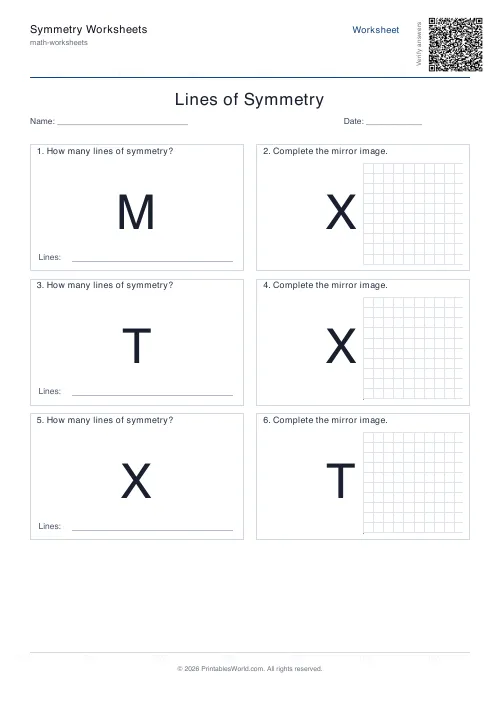
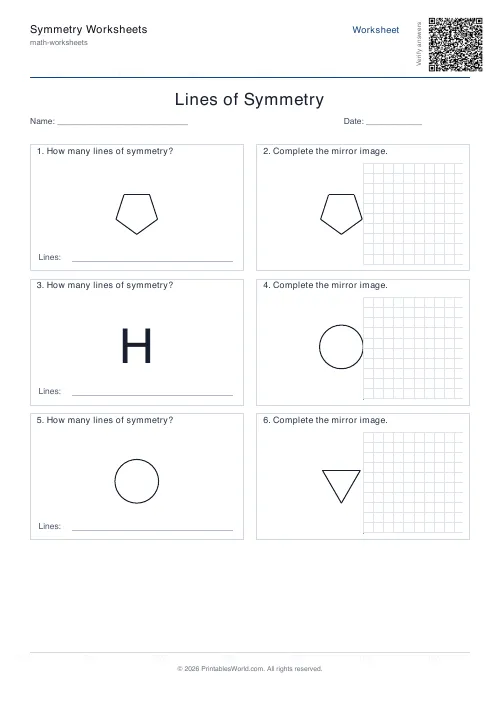
Symmetry practice covering the two skills separately. Identify how many lines of symmetry a shape has, or complete the missing half of a figure across a mirror line. Basic shapes, symmetric letters, or a mix of both, with an answer key that shows the counts or the completed figures.
People also used
Number Sequences & Patterns Worksheets
Printable number pattern practice. Arithmetic, geometric, and quadratic sequences.
Coordinate Navigation Generator
Create printable coordinate navigation missions with compass directions and step-by-step grid movement.
Fractions Practice Sheets Generator
Generate printable fraction simplification worksheets with custom ranges, layouts, and answer keys.
Feedback
Spotted something off with this tool?
Two skills, deliberately split
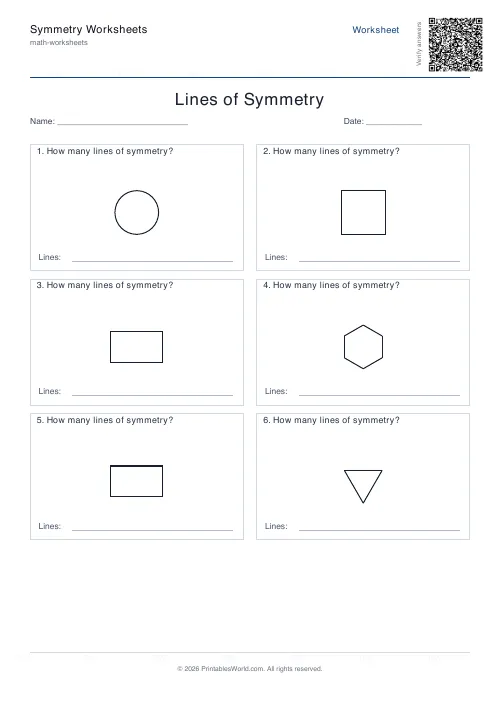
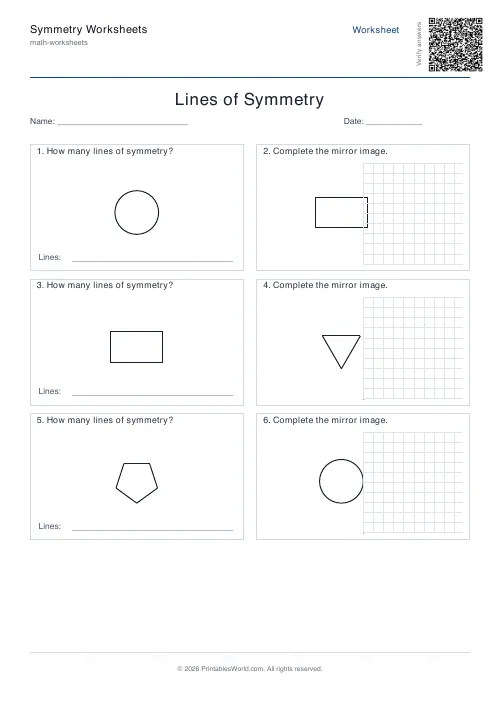
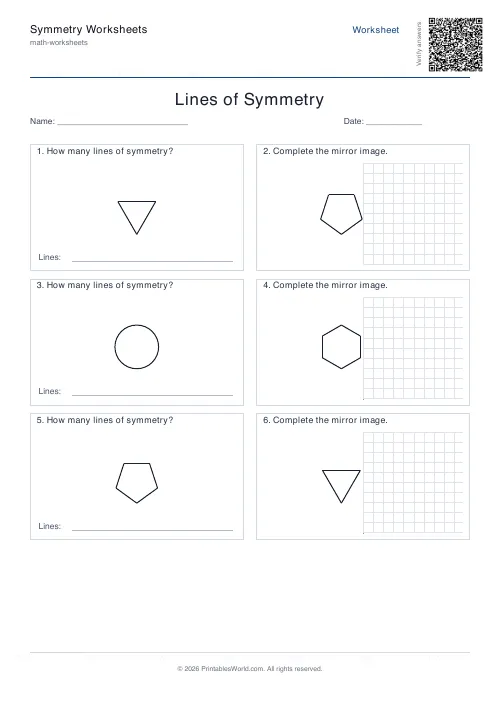
Identify the lines gives a shape and asks how many lines of symmetry it has. That builds the vocabulary and the confidence with standard shapes.
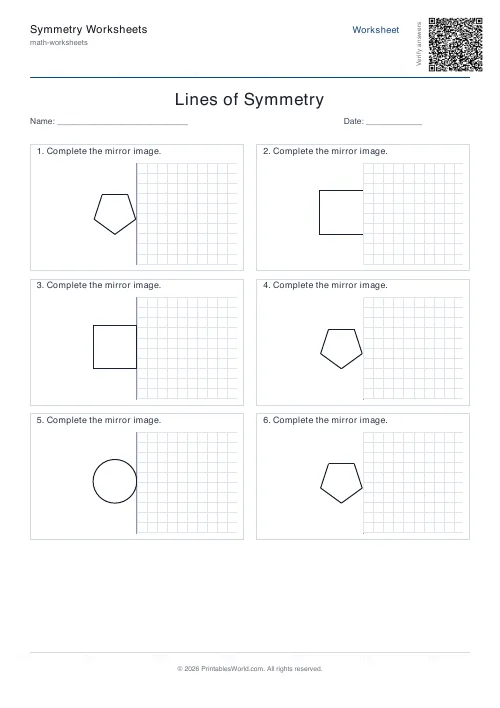
Complete the figure gives half a figure on a grid with a mirror line, and asks the learner to draw the other half. That is a drawing skill as much as a geometry one, and it is where most pupils lose accuracy.
Keeping them apart is the whole design. A mixed sheet is for revision at the end, not for teaching at the start.
The answers, for the shapes you will meet
A square has four lines. A rectangle has two, which catches out children who expect four because it looks like a square that got longer. An equilateral triangle has three, an isosceles triangle has one, and a regular hexagon has six.
A circle has infinitely many, and that one is worth stopping on rather than skipping. It is usually a child's first encounter with an answer that is not a number, and the reasoning behind it, that any line through the centre works, is more valuable than the answer.
The letters set, and what is missing from it
A, H, M, T, O and X. Six letters, and the selection is not arbitrary: those are letters with at least one line of symmetry. F and R and the rest are deliberately left out, because a letter with no symmetry is not a question, it is a trick.
The set is a good cross-curricular hook. A vertical line of symmetry is an abstract idea until a child sees it running down the middle of an A, and then it is obvious. H and O are the interesting ones, because they have two.
Reflections happen on a grid, on purpose
Complete-the-figure tasks are drawn on squares so the learner counts across rather than judging by eye, which is the Key Stage 2 method and the one that actually produces accurate work.
The mirror line is always vertical or horizontal, never diagonal. A diagonal reflection cannot be counted reliably on a square grid, and asking for one produces a lesson in frustration rather than in symmetry.
The answer key draws the full reflected figure on the same grid, so a pupil can lay it beside their own and see exactly which square went wrong.
How to teach it in order
- Basic shapes, identify only. Get them to imagine folding the shape along each line before they count anything.
- Letters, identify only. Same task, more concrete, and it lands with children who found the shapes abstract.
- Complete the figure, basic shapes. Insist on counting squares. Eyeballing it is the source of nearly every error at this stage.
- Mixed, both task types. Revision only.
One check worth teaching alongside the counting: the reflected point must be the same distance from the mirror line as the original. A child who applies that will catch their own mistakes without being marked.
One limit worth knowing
Lines of symmetry are counted for the outline of the printed shape, not for anything inside it. So a shape is symmetrical here if its silhouette is, regardless of pattern or shading, which is the convention primary work uses and the one the answer key follows.
FAQs
Quick answers
What does "lines of symmetry" mean?
A line of symmetry divides a shape into two halves that are mirror images of each other. A circle has infinitely many; a square has four.
Is there an answer key?
Yes. Turn on "Include answer key" and the PDF will include the correct number of lines for each shape.
What shapes are in the letters set?
A, H, M, T, O, and X. Letters that have at least one line of symmetry. Useful for early geometry alongside phonics work.
Who is this for?
Typically Years 3–5 (UK) or Grades 2–4 (US), when children first meet symmetry and reflection.
Related tools
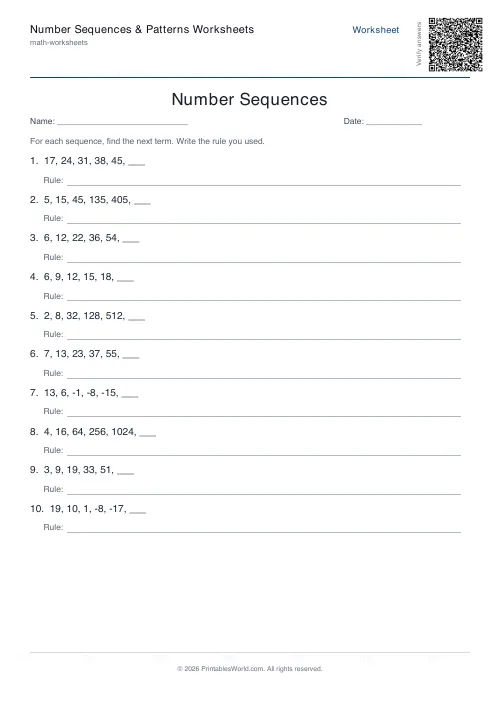
Number Sequences & Patterns Worksheets
Printable number pattern practice. Arithmetic, geometric, and quadratic sequences.
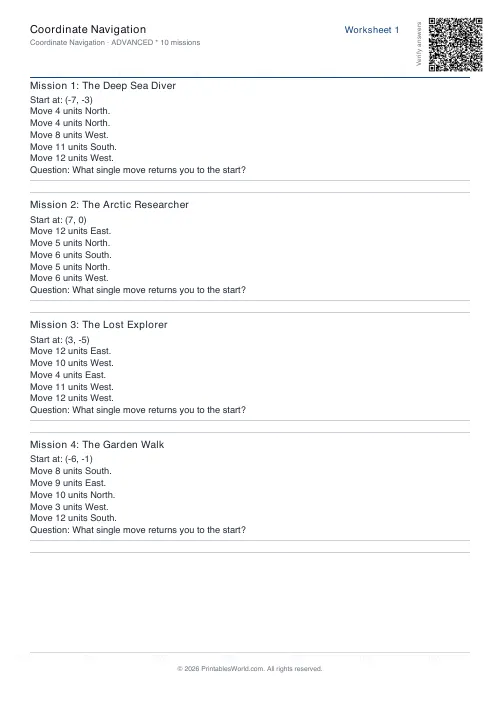
Coordinate Navigation Generator
Create printable coordinate navigation missions with compass directions and step-by-step grid movement.
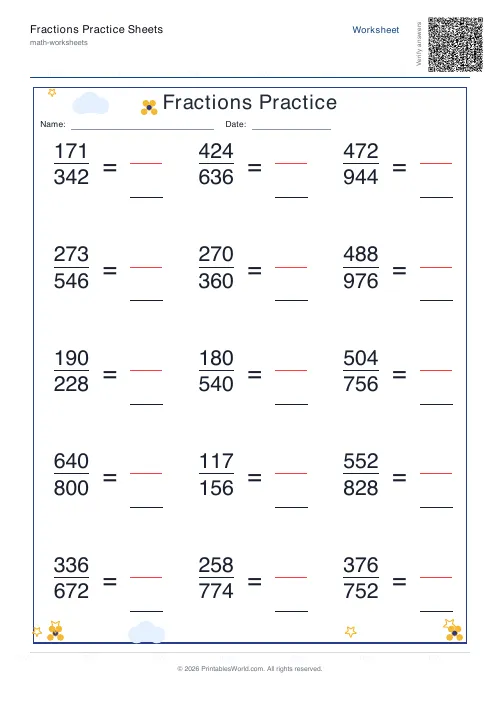
Fractions Practice Sheets Generator
Generate printable fraction simplification worksheets with custom ranges, layouts, and answer keys.
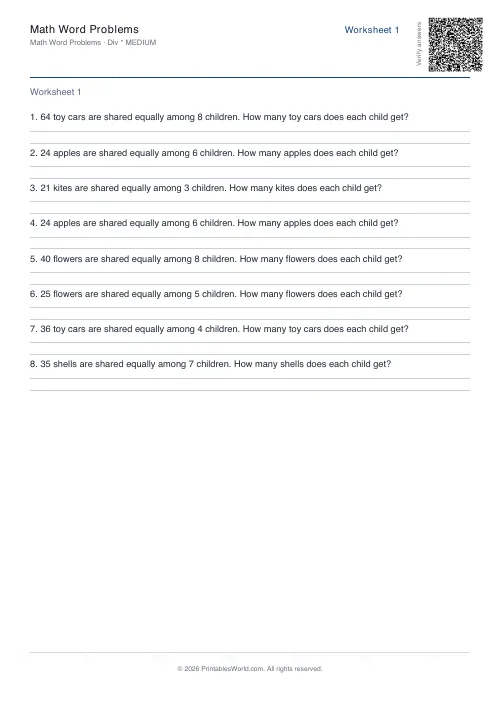
Math Word Problems Generator
Generate printable math word problem worksheets with customisable topics, difficulty, and answer keys.
Further reading
Math Worksheets
Addition strategies: number lines, regrouping and more
Column addition is the destination, not the route. Here are the strategies that come before it, why each matters, and how to tell which one a child is actually using.
5 min read
Math & Numeracy
How to help a child who's stuck on times tables
A simple two week plan to help child with times tables, using short daily practice and free printable multiplication grids you can customise and print.
7 min read
More like this
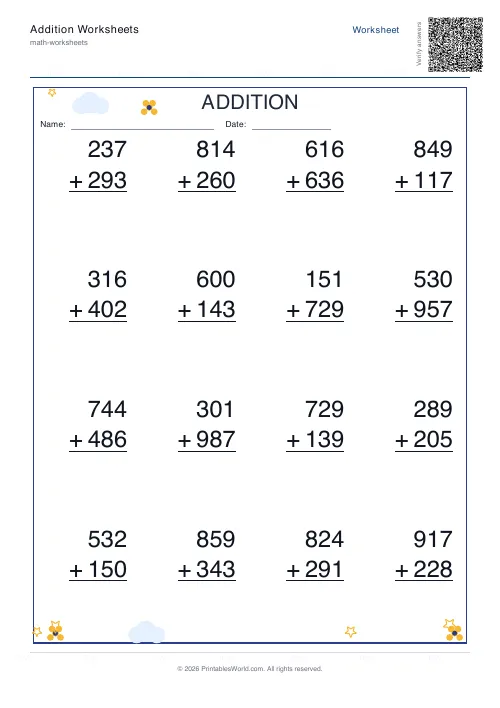 Addition Worksheets Generator
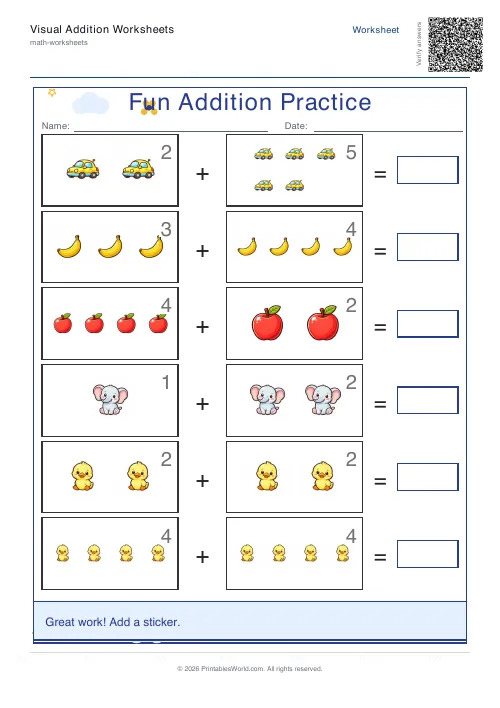 Visual Addition Worksheets Generator
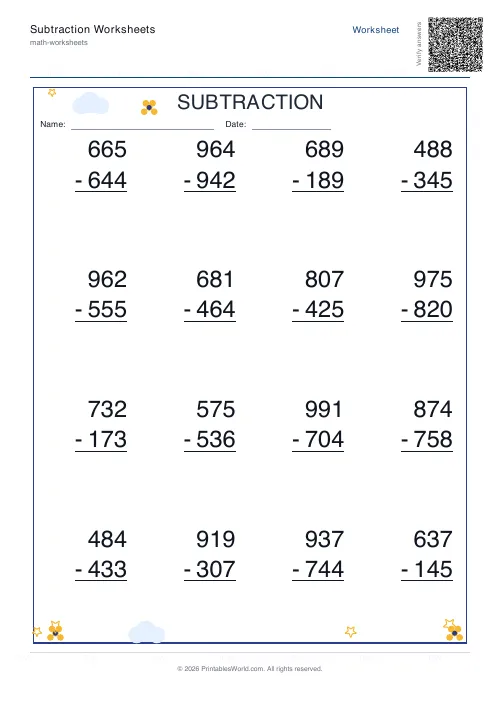 Subtraction Worksheets Generator
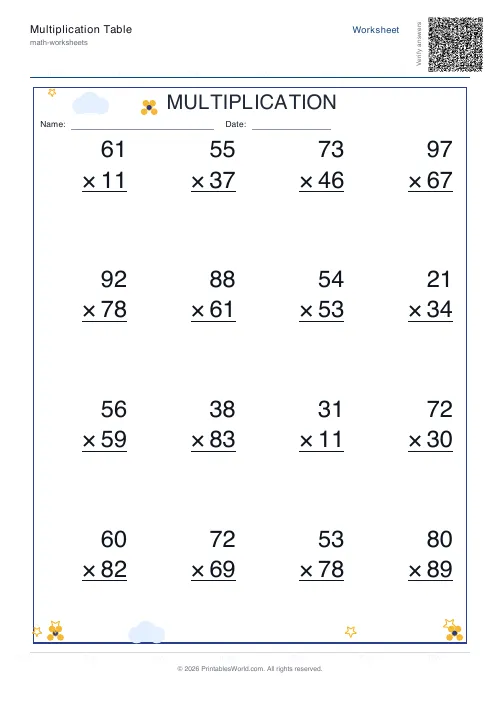 Multiplication Table Generator
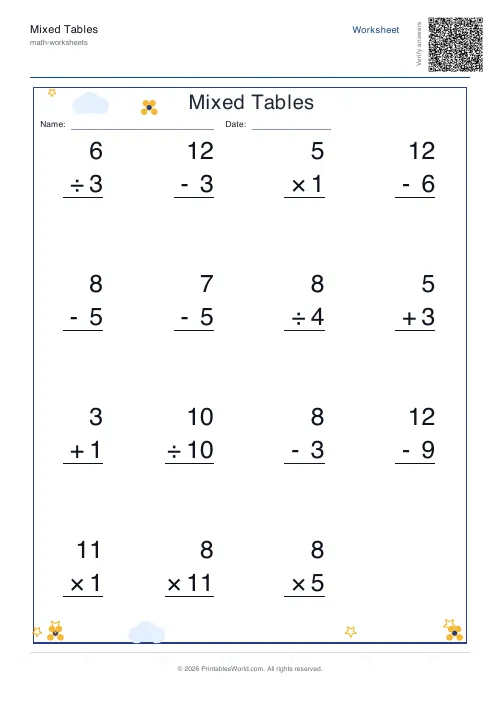 Mixed Tables Generator
- Fractions Practice Sheets Generator
- Math Word Problems Generator
- Coordinate Navigation Generator
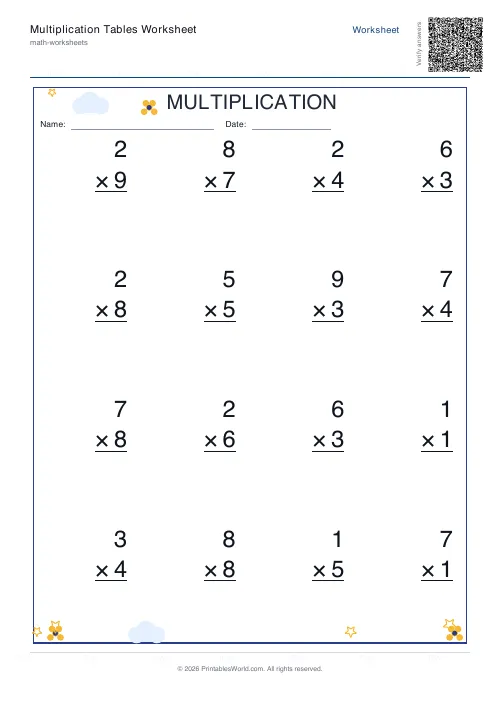 Multiplication Tables Worksheet
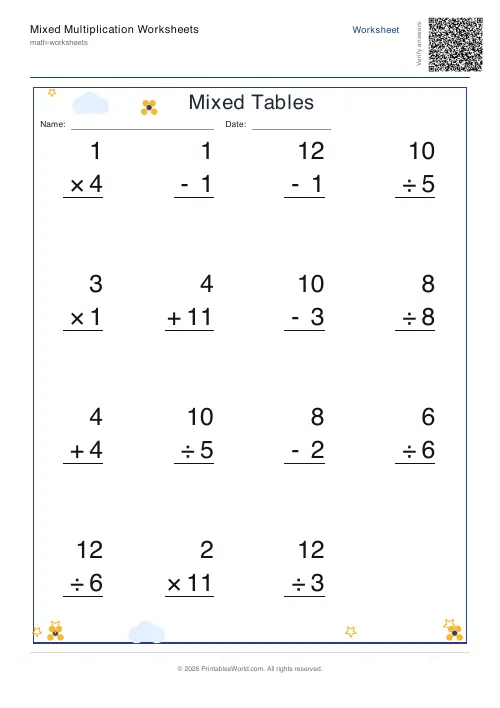 Mixed Multiplication Worksheets
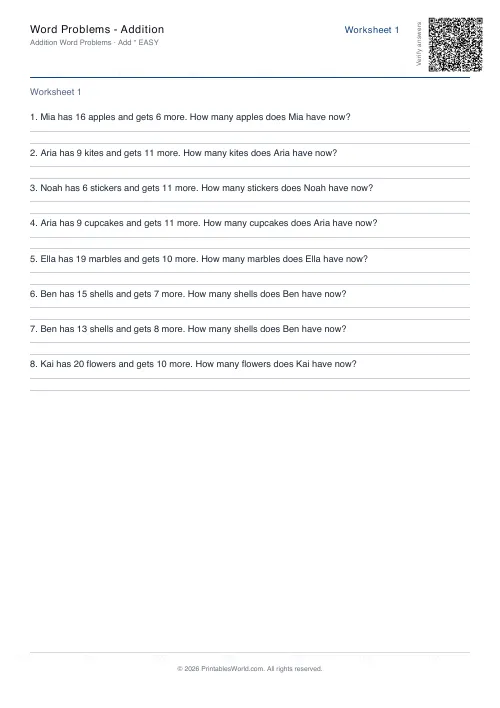 Word Problems: Addition
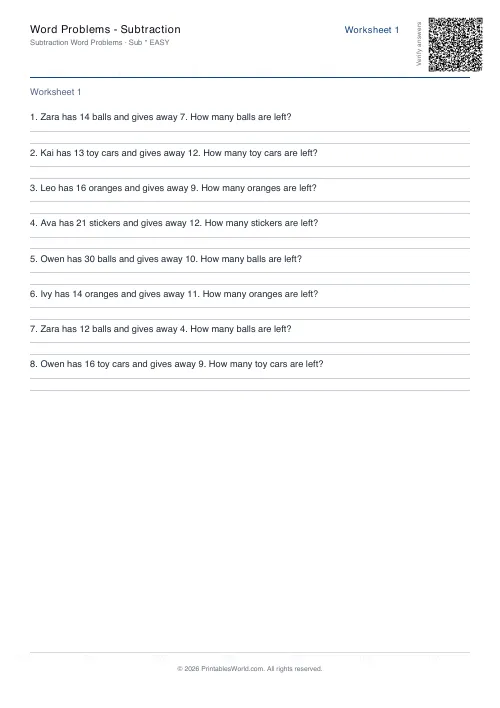 Word Problems: Subtraction
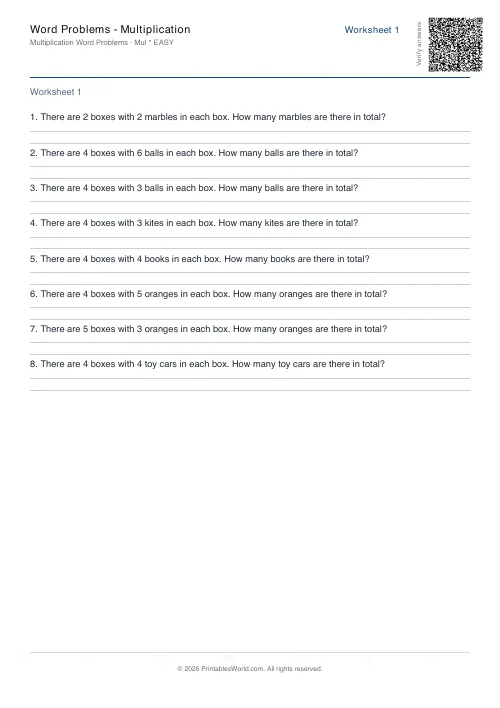 Word Problems: Multiplication
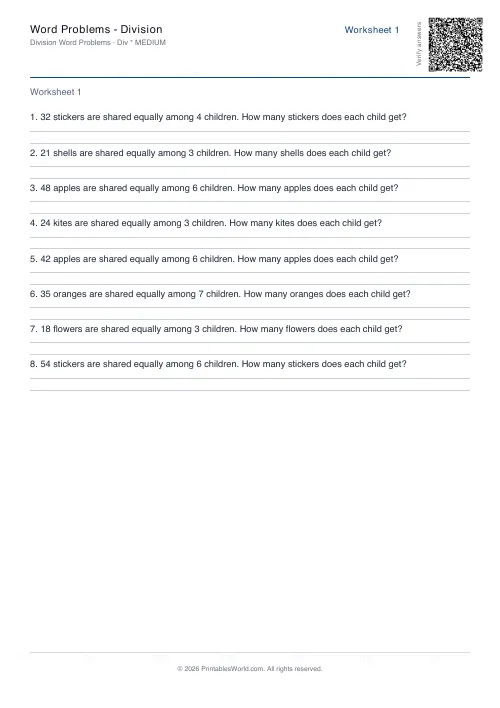 Word Problems: Division