What this tool does
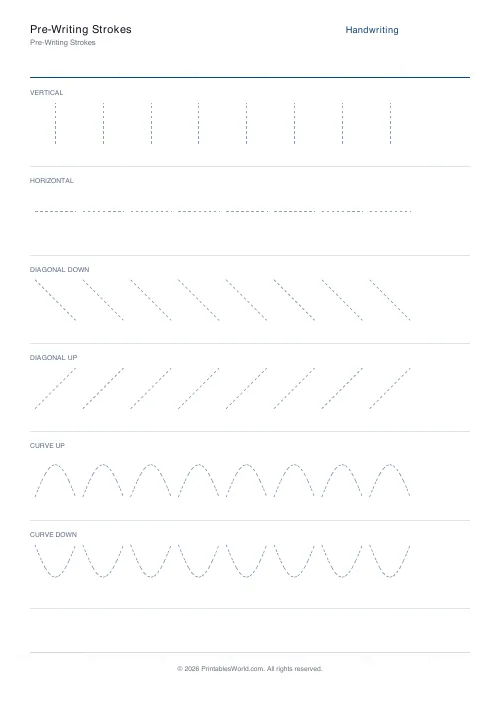
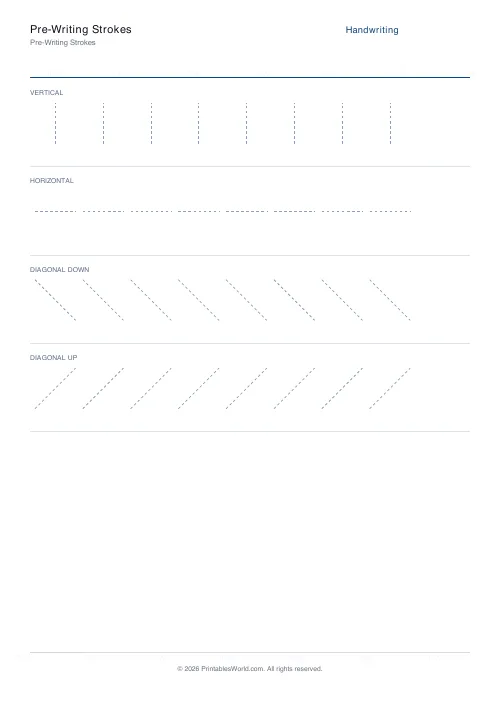
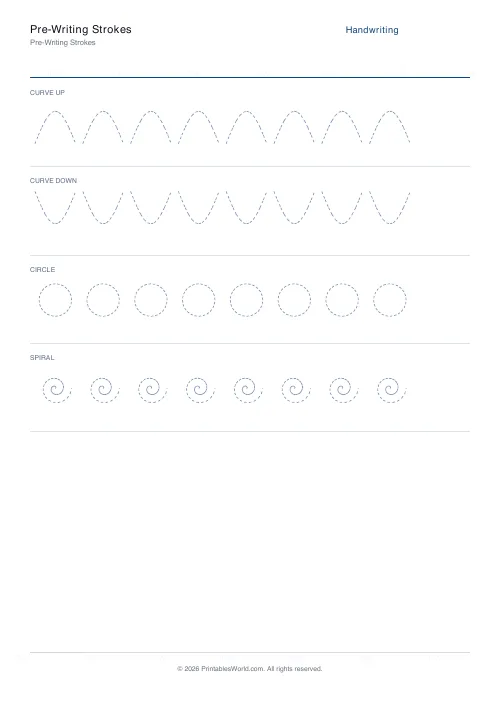
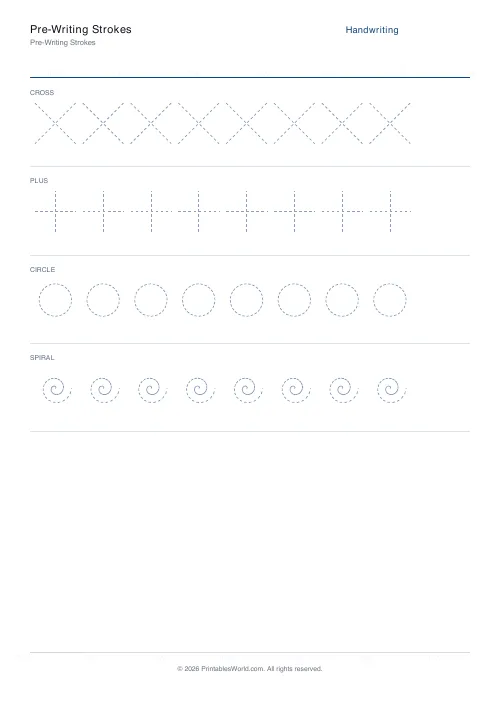
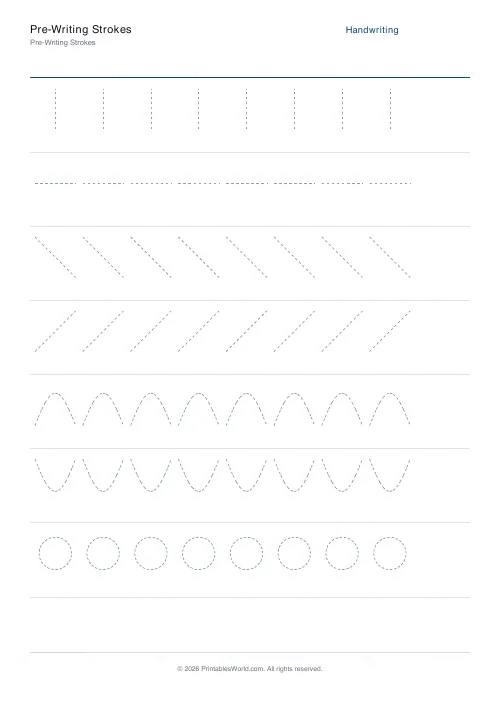
Dotted pre-writing strokes to trace: vertical, horizontal, both diagonals, two curves, a circle and a spiral. One to four rows each, with optional labels.
People also used
Feedback
Spotted something off with this tool?
The eight movements that letters are made from
Each row prints one stroke in dotted form, repeated across the page, for tracing over. Vertical, horizontal, diagonal down, diagonal up, curve up, curve down, circle, spiral.
Choose which strokes to include and how many rows each gets. This sheet sits before any letter practice at all.
Why strokes before letters
Because a letter is a combination of these, and a child who cannot draw a controlled vertical line cannot draw an l, however many times they are shown one.
Handing letters to a child who is not ready produces a term of frustration and a habit of pressing hard, which is difficult to undo. Fifteen minutes a week on strokes gets there faster than three hours a week on letters.
They are learnable in a fairly fixed order
Vertical first, then horizontal, then the circle, then the cross, then the square, then the diagonals.
The diagonals arrive last and they arrive late — typically well after the circle. That is why capital A and the letter v are harder than O, despite looking simpler, and it is why a child who cannot manage the diagonal rows on this sheet is not behind. They are on schedule.
Print the strokes they are close to. A page including a spiral for a child still working on verticals is seven rows of failure and one of success.
The circle has a direction
Anticlockwise, starting at the top. It matters because a, c, d, g, o, q and s all begin with that movement, and a child who learns to draw circles clockwise will have to unlearn it at every one of those letters.
Watch the pencil rather than the page. A circle that ends up looking correct may have been drawn in two halves or in the wrong direction, and the finished sheet cannot tell you which.
How to run it
Big movements first, and not necessarily on paper. The same strokes drawn in the air, in sand, in shaving foam on a table, or with a finger on a steamy window are doing the same work and are more interesting.
Use a thick pencil or a crayon. Fine motor control develops outward from the shoulder, so at this stage the grip matters far more than the point does.
Short sessions. Five minutes of attention beats twenty of grinding, and a child who is pressing hard or gripping tightly has already stopped learning.
What the generator asks for
Which strokes, rows per stroke (1 to 4), and the labels on or off. A4 or US Letter, printed at 100%.
Labels are worth keeping for the adult's benefit. The child cannot read them.
When the strokes are secure, the shape tracing sheets are the next step, and letters after that.
FAQs
Quick answers
Why pre-writing strokes first?
Letter formation reuses a small set of underlying strokes. Mastering vertical, horizontal, diagonal and curved lines first makes early letter writing dramatically easier.
What age is this for?
Ages 2-4. The toddler / pre-school stage when children are first learning to control a pencil.
Can I focus on a single stroke?
Yes. The strokes list is part of the tool data. Edit defaults, or pair this sheet with a focused custom variant if you want hour-long practice on one shape.
How many strokes per row?
About eight per row by default, with each row sized so a small hand can complete it in one comfortable session.
Related tools
Pattern Tracing
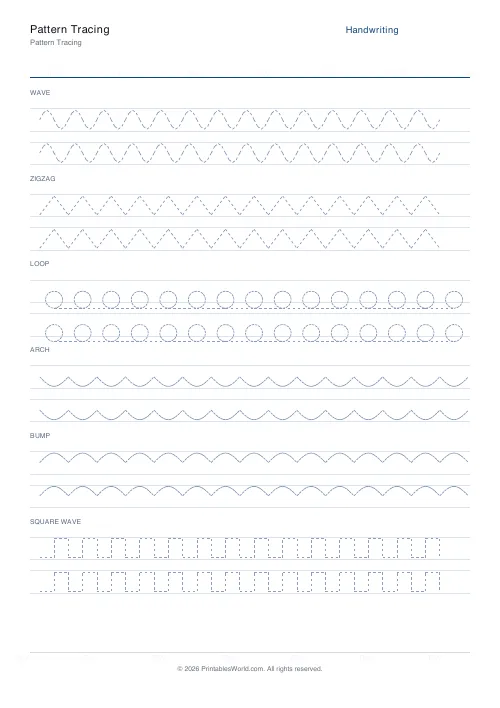
Repeating patterns, zigzags, waves and loops, for pencil control.
Shapes Tracing
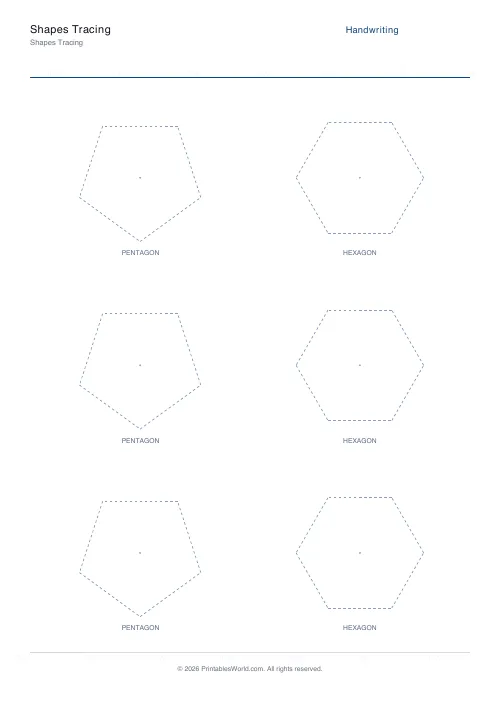
Trace 2D shapes. Circle, square, triangle, pentagon, hexagon.
Dotted Letter Tracing
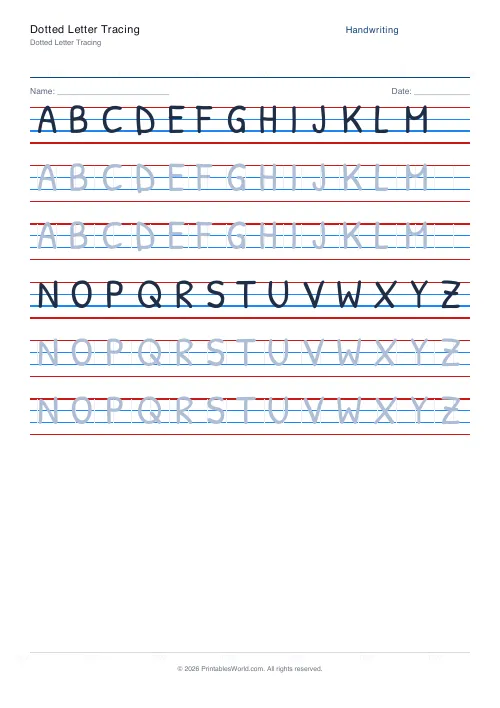
Large dotted letters for fine motor development and letter formation.
Handwriting Practice Generator
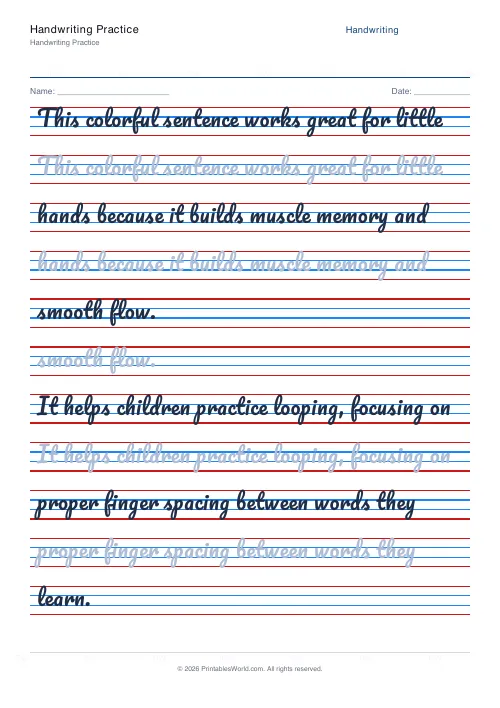
Create custom 4-line handwriting practice sheets with trace rows, adjustable guides, and your own text.
Further reading
Handwriting
How to teach handwriting to kids: a step-by-step guide
A practical order for teaching handwriting: get the body and the pencil right first, then teach letters in stroke families rather than alphabetically, and keep sessions short enough that the hand never tires.
7 min read
Handwriting
Dotted vs solid trace lines: what works best for beginners
Each trace style removes a different amount of support. The mistake is staying on one too long. Tracing feels productive and teaches less than copying.
4 min read
Handwriting
How to teach cursive at home: a step-by-step plan
A simple step-by-step plan for teaching cursive at home, with letter families grouped by stroke, a four-week practice sequence, and free printable sheets to download.
8 min read
More like this
- Handwriting Practice Generator
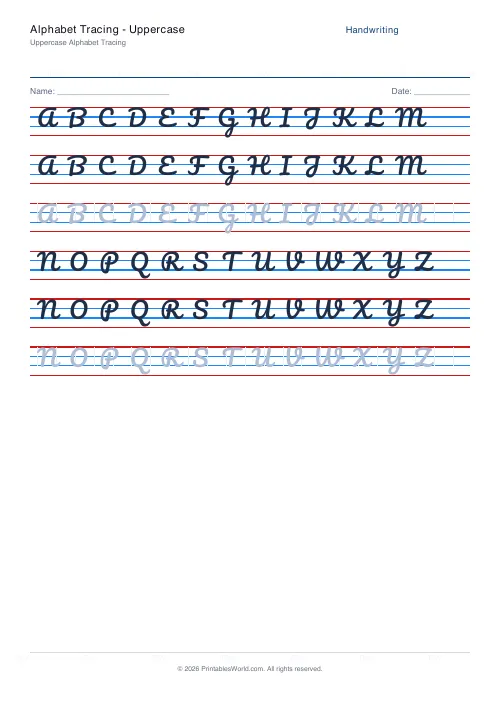 Alphabet Tracing: Uppercase
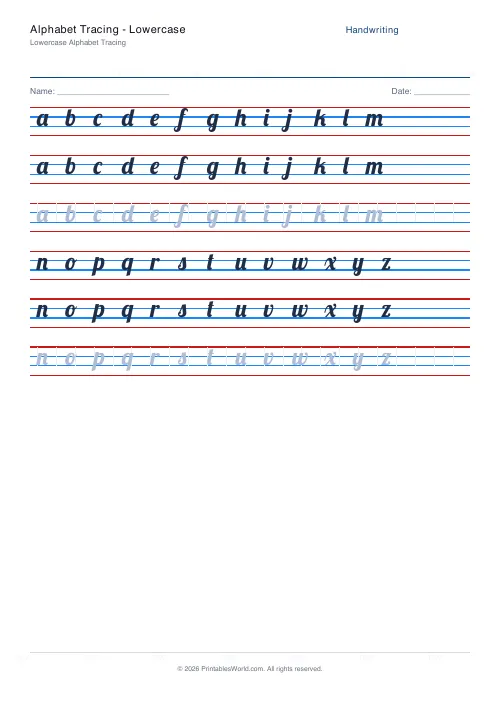 Alphabet Tracing: Lowercase
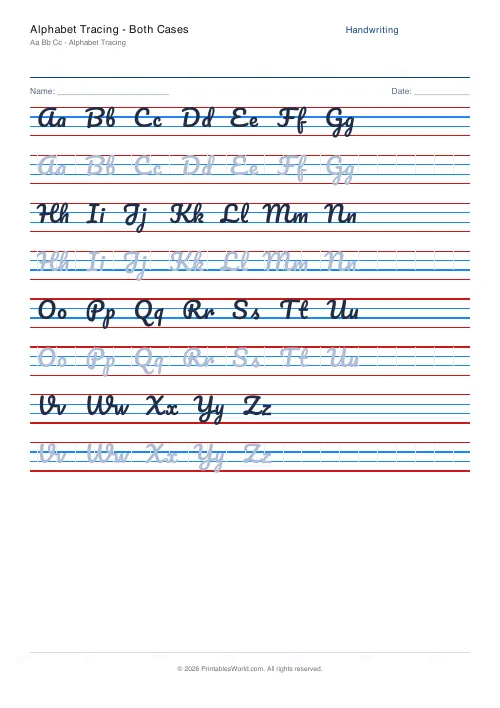 Alphabet Tracing: Both Cases
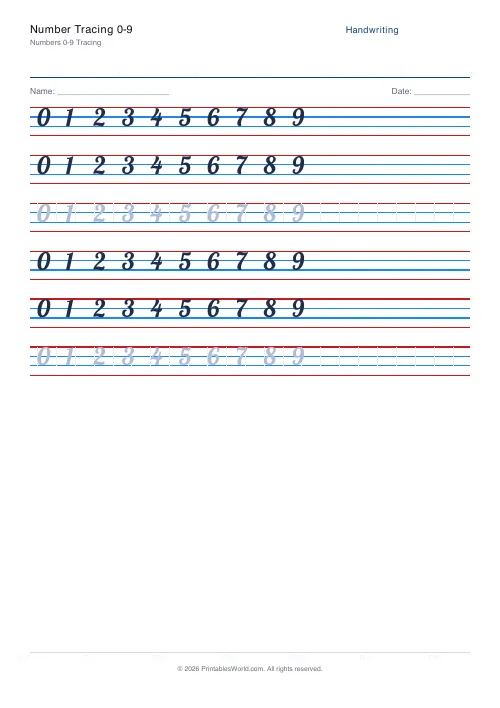 Number Tracing 0-9
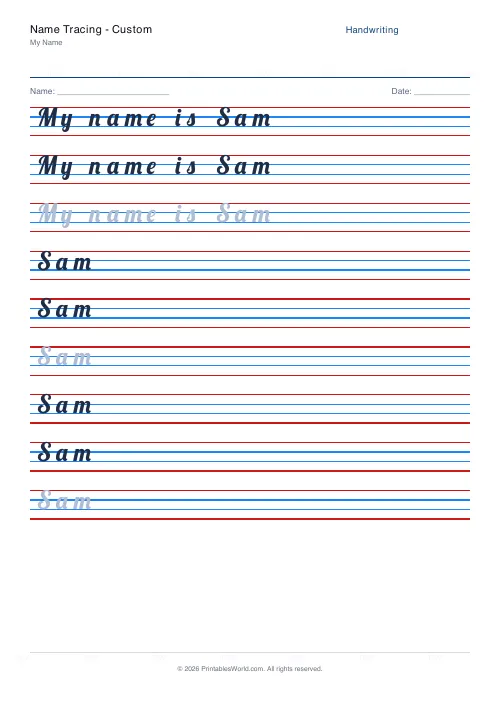 Name Tracing: Custom
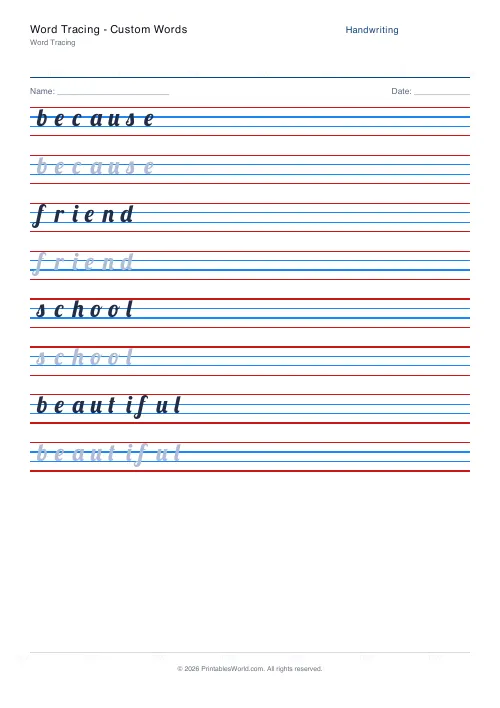 Word Tracing: Custom Words
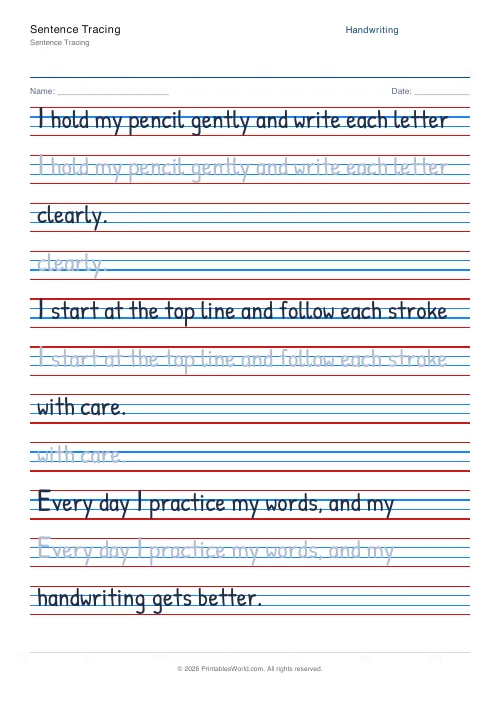 Sentence Tracing
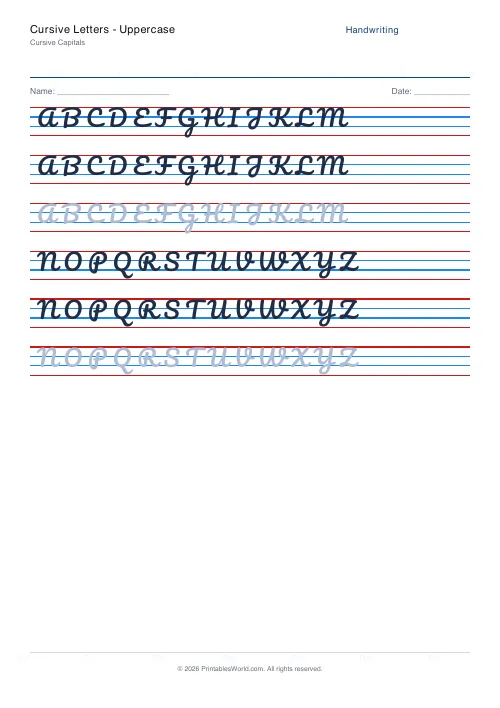 Cursive Letters: Uppercase
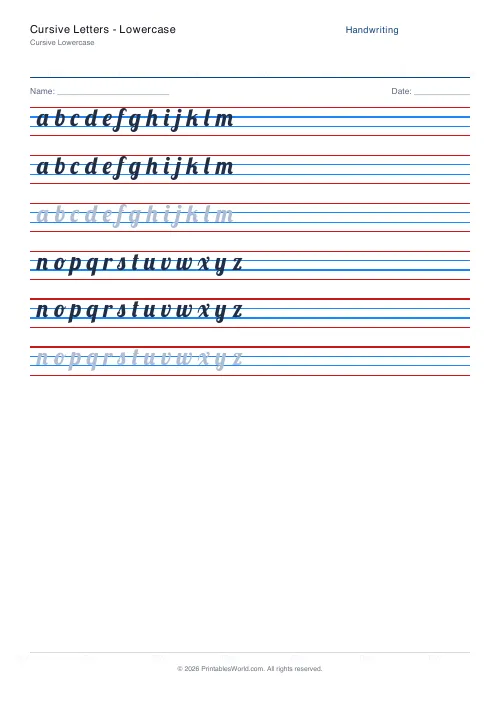 Cursive Letters: Lowercase
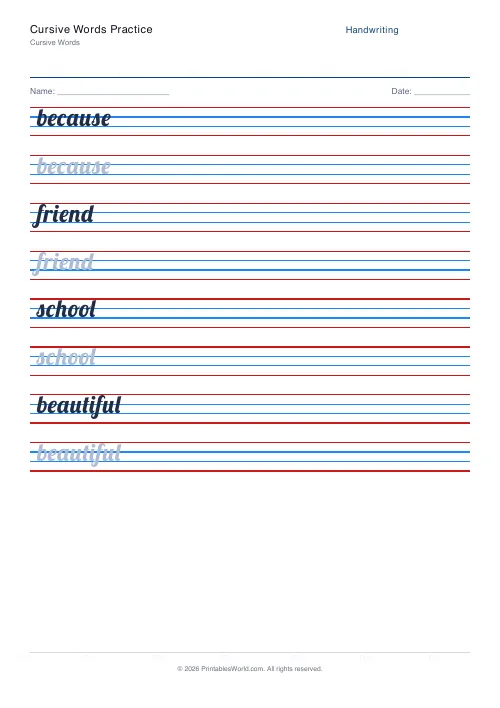 Cursive Words Practice
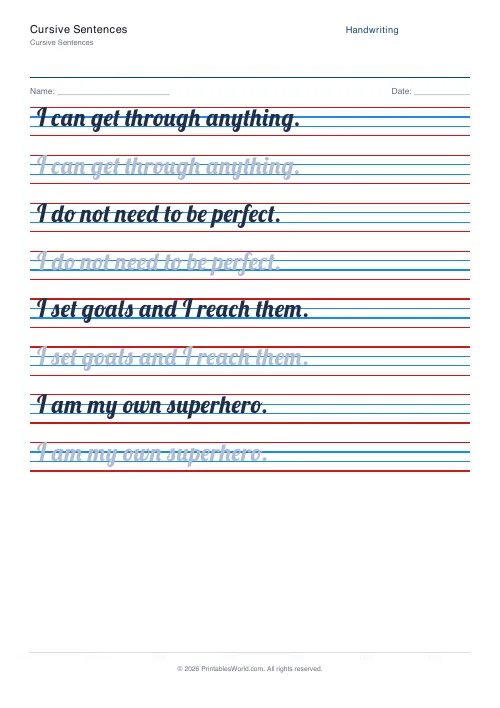 Cursive Sentences
- Dotted Letter Tracing
 Arrow Letter Tracing