Math Worksheets
Addition Worksheets — Triple Digit
Printable triple-digit addition practice (100–999).
Last updated:
What this tool does
Triple-digit addition practice. Problems are drawn from three-digit numbers (100–999) for practice with column addition, multi-step carrying and place-value handling.
Free downloads
Ready-made Addition Worksheet printables — free PDF downloads
No setup needed — download these print-ready addition worksheets as free PDFs. Each one was made with the generator above, so you can recreate or fully customize any of them.
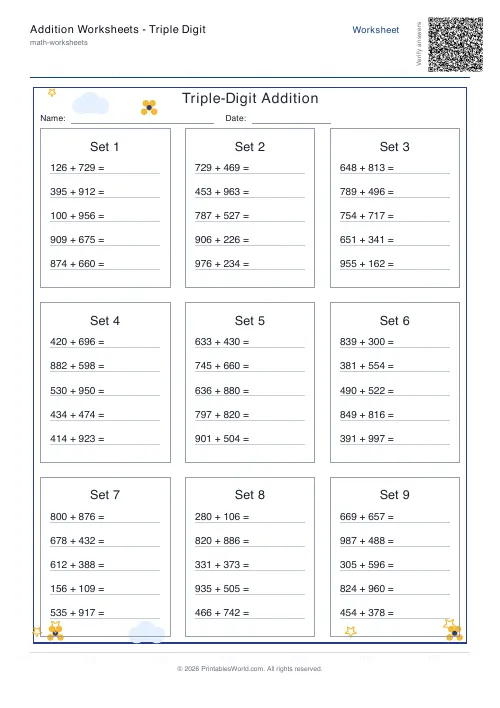
Addition Worksheet — Table style
Print-ready addition worksheet (Table style) as a free PDF — made with the generator above so you can tweak and reprint.
↓ Download PDF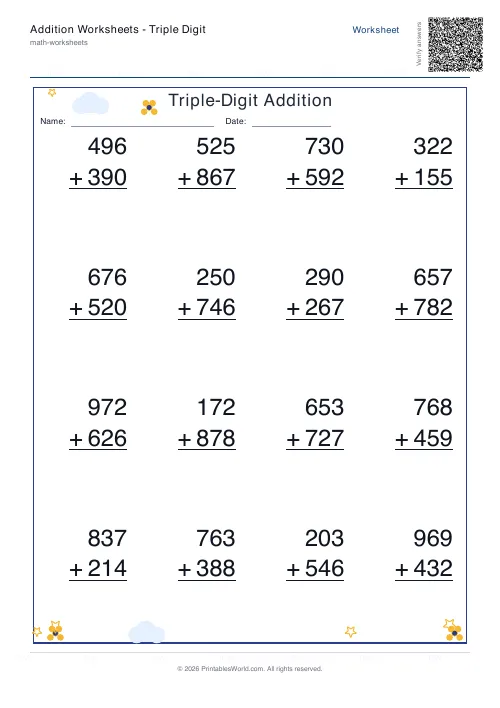
Addition Worksheet — Vertical / line-by-line
Print-ready addition worksheet (Vertical / line-by-line) as a free PDF — made with the generator above so you can tweak and reprint.
↓ Download PDF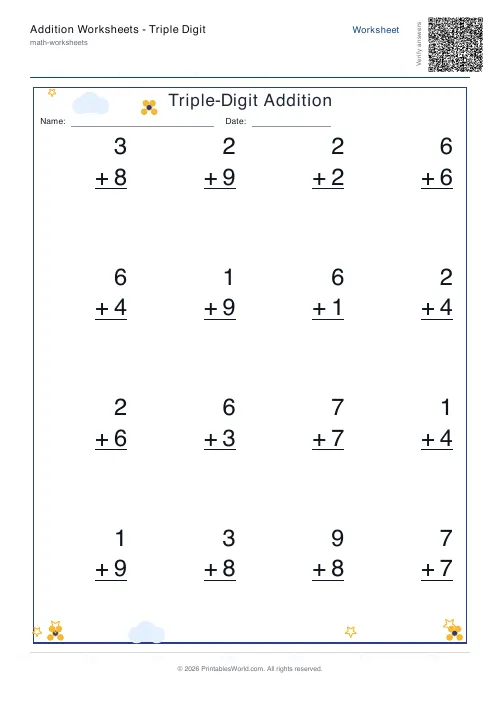
Addition Worksheet — 1-digit
Print-ready addition worksheet (1-digit) as a free PDF — made with the generator above so you can tweak and reprint.
↓ Download PDF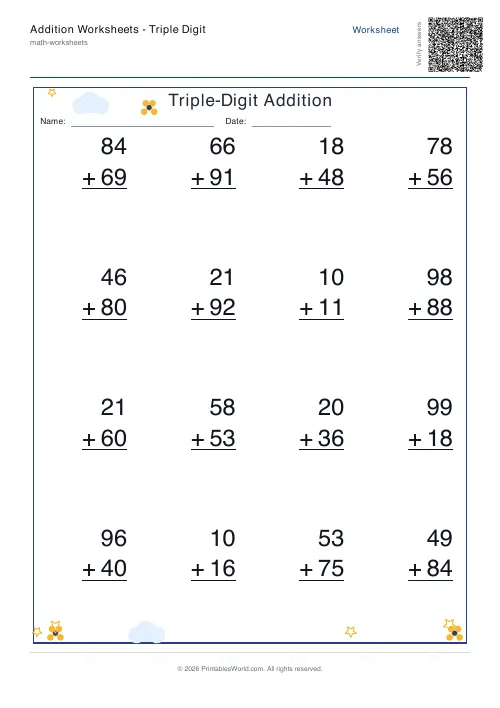
Addition Worksheet — 2-digit
Print-ready addition worksheet (2-digit) as a free PDF — made with the generator above so you can tweak and reprint.
↓ Download PDF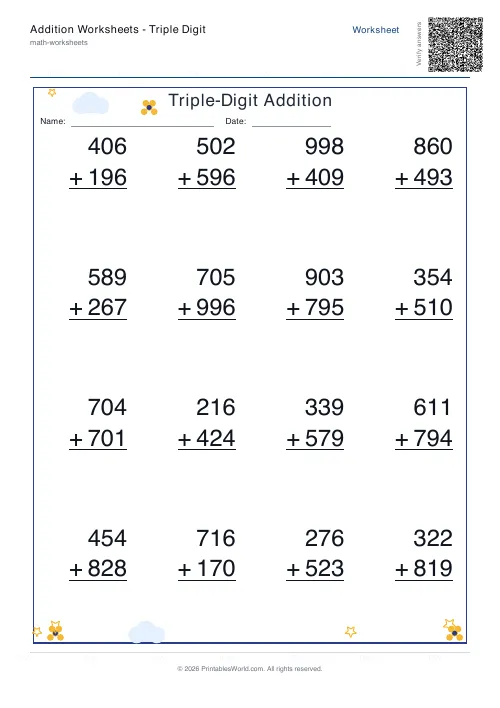
Addition Worksheet — 3-digit
Print-ready addition worksheet (3-digit) as a free PDF — made with the generator above so you can tweak and reprint.
↓ Download PDF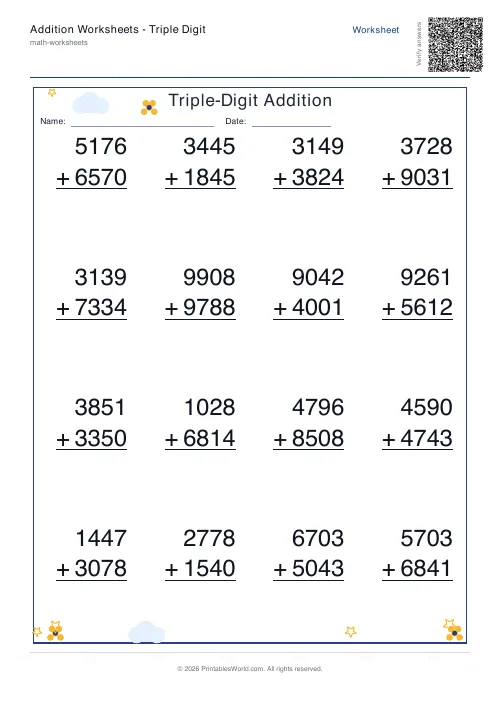
Addition Worksheet — 4-digit
Print-ready addition worksheet (4-digit) as a free PDF — made with the generator above so you can tweak and reprint.
↓ Download PDF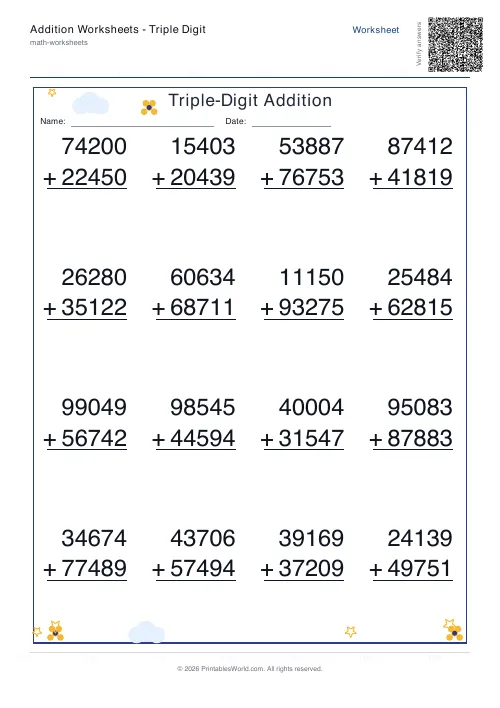
Addition Worksheet — 5-digit
Print-ready addition worksheet (5-digit) as a free PDF — made with the generator above so you can tweak and reprint.
↓ Download PDF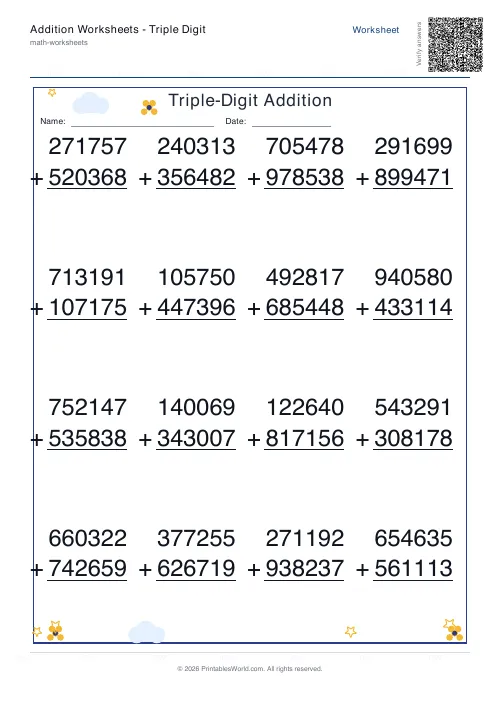
Addition Worksheet — 6-digit
Print-ready addition worksheet (6-digit) as a free PDF — made with the generator above so you can tweak and reprint.
↓ Download PDF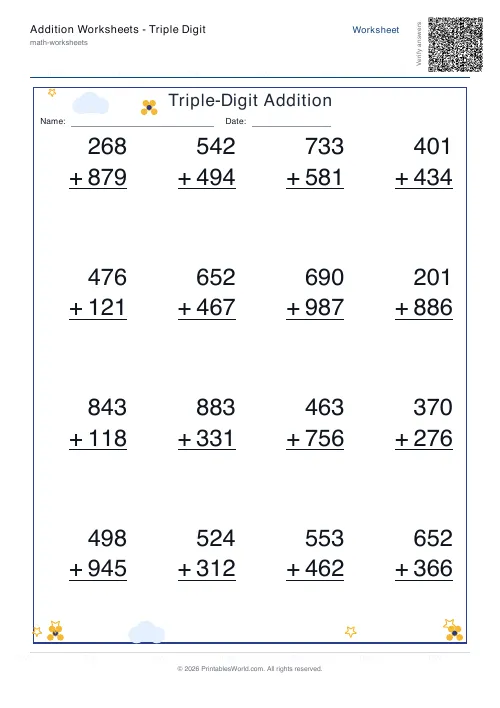
Addition Worksheet — Standard
Print-ready addition worksheet (Standard) as a free PDF — made with the generator above so you can tweak and reprint.
↓ Download PDF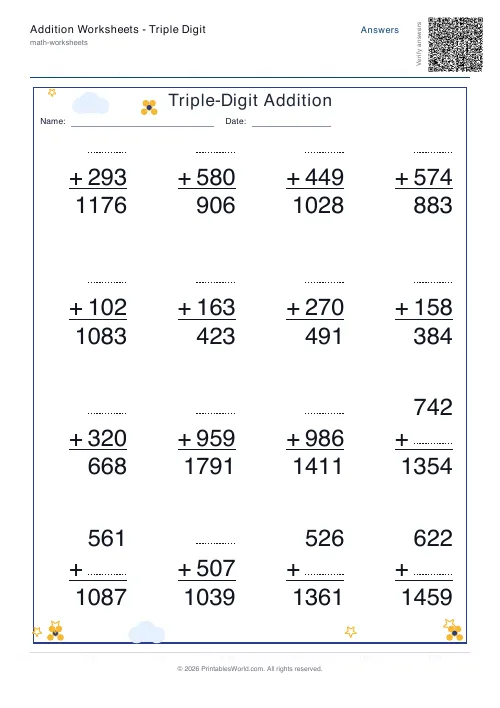
Addition Worksheet — Find the missing number
Print-ready addition worksheet (Find the missing number) as a free PDF — made with the generator above so you can tweak and reprint.
↓ Download PDF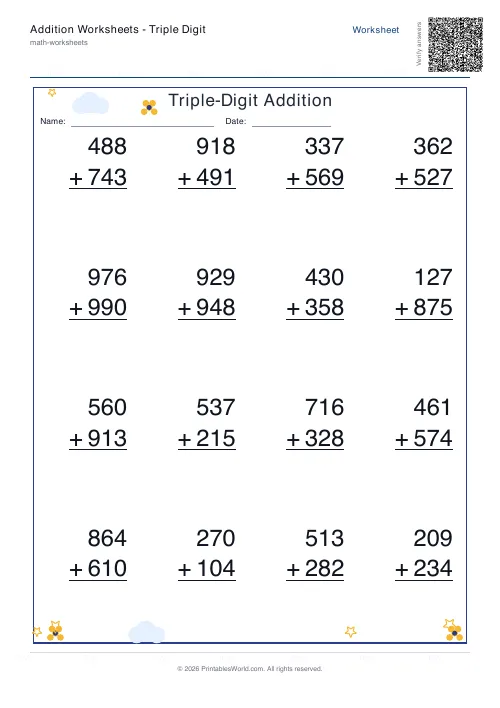
Addition Worksheet — No zero
Print-ready addition worksheet (No zero) as a free PDF — made with the generator above so you can tweak and reprint.
↓ Download PDF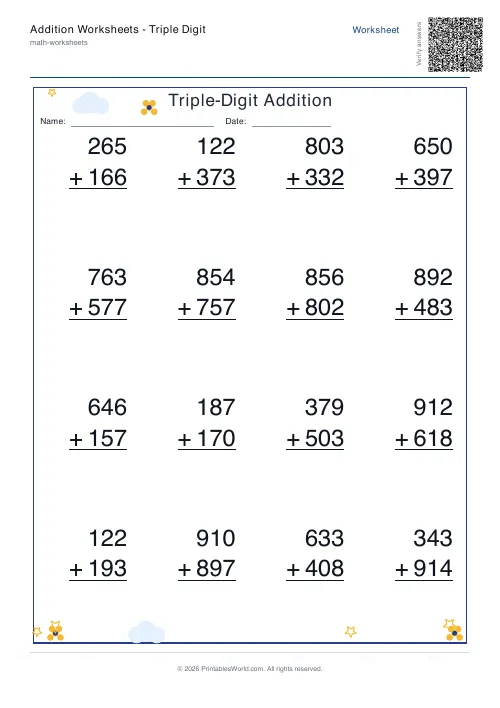
Addition Worksheet — Include zero
Print-ready addition worksheet (Include zero) as a free PDF — made with the generator above so you can tweak and reprint.
↓ Download PDF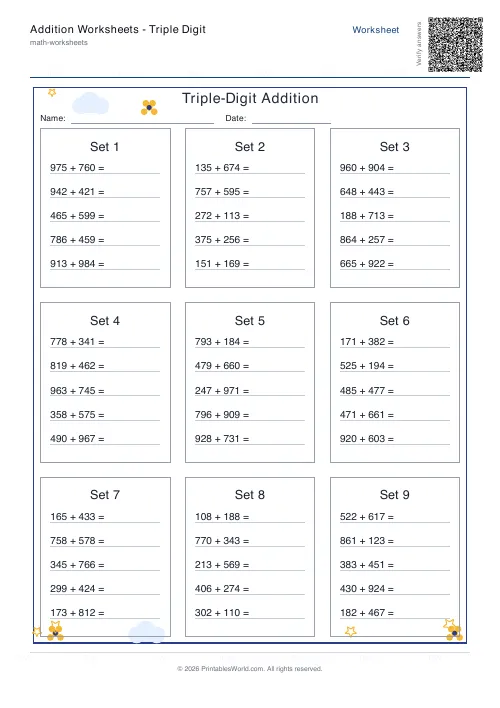
Addition Worksheet — Table style, with answer key
Completed answer key for the Table style addition worksheet — print-ready PDF for fast marking.
↓ Download PDF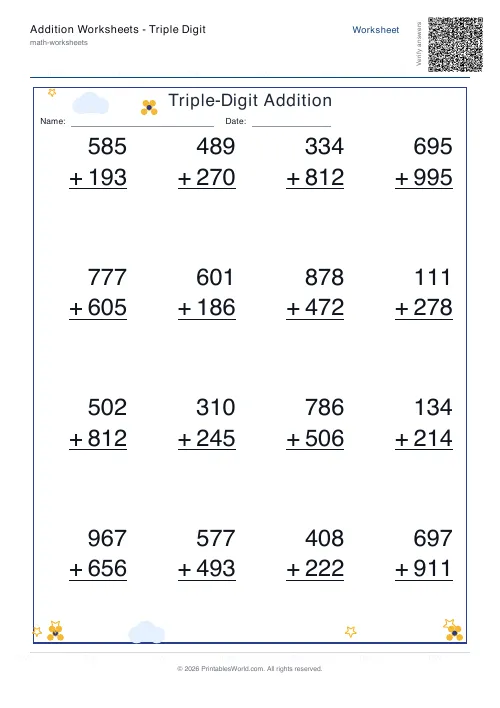
Addition Worksheet — Vertical / line-by-line, with answer key
Completed answer key for the Vertical / line-by-line addition worksheet — print-ready PDF for fast marking.
↓ Download PDF
Settings
Customize your addition worksheet
Line-by-line · none theme · 3-digit · A4
Worksheet style
Output
Paper size
Preview
Live PDF preview
The actual PDF, updated as you change settings.
People also used
Feedback
Spotted something off with this tool?
Create Printable Triple-Digit Addition Worksheets for Home and Classroom Use
Produce free printable triple-digit addition worksheets for learners moving from two-digit to three-digit column work.
Every addend sits between 100 and 999, giving learners full practice with the hundreds, tens and ones columns together — including sums that carry across multiple columns such as 578 + 465. Export to A4 or US Letter PDF and choose blank sheets, a matching answer key, or both.
Useful for teachers, parents, tutors and homeschoolers building place-value confidence and accurate column addition.
Why use this triple-digit addition generator?
Three-digit addition is where accurate column alignment and multi-column regrouping really matter. Learners need plenty of varied practice so that carrying into the tens column and then the hundreds column becomes automatic. This generator supports:
- Year 3 and Year 4 (UK) column-addition work
- Grade 2 and Grade 3 (US) three-digit fluency
- SATs and state-test revision
- daily column-method drills
- catch-up work for learners who struggled with two-digit regrouping
- homeschool arithmetic blocks
- tutor diagnostics
What you can customise
- Worksheet style: Table or Line-by-line layout
- Number range: three-digit numbers (100–999) by default; lower the end number for an easier 100–500 sheet
- Download type: Blank, Answers, or Both
- Missing question mode: print the total and hide one addend for inverse practice
- Paper type: A4 or US Letter PDF
- Theme style: pick an alternative visual look if needed
- Font size: Auto or larger for easier column alignment
- Worksheet title: add your own heading
- Name and Date fields: useful for classwork and homework
Notes and limitations
- Problems are drawn randomly, so each generated sheet is a fresh mix of carry and no-carry sums.
- Line-by-line style gives the most room for column working, including carry digits above each column.
- Table style packs more problems per page but gives less space to record carries.
- Print at 100% scale to preserve the column gutters and digit spacing.
Who these worksheets are for
Parents
Regular three-digit practice that supports what is happening in class, with an answer key for quick marking.
Teachers
Morning work, homework, formative-assessment sheets and revision for Year 3 and Year 4.
Homeschool families
Progressive practice, scaled up from two-digit sums once learners are fluent.
Tutors
Targeted sheets to spot where learners misalign columns or forget a carry, and to track improvement.
Worksheet style options
Table style
Grouped cards suited to learners who no longer need generous working space. Good for pace and volume.
Line-by-line
Vertical column layout with room beneath each sum for the answer and above each column for carries.
Missing question mode
Reveal the total and hide one addend so learners use subtraction to find the missing three-digit number — excellent for linking the two operations.
How to use the tool
- Choose Table or Line-by-line layout.
- Keep the range at 100–999 or lower the end number for a simpler sheet.
- Decide whether to use Missing question mode.
- Show or hide Name and Date fields.
- Select Blank, Answers or Both.
- Pick A4 or US Letter.
- Click Generate Worksheet, preview the page, and download the PDF.
Worked example
For a Year 4 column-addition revision sheet, pick Line-by-line, keep the range at 100–999, leave Missing question mode off, and set Download type to Both.
The blank PDF gives you around fifteen to twenty three-digit sums such as 487 + 256 and 302 + 618, with enough room to carry into the tens and hundreds columns. The answer sheet lets you mark accurately in seconds.
Methodology
The generator draws random three-digit pairs (100–999) and places them in the layout you chose. It does not enforce regrouping on every problem, so each sheet mimics real assessment conditions — some sums carry, some do not. The shared branded PDF template handles page headers, watermark and QR so output matches every other worksheet on the site.
Helpful preset ideas
- End number set to 500 for first sessions on three-digit addition
- Full 100–999 range for Year 4 revision
- Line-by-line layout to keep column working tidy
- Missing question mode for linking addition and subtraction
- Both (blank + answers) for tutor or parent marking
Best ways to practise triple-digit addition
- Use squared paper underneath the worksheet if column alignment is shaky.
- Insist on carries written above the next column, not squeezed beside the digit.
- Mix carry and no-carry sums — assessments do.
- Keep sessions short and daily rather than long and weekly.
- Move to Missing question mode once column addition is secure.
Designed for A4 and US Letter Printing
Column spacing, digit width and margins are tuned for both A4 and US Letter. Choose the paper type that matches your printer and you will get correctly proportioned worksheets — no clipped right edges, no cramped columns — whether you are printing at home, in a school, or at a tutoring centre.
Related maths practice tools
Other printable maths tools you may find useful:
FAQs
Quick answers
How many digits are in each number?
Each addend has three digits (100–999), so learners build fluency with larger column addition.
Which year group is this for?
Typically Year 3 and Year 4 (UK) or Grades 2–3 (US).
Does the answer sheet show the carries?
The answer sheet shows the final sum; carries are practised by the learner on the blank sheet.
What paper sizes can I print on?
Both A4 and US Letter are supported. The layout scales the three-digit columns and the answer sheet to either paper size, keeping the carries and place-value columns neatly aligned.
Related tools
More like this
 Addition Worksheets Generator
 Visual Addition Worksheets Generator
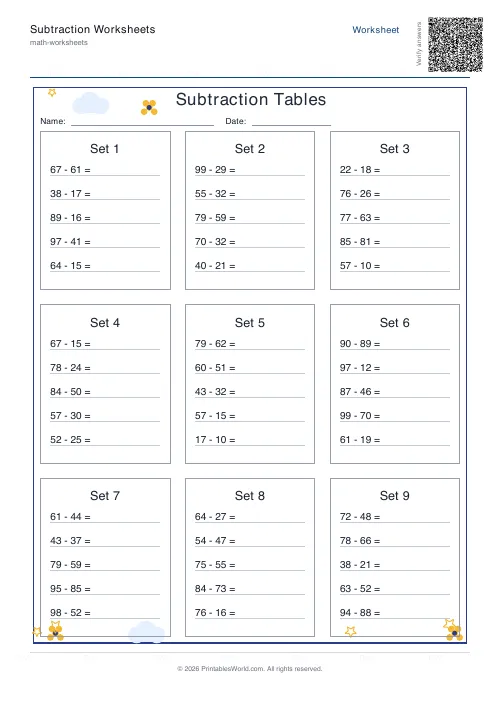 Subtraction Worksheets Generator
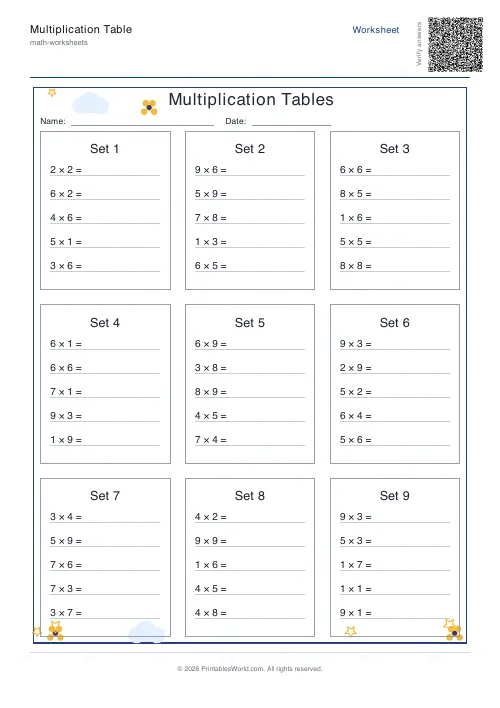 Multiplication Table Generator
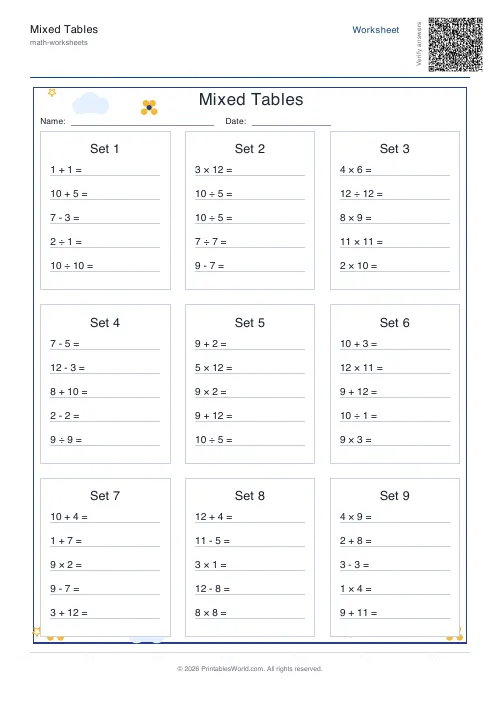 Mixed Tables Generator
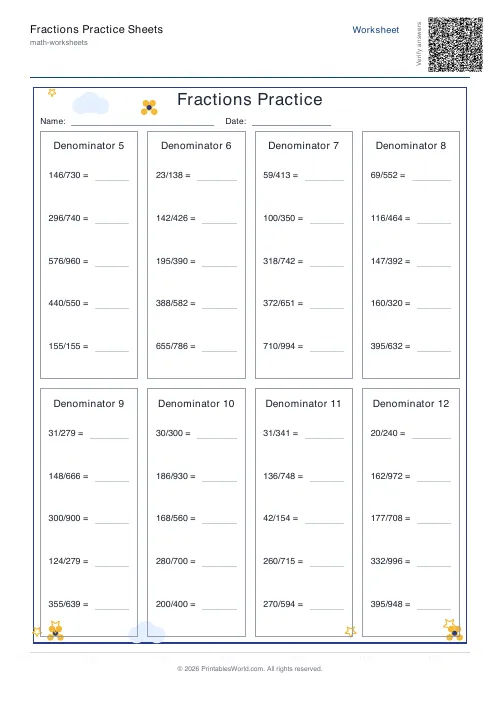 Fractions Practice Sheets Generator
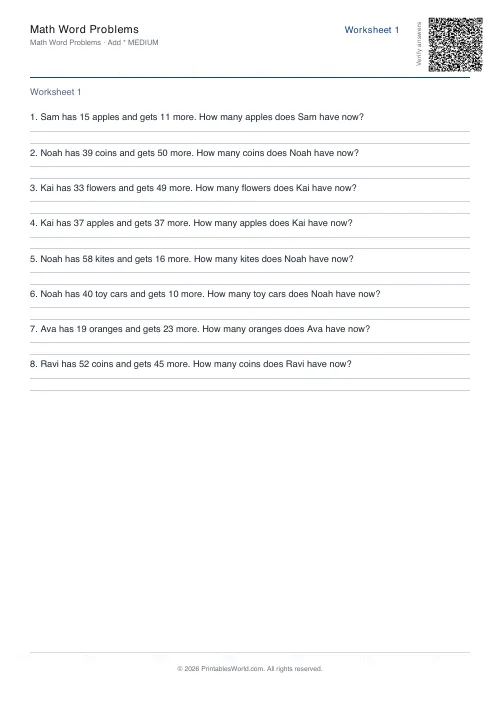 Math Word Problems Generator
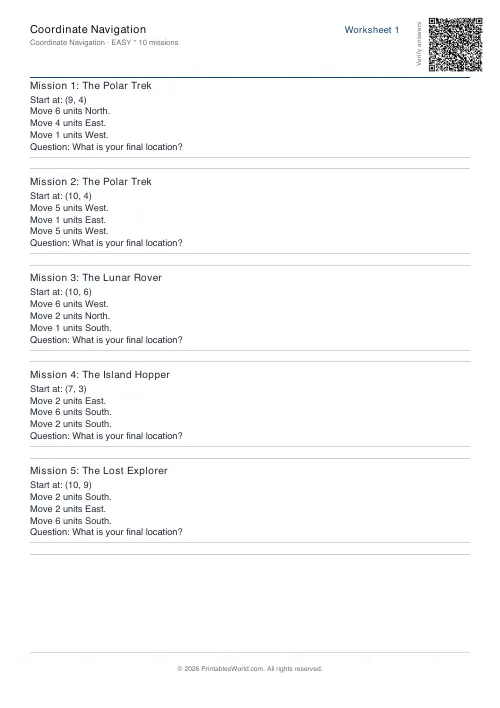 Coordinate Navigation Generator
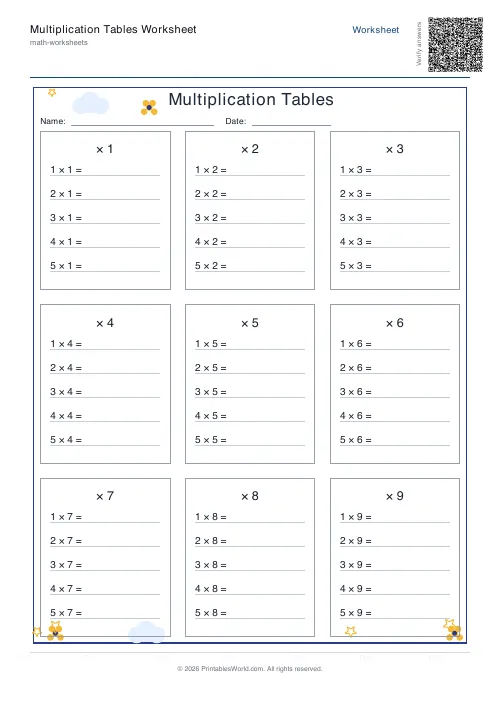 Multiplication Tables Worksheet
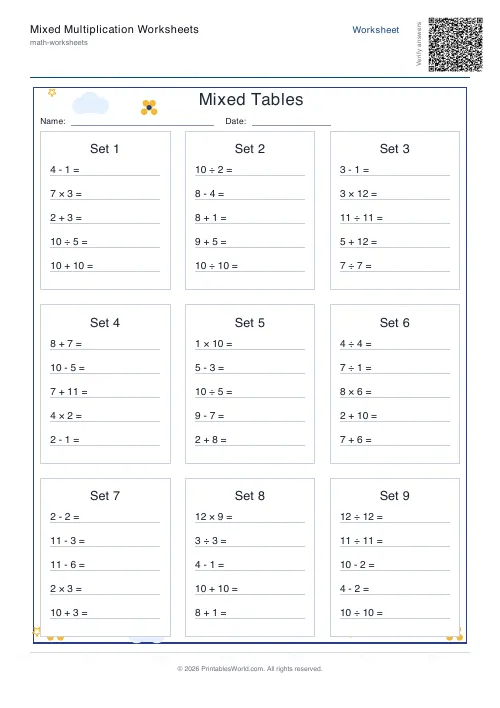 Mixed Multiplication Worksheets
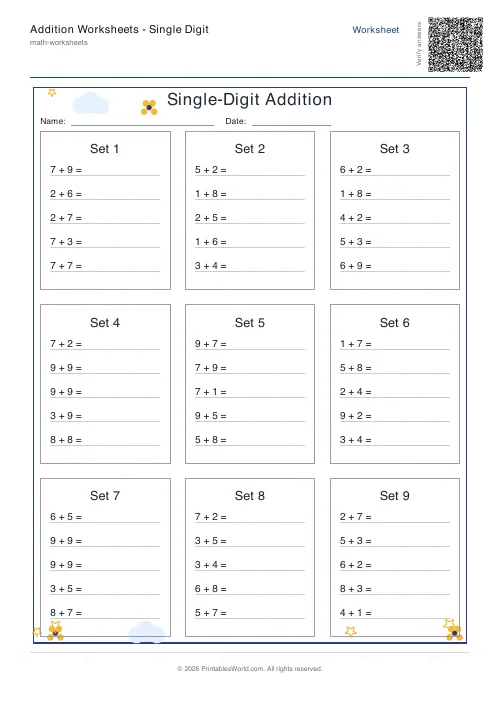 Addition Worksheets — Single Digit
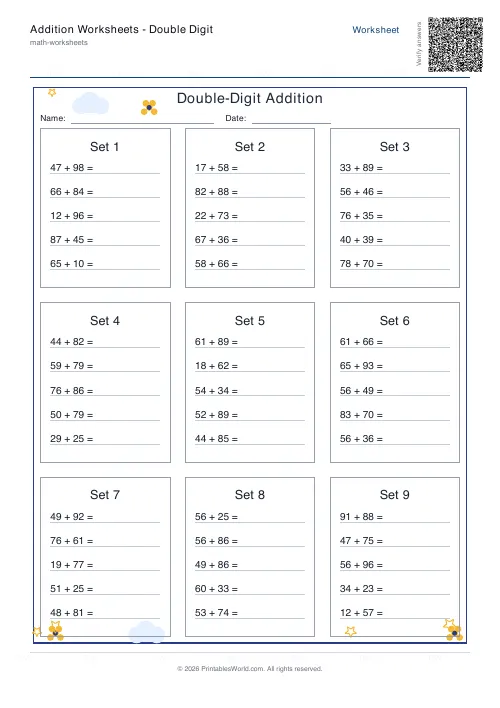 Addition Worksheets — Double Digit
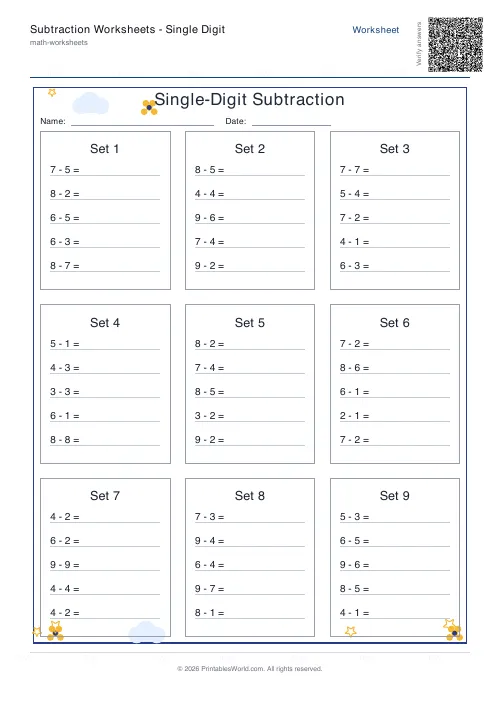 Subtraction Worksheets — Single Digit
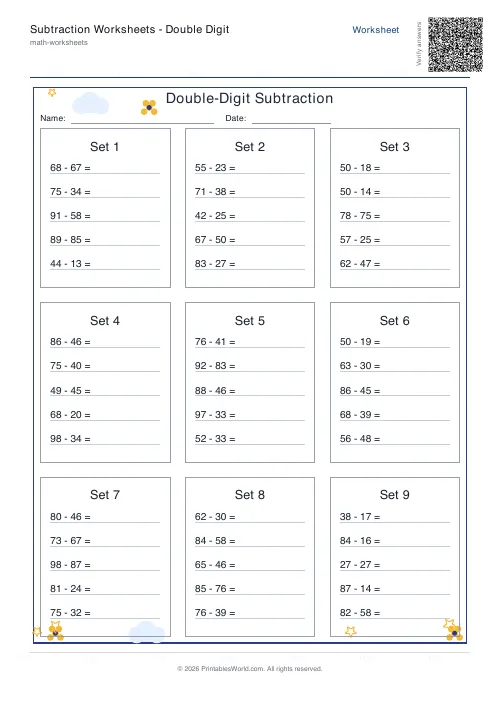 Subtraction Worksheets — Double Digit